Have it delivered hassle-freeBuyer protectionAll Designer items curated by WhoppahDownload the Whoppah App – get alerts & sell with ease.
Have it delivered hassle-free
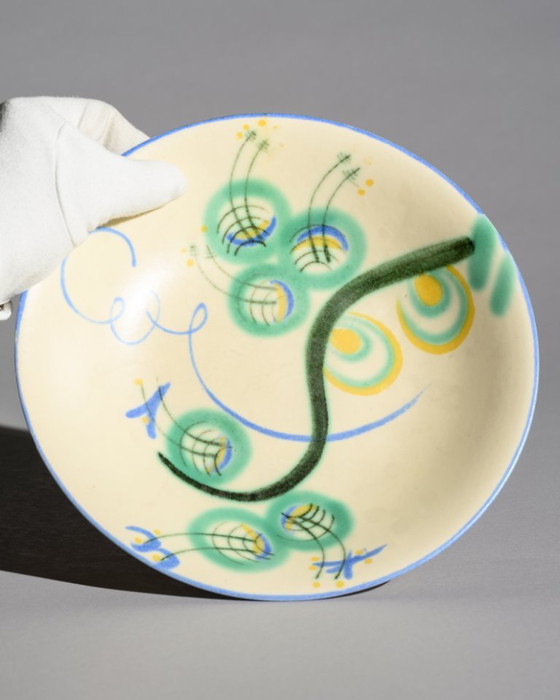
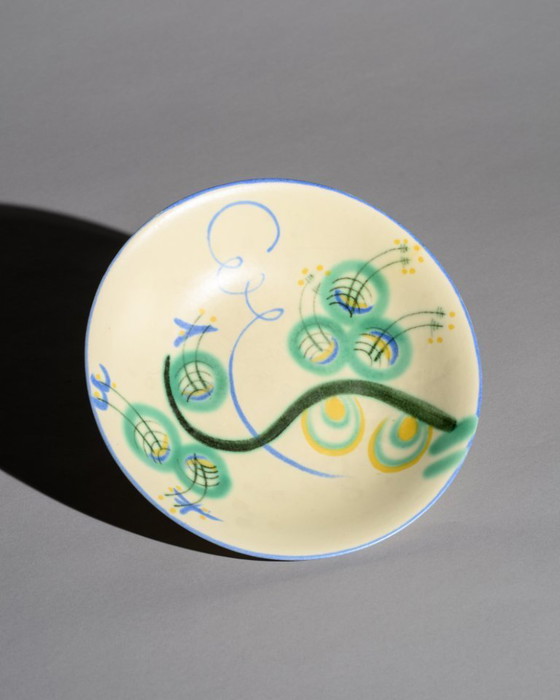
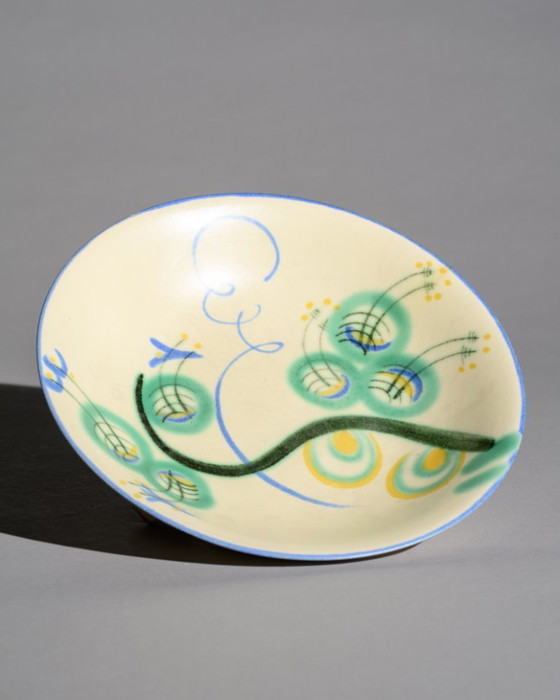
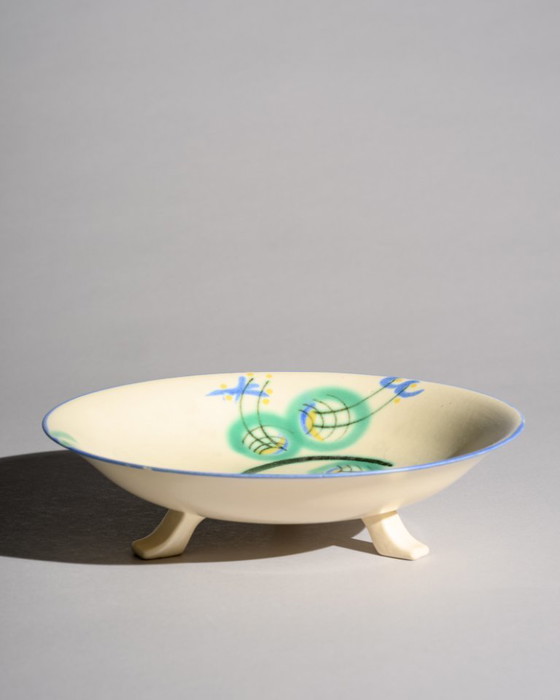
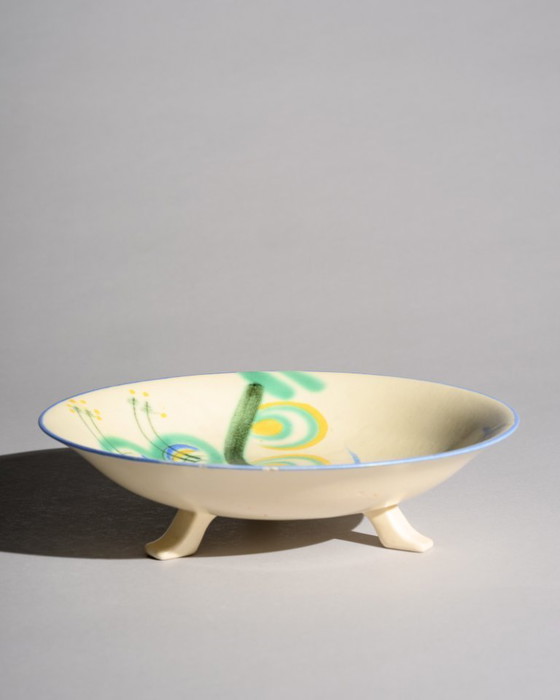
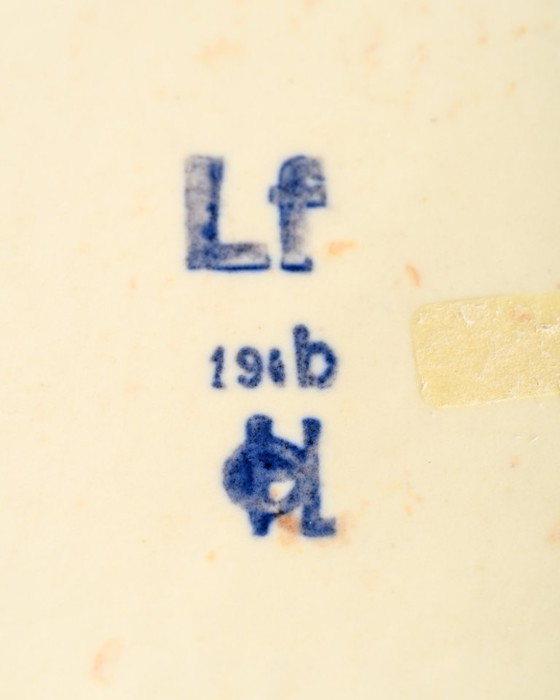
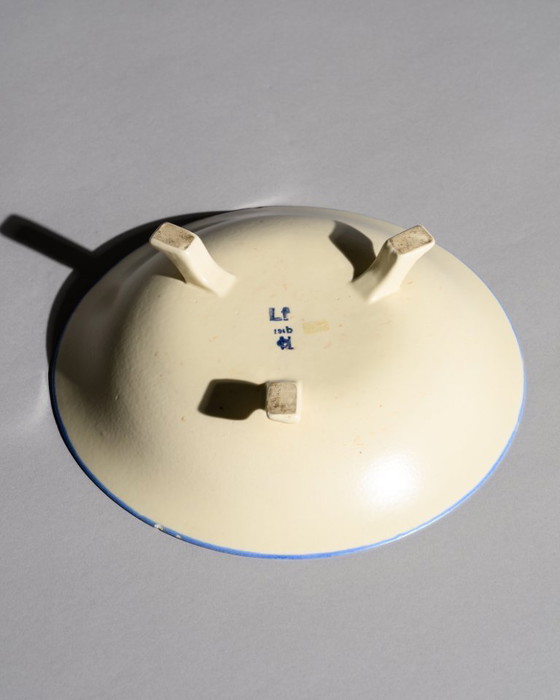
Margarete Heymann-Löbenstein Haël-Werkstätten Art Deco Ceramic Footed Bowl 1930s
€499Bid from €270
Buy with confidence
Shop & pay safely with Buyer ProtectionDesigner items curated by WhoppahWe only pay the seller once you have safely received the itemTrusted payment methods


About this seller
Private sellerBerlin, GermanyOn Whoppah since August 2023 • 31 sales
Product description
Margarete Heymann-Löbenstein for Haël-Werkstätten Art Deco Ceramic Footed Bowl, Germany, 1930s
A rare and historically important ceramic footed bowl designed by Margarete Heymann-Löbenstein for the legendary Haël-Werkstätten, executed in the early 1930s during one of the most radical and influential periods of German modernist ceramics.
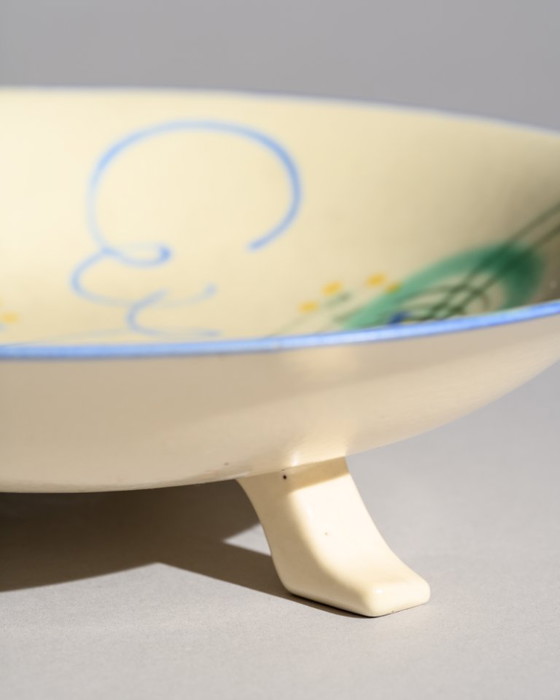
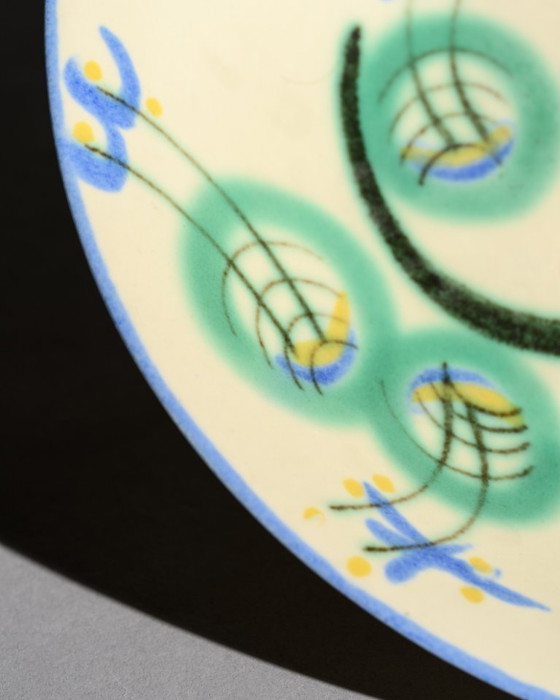
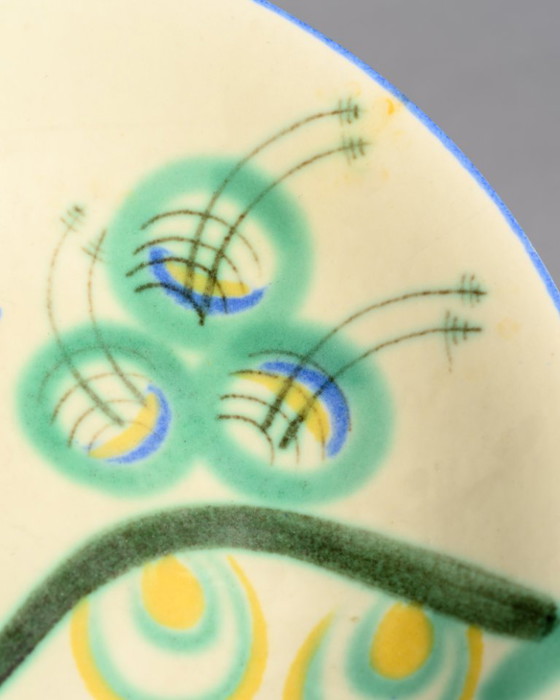
The shallow bowl rests elegantly on three small sculptural feet and is decorated with an abstract hand-painted composition in turquoise green, cobalt blue, yellow, and black over a warm ivory ground. The dynamic linear motifs and floating biomorphic forms reveal the unmistakable dialogue between Bauhaus experimentation, Art Deco elegance, and the expressive freedom of early modernist studio ceramics.
Margarete Heymann-Löbenstein (1899–1990) is today recognized as one of the most important female ceramic artists of the 20th century and a pioneering figure of German avant-garde design. After studying at the Kunstgewerbeschule in Berlin and briefly at the Bauhaus in Weimar under Gerhard Marcks, she founded the Haël-Werkstätten in Marwitz together with her husband Gustav Löbenstein in 1923. The factory quickly became internationally celebrated for its daring modern ceramic forms and vividly experimental glazes.
Unlike the strict industrial rationalism associated with some Bauhaus production, Heymann-Löbenstein’s work maintained a uniquely lyrical and playful quality. Her ceramics combine geometric clarity with painterly spontaneity, often incorporating asymmetry, whimsical abstraction, and bold color relationships that anticipated later mid-century modern aesthetics by decades.
The rise of National Socialism violently interrupted both her career and the history of Haël. As a Jewish designer and entrepreneur, Margarete Heymann-Löbenstein was forced out of her company in the 1930s before emigrating to England. Today, surviving original Haël pieces are increasingly sought after not only as important design objects, but also as witnesses to a fractured chapter of German modernism.
Works by Margarete Heymann-Löbenstein are held in major museum collections internationally, including the Bauhaus-Archiv Berlin, the Bröhan Museum, the Victoria & Albert Museum in London, the Jewish Museum Berlin, and the Metropolitan Museum of Art in New York. In recent years, her work has undergone substantial scholarly and curatorial reevaluation, positioning her among the key protagonists of interwar European ceramic design.
The present bowl is particularly striking for its highly refined composition: the airy calligraphic blue line dances across the surface like an abstract musical notation, while the softly airbrushed turquoise halos and delicate graphic intersections create remarkable spatial depth despite the restrained palette. The slightly raised tripod form further enhances the object’s sculptural presence, allowing it to hover visually above the surface.
Dimensions:
Diameter: 25 cm
Height: 6.5 cm
Condition:
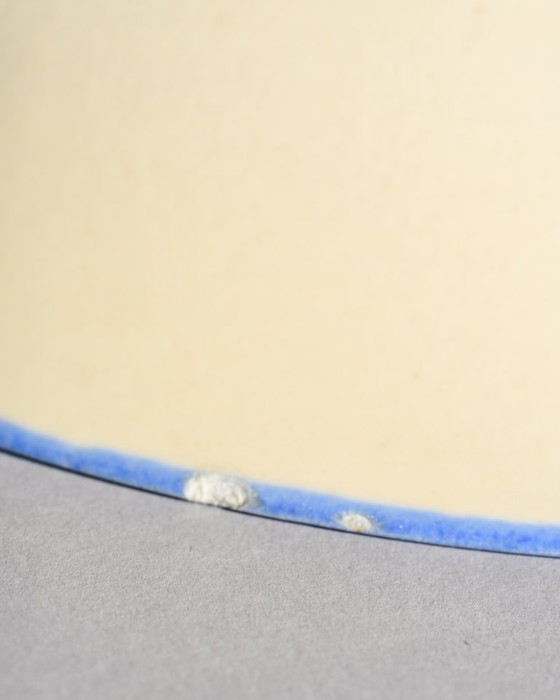
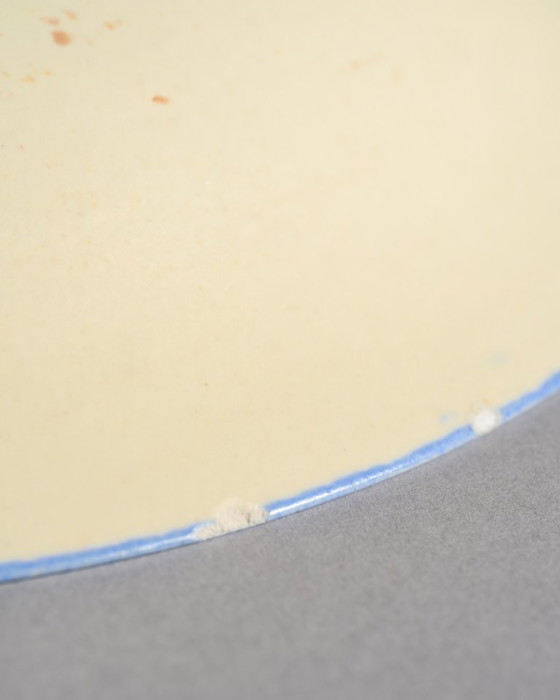
Good vintage condition with age-related wear consistent with use and age. Several small chips to the underside edge/rim, visible from below and documented in the photographs. No cracks or repairs observed. The painted decoration remains vivid and exceptionally well preserved.
General Information
Please explore our profile for more vintage vases!
International buyers: import duties or taxes, if applicable, are the buyer’s responsibility.
All items are photographed and described with care. Vintage pieces may show minimal traces of age; any significant flaws will be clearly mentioned.
Specifications
ConditionGoodColorsCreme, Multi ColorMaterialCeramicNumber of items1Height6 cmWidth25 cmDepth25 cmSigns of usageChipped
Discover more
Seller information
About this seller
Private sellerBerlin, GermanyOn Whoppah since August 2023 • 31 sales