Have it delivered hassle-freeBuyer protectionAll Designer items curated by WhoppahDownload the Whoppah App – get alerts & sell with ease.
Have it delivered hassle-free
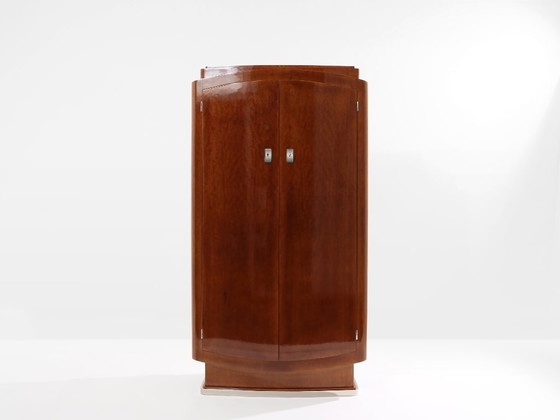
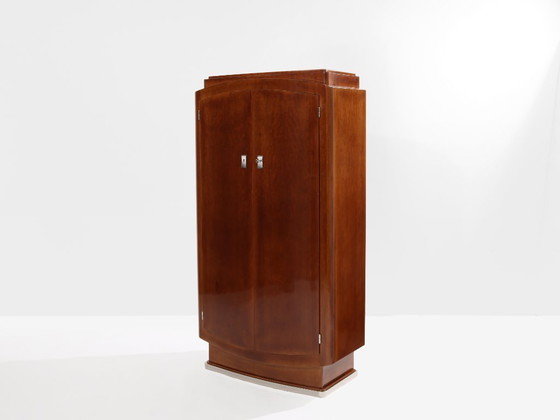
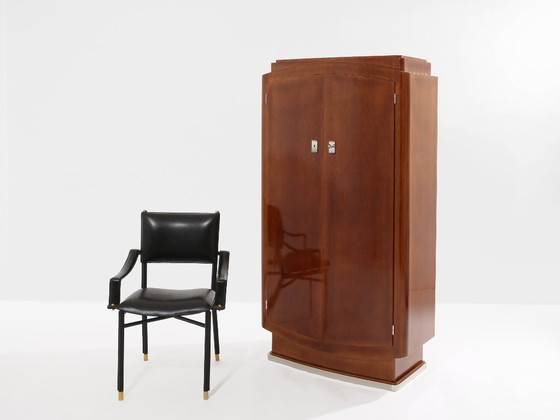
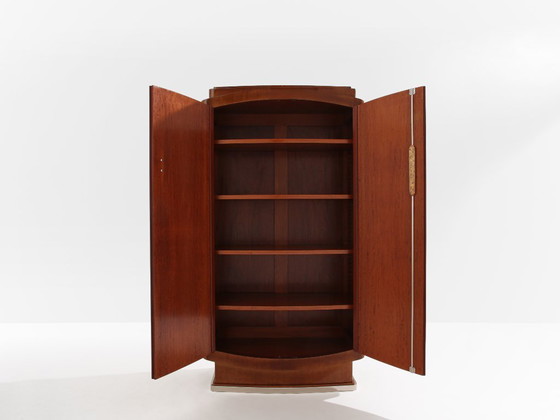
Jules Leleu mahogany cabinet nickeled metal 1930
€28,000
Buy with confidence
Shop & pay safely with Buyer ProtectionDesigner items curated by WhoppahWe only pay the seller once you have safely received the itemTrusted payment methods


About this seller
ProfessionalSaint-Ouen-sur-Seine, FranceOn Whoppah since October 2024 • 2 sales
Product description
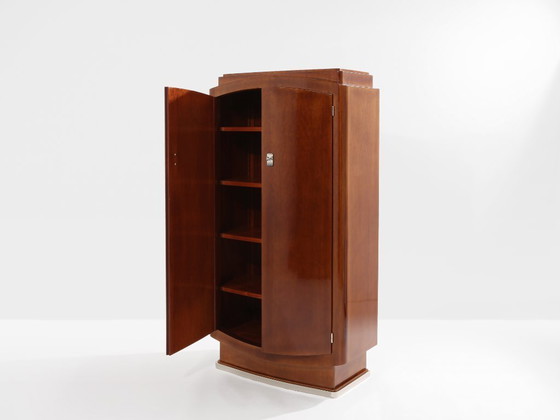
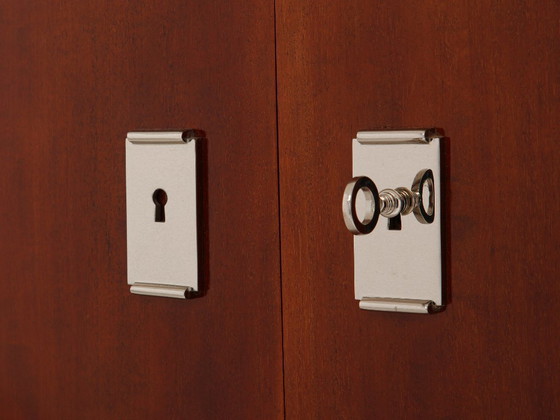
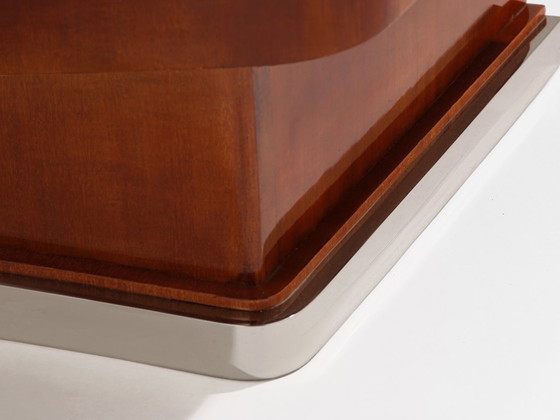
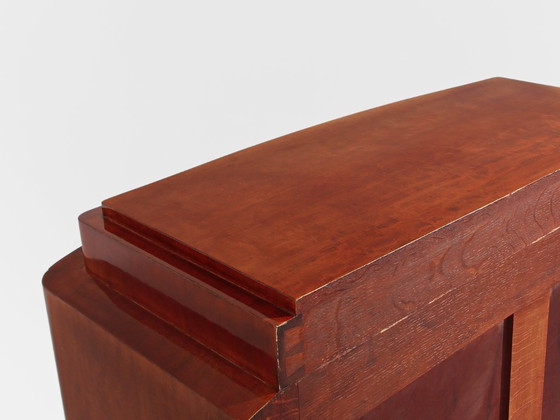
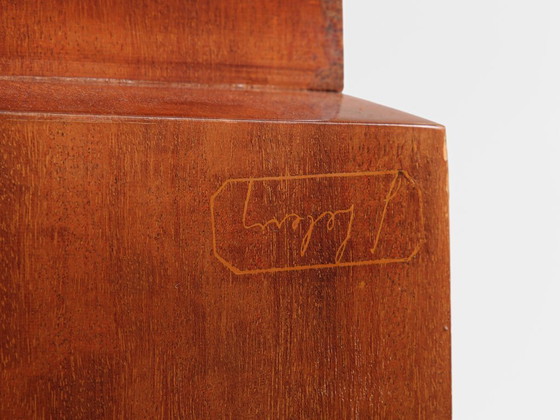
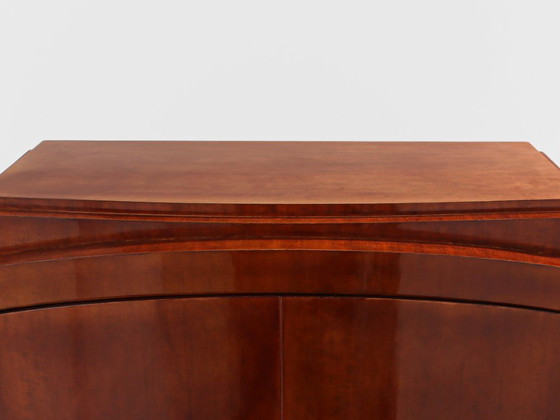
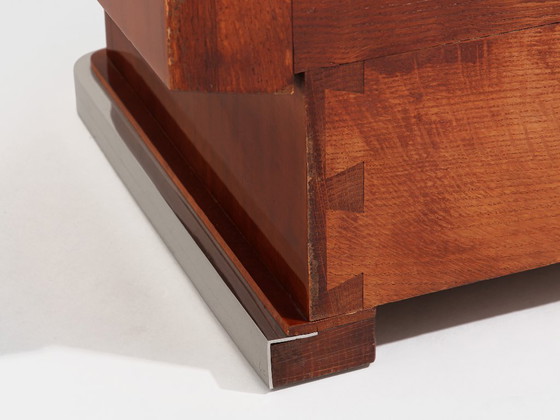
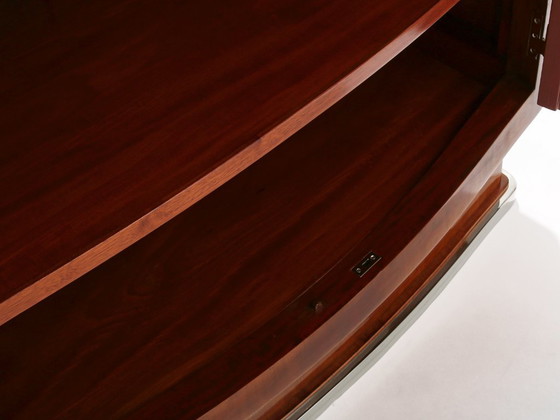
This very fine Art Deco cabinet was created in the 1930s by Jules Leleu, with flamed mahogany veneer and a nickeled metal base, and bears the workshop stamp. The piece perfectly illustrates the refined aesthetic developed by Leleu, where architectural precision is combined with a sober and masterful elegance of materials, hallmarks of the sophisticated language cultivated by the decorator, who consistently sought a balance between monumentality and elegance. The cabinet fully embodies this approach, standing out for the harmony of its proportions and the richness of its finishes, and features four shelves inside. Its structure is defined by clean, controlled lines, subtly animated by a gentle curve along the upper section, which enhances the refinement and timeless quality of the piece. The ensemble rests on a nickeled metal base, a detail characteristic of Leleu’s approach, combining noble materials with modern elements. This subtle contrast between mahogany wood and metal reinforces the architectural character of the piece and reflects the exceptional craftsmanship of the Leleu workshops, where functionality is integrated into a restrained art deco aesthetic of remarkable timelessness. The piece has been fully restored, revarnished, and is in great vintage condition.
Jules Leleu (1883–1961) was a French interior designer and furniture maker, and a major figure of Art Deco and French design during the interwar period. Trained in applied arts and at the École des Beaux-Arts, he developed an early and profound understanding of materials and artisanal techniques, which he applied to the creation of furniture of exceptional quality. After the First World War, he established himself on the Parisian scene through luxurious interiors that combined decorative elegance, precious woods and outstanding craftsmanship.During the 1920s, his work was characterized by a refined and traditionalist Art Deco style, still imbued with classical references, where material richness and the sophistication of line played a central role. Toward the end of the decade, Leleu evolved toward a more pared-down language and gained recognition as an ensemble designer, notably through the decoration of ocean liners such as L’Île de France and L’Atlantique. The 1930s marked a decisive shift toward a restrained modernism: forms became simpler, ornamentation gradually disappeared in favor of clear, architectural volumes, while discreet metal elements were introduced to emphasize structure. This period corresponds to numerous prestigious private and institutional commissions, firmly establishing Maison Leleu as one of the leading forces in French furniture design.
Specifications
CategoryStorage cabinetConditionGoodColorsMulti ColorMaterialWoodNumber of items1Height160 cmWidth86 cmDepth41 cmSeller locationSaint-Ouen-sur-Seine, FranceDelivery optionsDelivery or pickup
Discover more
Seller information
About this seller
ProfessionalSaint-Ouen-sur-Seine, FranceOn Whoppah since October 2024 • 2 sales