Have it delivered hassle-freeBuyer protectionAll Designer items curated by WhoppahDownload the Whoppah App – get alerts & sell with ease.
Have it delivered hassle-free
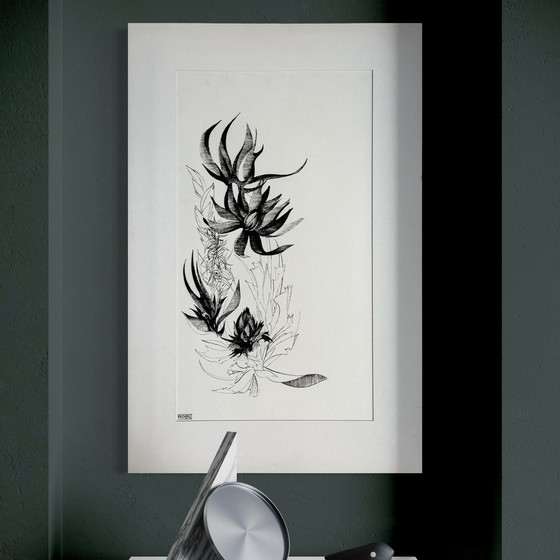
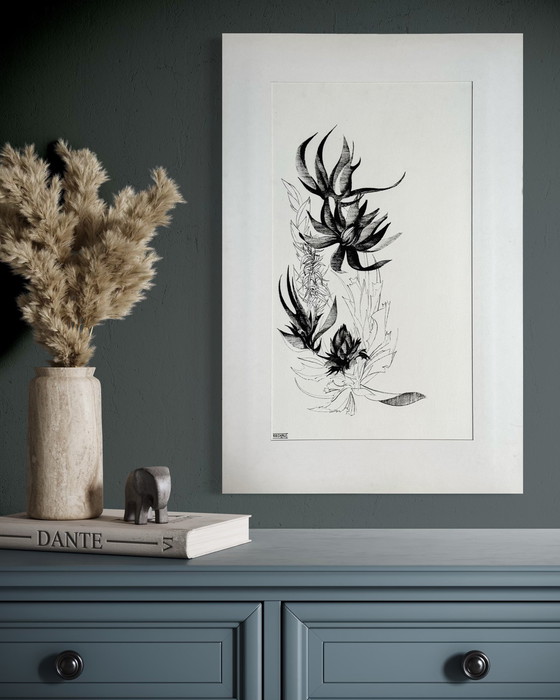
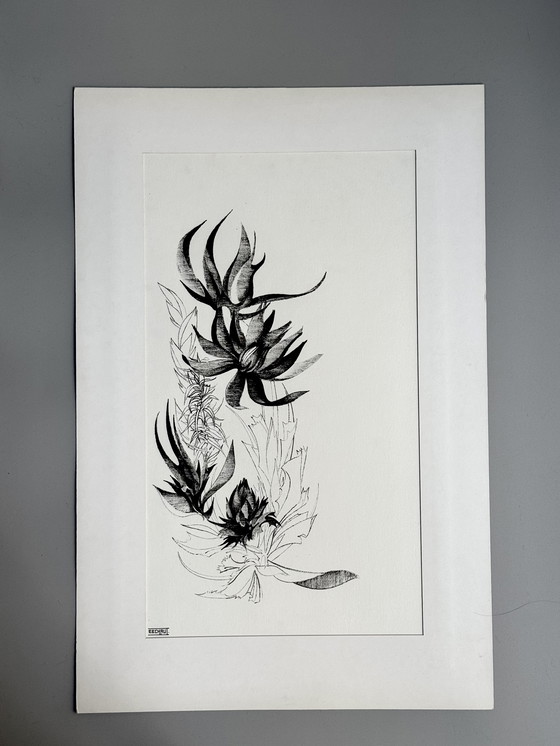
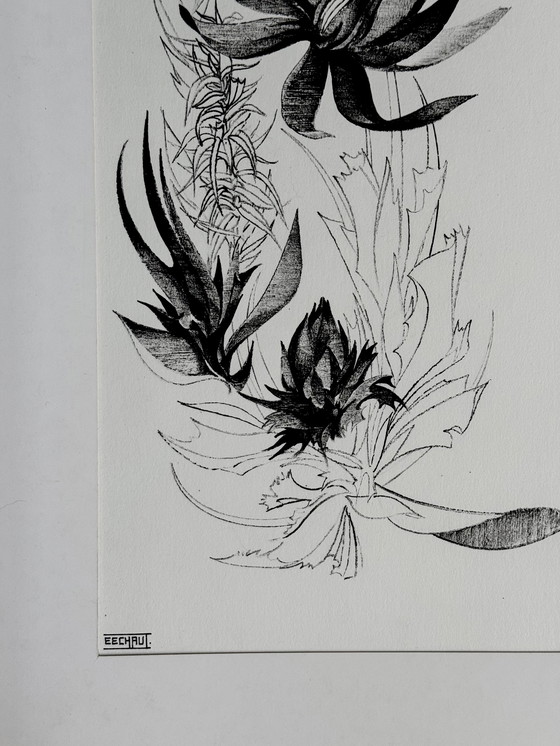
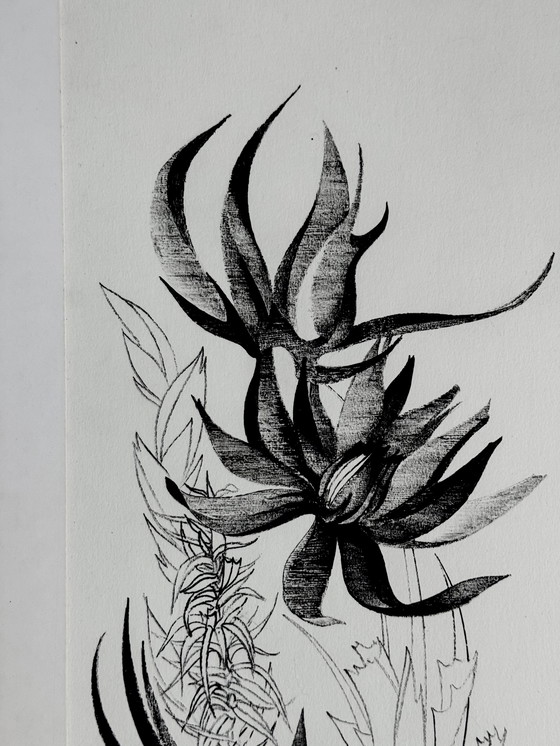
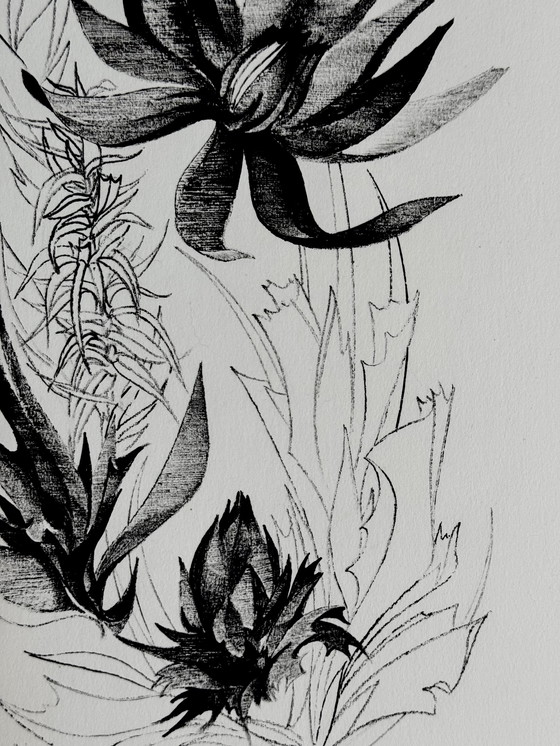
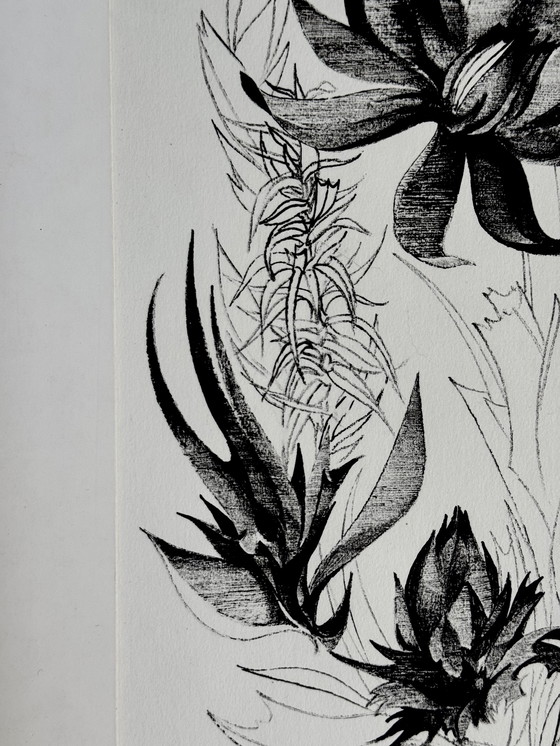
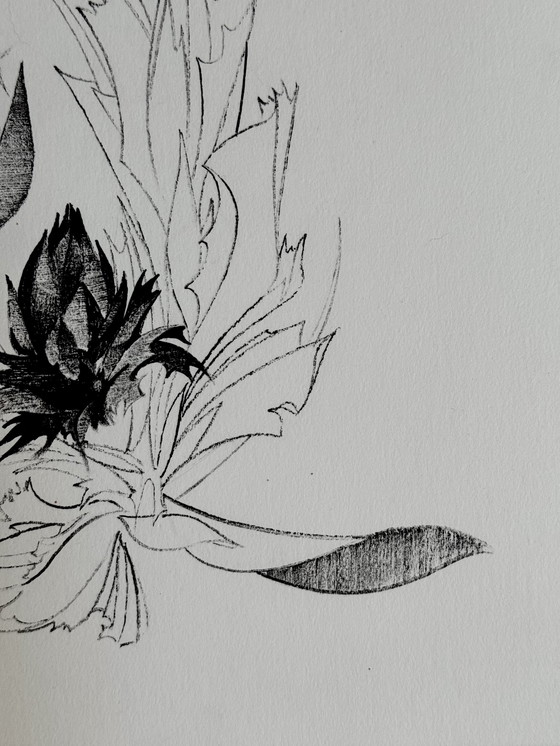
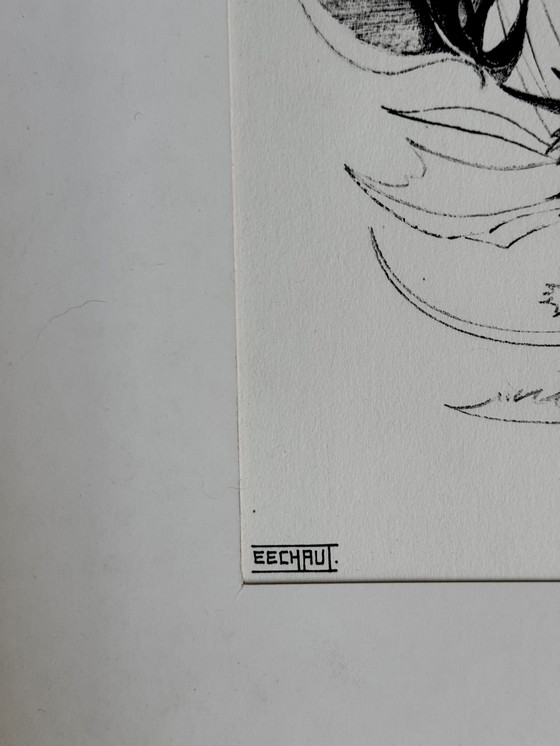
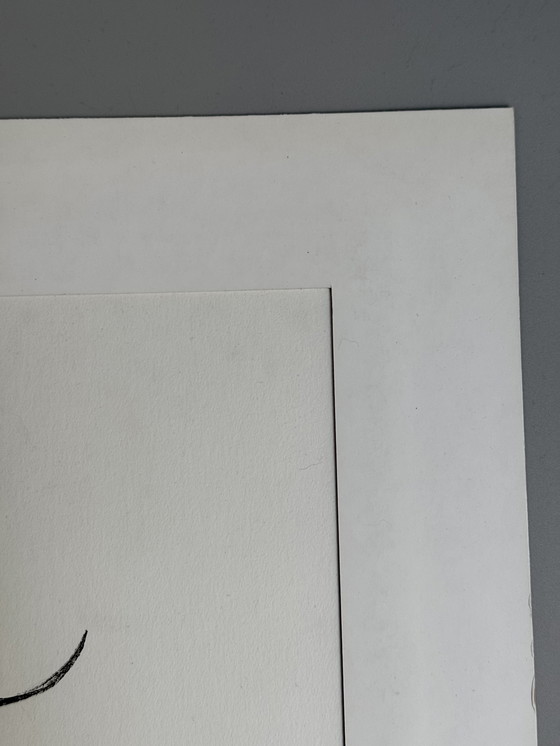
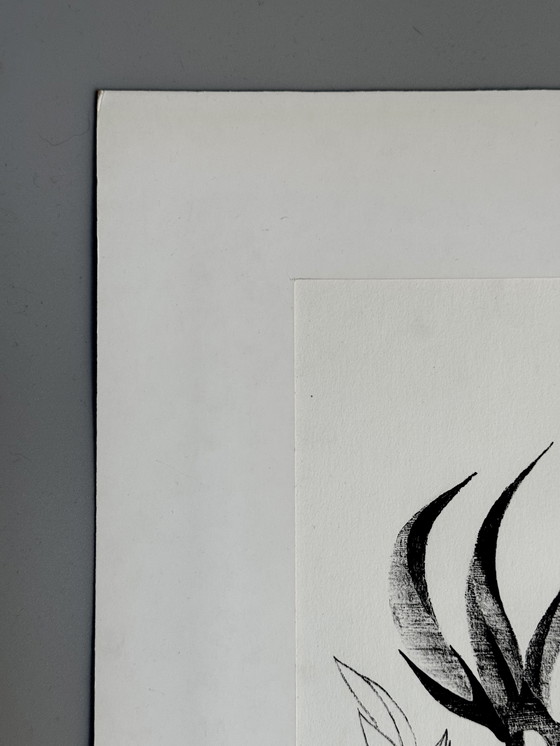
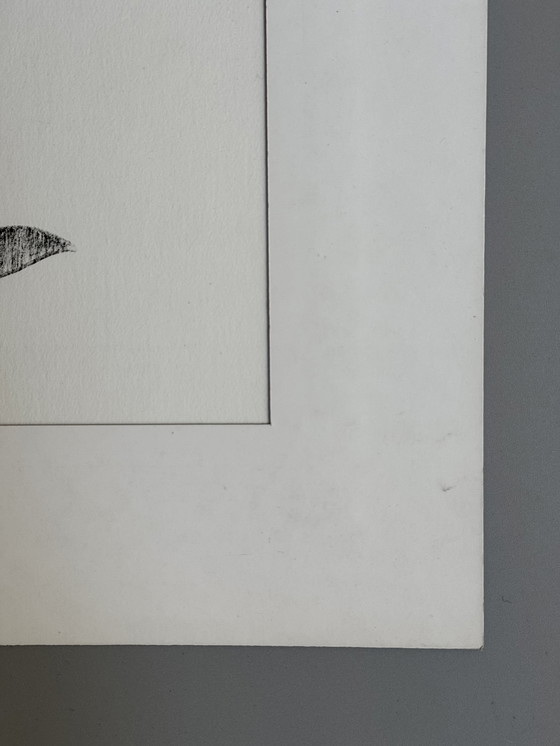
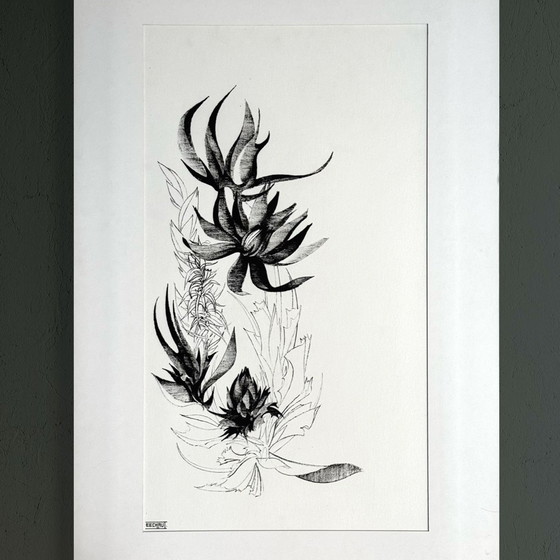
Eugene Eechaut (1928-2019) - Floral ink composition - 1970, signed
€80€72-10%Bid from €67
Buy with confidence
Shop & pay safely with Buyer ProtectionDesigner items curated by WhoppahWe only pay the seller once you have safely received the itemTrusted payment methods


About this seller
Private sellerBruxelles, BelgiumOn Whoppah since April 2024 • 96 sales
Product description
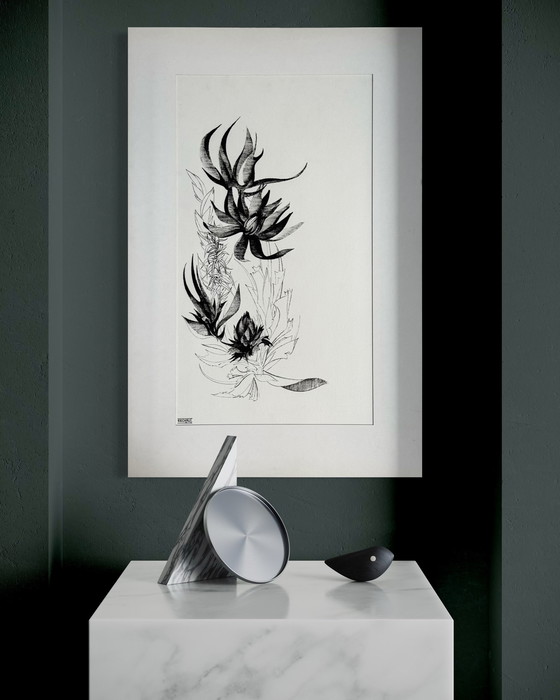
This ink on paper work by Eugène Eechaut, dated 1970, presents a vertical, semi-abstract composition built from organic, plant-like forms that shift between botanical imagery and surreal suggestion.
Confident, expressive lines alternate between dense black areas and lighter contours, creating rhythm and movement across the surface. The drawing reflects Eechaut’s affinity with Belgian surrealism and his interest in transformation and natural symbolism.
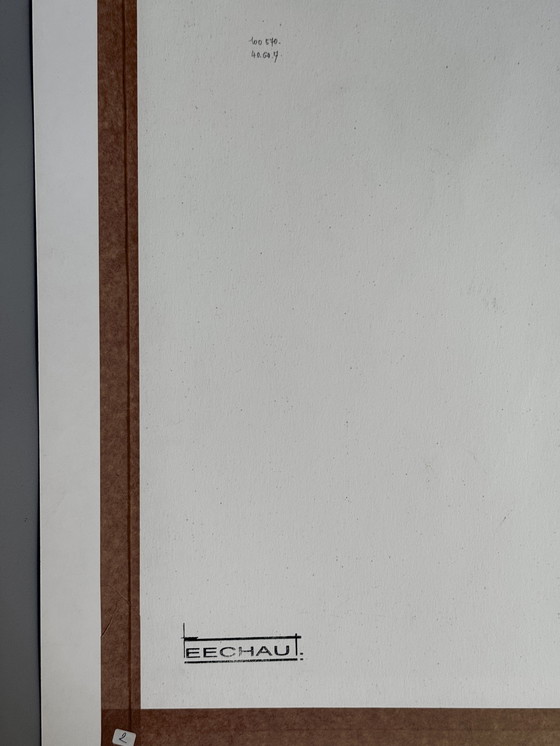
The work is signed by the artist and preserved in its original passe-partout made by Eechaut himself, reinforcing its authenticity. A refined example of his mature graphic language, it is both intimate and visually striking.
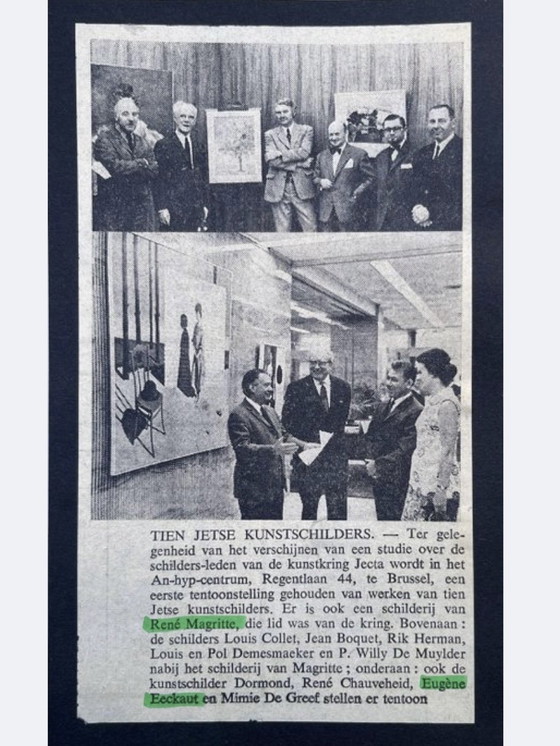
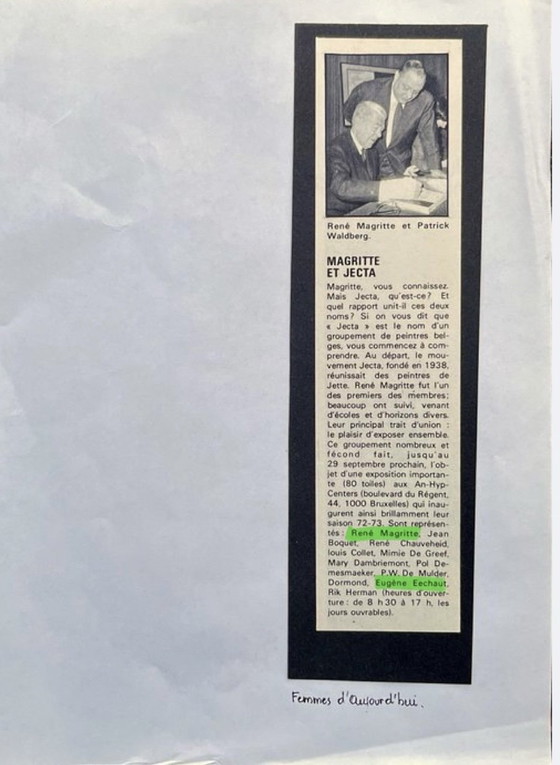
Eugène Eechaut (1928–2019) was a Belgian artist whose career evolved at the crossroads of imagination, technical discipline, and artistic dialogue. He began gaining recognition in 1958, when he received his first distinctions from the European Center for Art and Aesthetics. Early in his career, Eechaut became a member of the artist collective JECTA, an influential Belgian group that included René Magritte. His participation in this circle is confirmed by two surviving newspaper clippings documenting shared exhibitions and professional activity within the group.
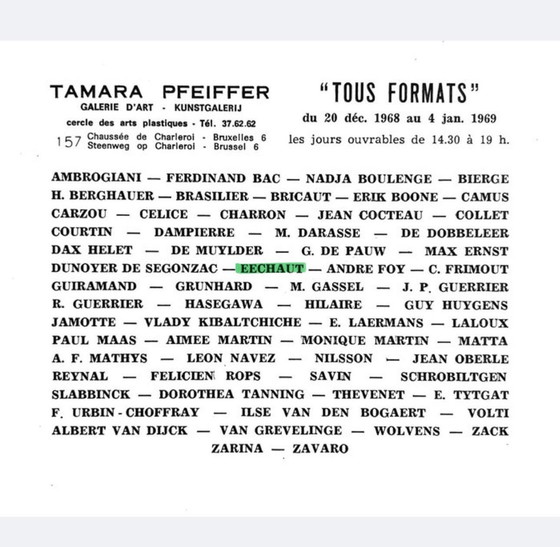
Since the 1960s, Eugène Eechaut became a regular participant in exhibitions at the Tamara Pfeiffer Gallery in Brussels, a venue internationally recognized for presenting leading figures of modern and avant-garde art. A preserved invitation card from the 1968–1969 exhibition season confirms that Eechaut exhibited in the same gallery alongside major artists such as Max Ernst, Jean Cocteau, Paul Klee, Dorothea Tanning, Léon Navez, Dunoyer de Segonzac, and Félix Labisse. These archival materials clearly demonstrate that Eechaut shared exhibition space with some of the most influential artists of the twentieth century.
Over the course of his artistic life, Eechaut developed several distinctive and recognizable artistic styles, rather than adhering to a single visual language. His work is characterized by evolving color palettes and a strong sense of structure, combining elegance with expressive freedom. He gradually refined and mastered ink techniques, achieving a high level of precision and control that became a defining element of his artistic identity.
Despite consistent exhibition activity and professional recognition, Eechaut remained notably discreet and protective of his work, rarely offering pieces for sale—even within his own family. This personal approach has contributed to the rarity of his works on the market today. Supported by archival documents, exhibition invitations, and press records, Eugène Eechaut’s legacy emerges as that of a disciplined and original artist, firmly embedded in the European art scene and in direct dialogue with some of its most celebrated figures.
Will be well packadged and protected
Specifications
ConditionGoodColorsBlack, WhiteMaterialPaperNumber of items1OrientationPortraitArt sizeMediumHeight59 cmWidth39 cm
Discover more
Seller information
About this seller
Private sellerBruxelles, BelgiumOn Whoppah since April 2024 • 96 sales