Have it delivered hassle-freeBuyer protectionAll Designer items curated by WhoppahDownload the Whoppah App – get alerts & sell with ease.
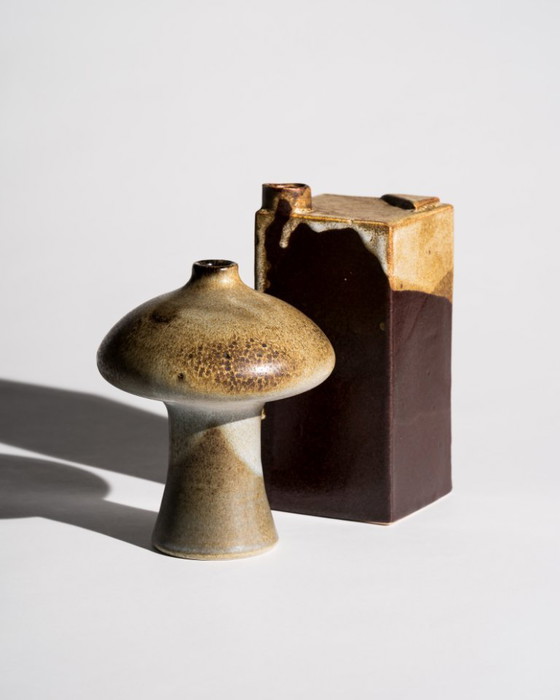
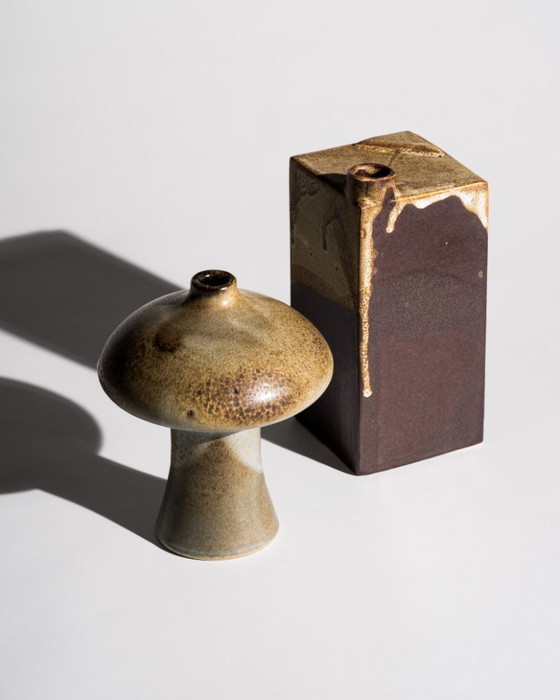
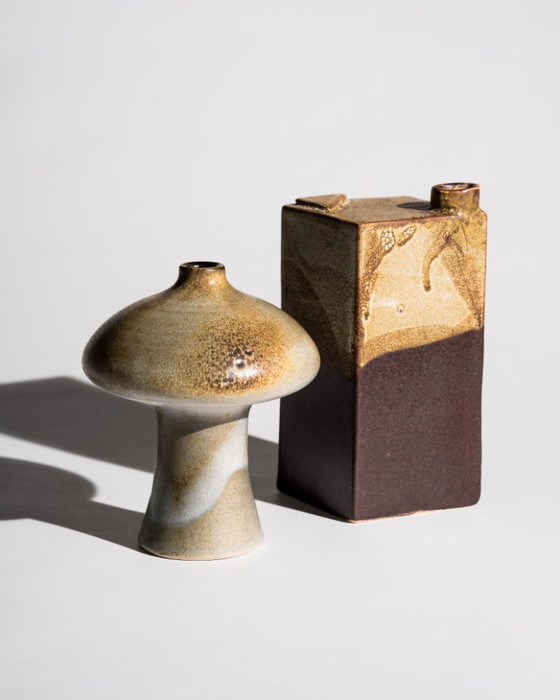
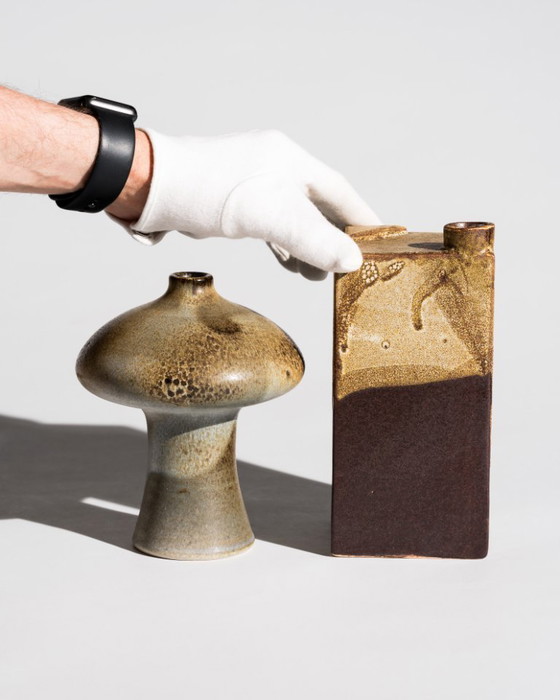
Curated Duo of German Studio Ceramic Sculpural Vessels Till Sudeck & Anonymous
€299Bid from €270
Buy with confidence
Shop & pay safely with Buyer ProtectionDesigner items curated by WhoppahWe only pay the seller once you have safely received the itemTrusted payment methods


About this seller
Private sellerBerlin, GermanyOn Whoppah since August 2023 • 28 sales
Product description
Curated Duo of German Studio Ceramic Vessels – Till Sudeck & Anonymous Sculptural Stoneware Vase, ca. 1960s–1970s
A highly atmospheric pairing of two sculptural studio ceramic vessels embodying the meditative restraint and material sensitivity of postwar German ceramic art. Though differing in geometry and temperament, the two works converse through their earthy glazes, architectural silhouettes, and quiet sculptural presence.
Together they evoke the aesthetic territory between Bauhaus reduction, Japanese ceramic philosophy, and the organic modernism that profoundly shaped German studio pottery after the Second World War.
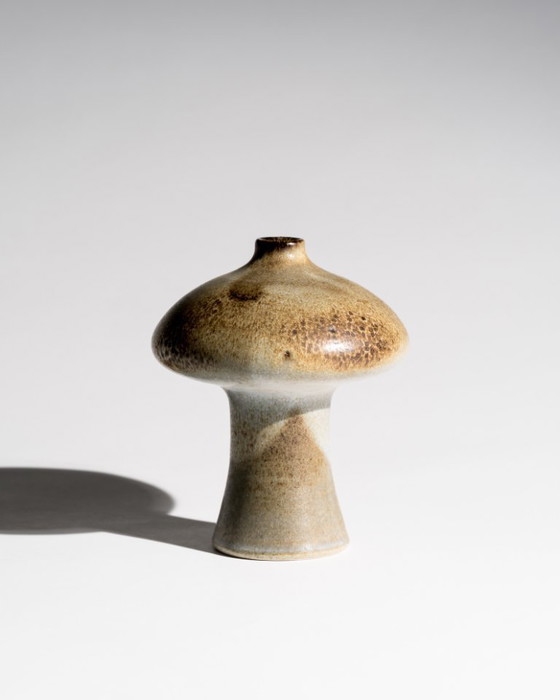
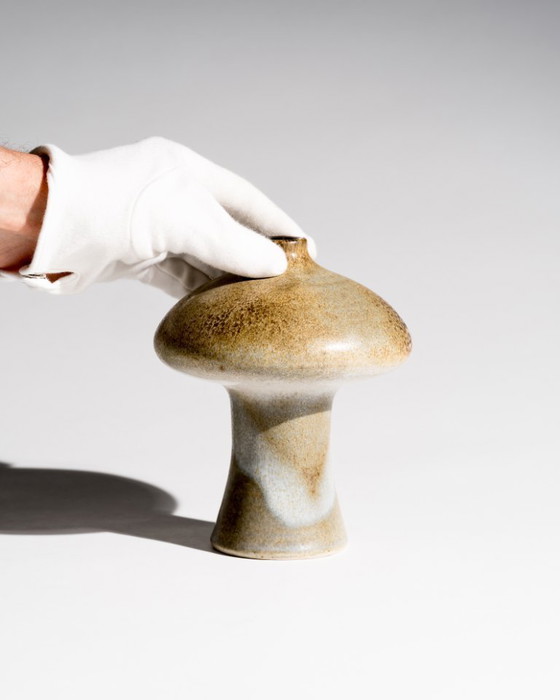
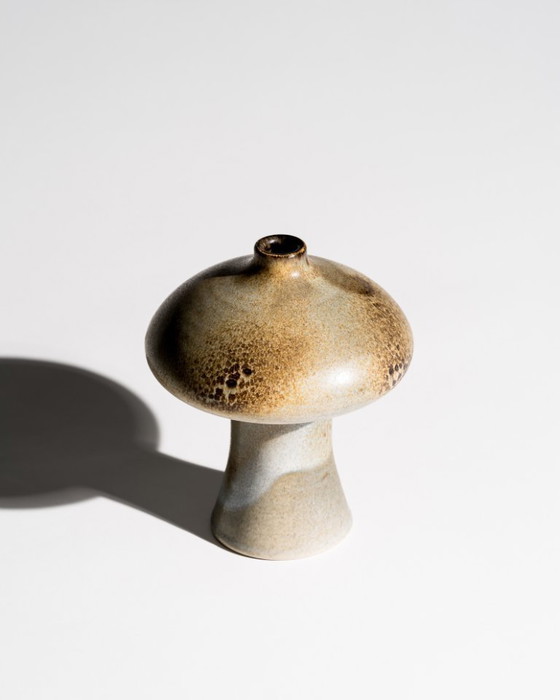
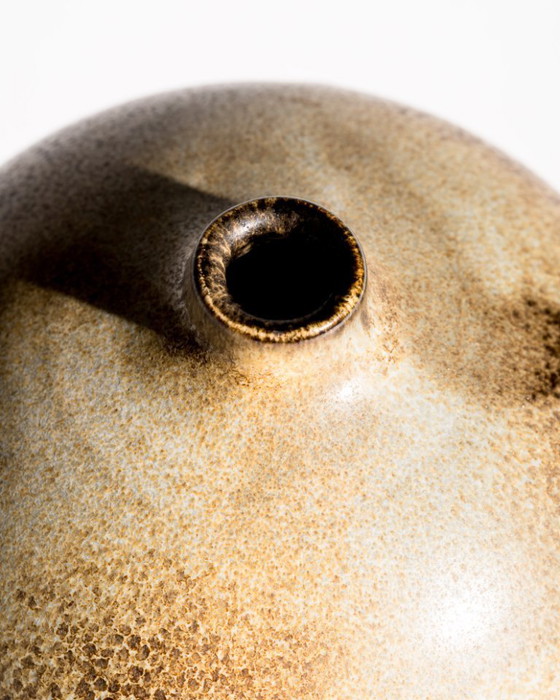
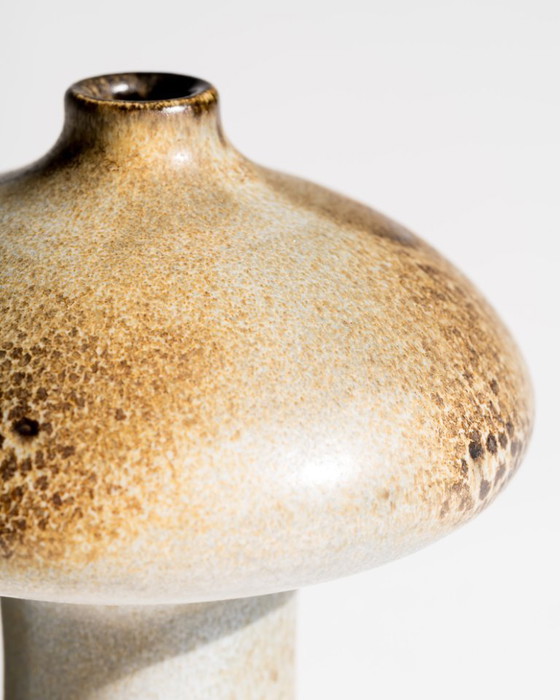
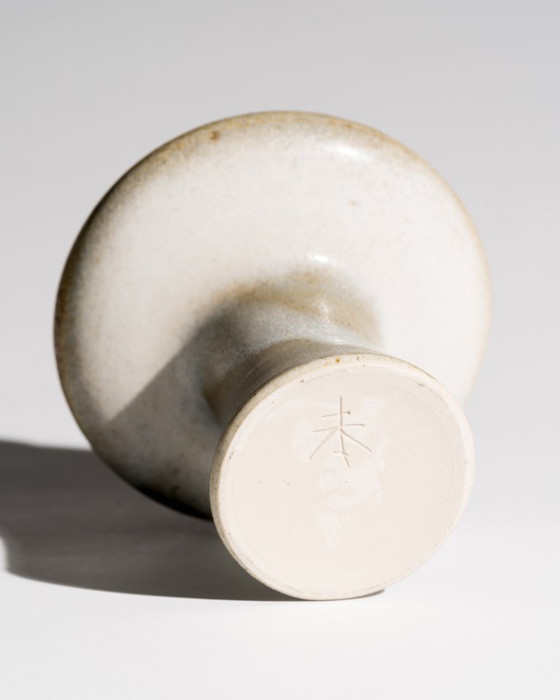
The first vessel, attributed to German ceramic artist Till Sudeck, is an exceptional example of his dialogue between Eastern ceramic traditions and European modernism. Its flattened domed form — somewhere between mushroom, pagoda, and ritual object — rises delicately from a narrow pedestal base. The softly cratered glaze transitions between warm beige, olive-grey, umber, and smoky brown, creating a volcanic surface rich in depth and subtle tonal movement.
Till Sudeck (born 1926 in Aumühle) occupies a fascinating position within postwar German ceramics. After studying psychology and Sinology in Paris between 1958 and 1962, he became deeply influenced by Japanese ceramics and Zen Buddhism. This philosophical engagement led him toward pottery itself, later studying form and glaze technology under Jan Bontjes van Beek at the Hochschule für Bildende Künste Hamburg. Sudeck’s works often reject decorative excess in favor of concentration, silence, and balance — qualities deeply present in this piece.
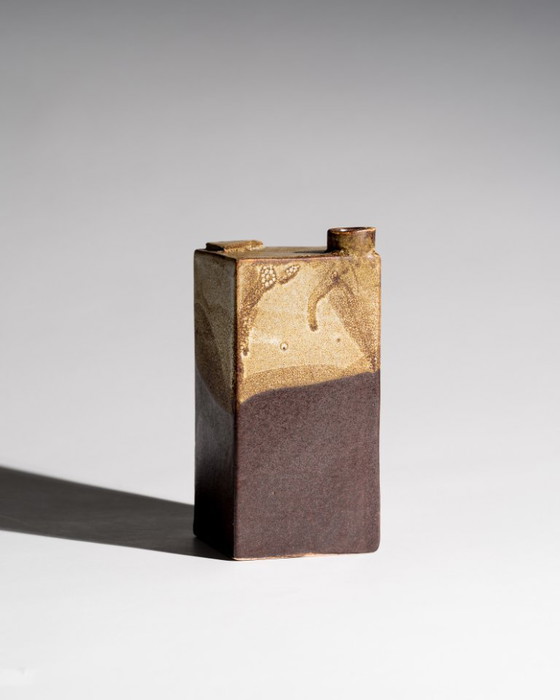
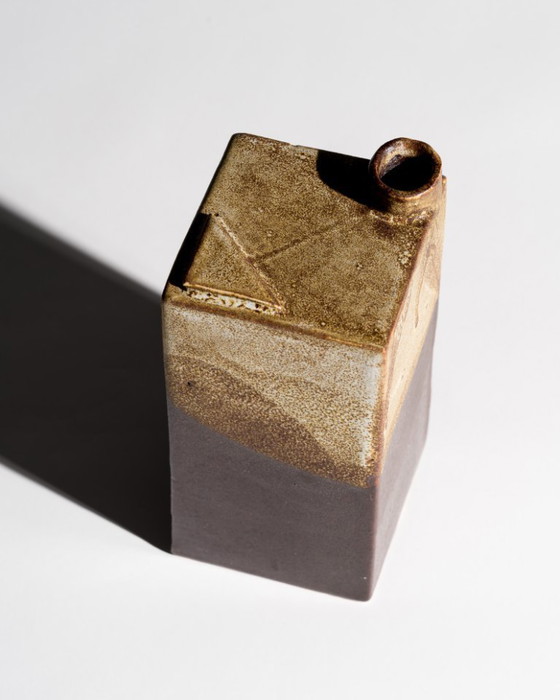
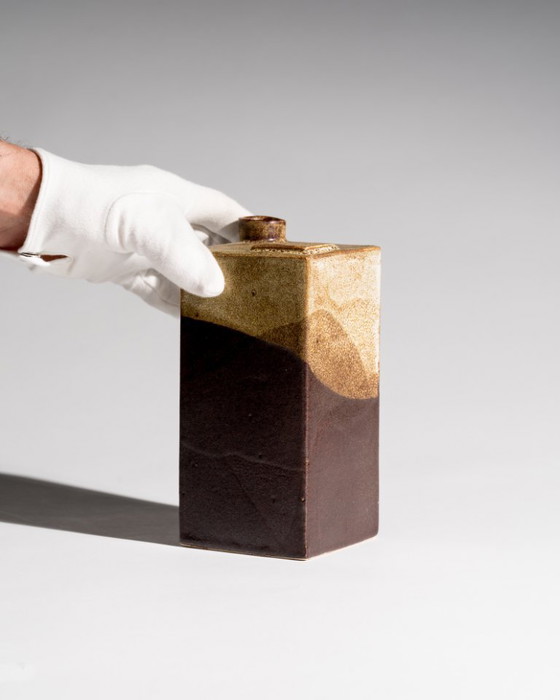
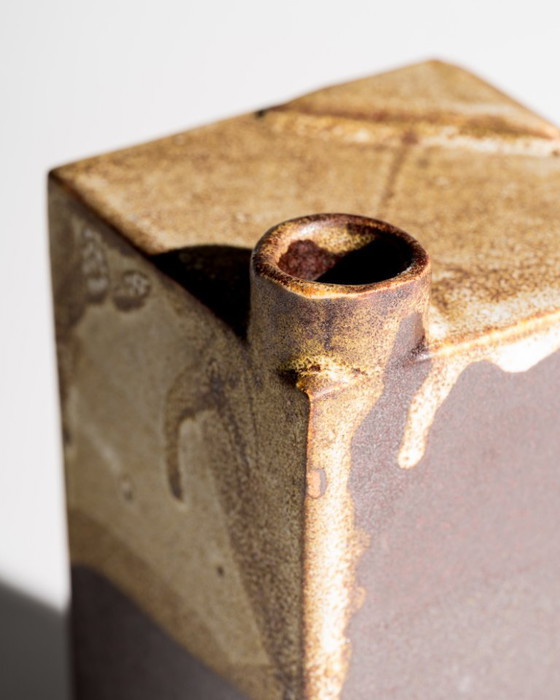
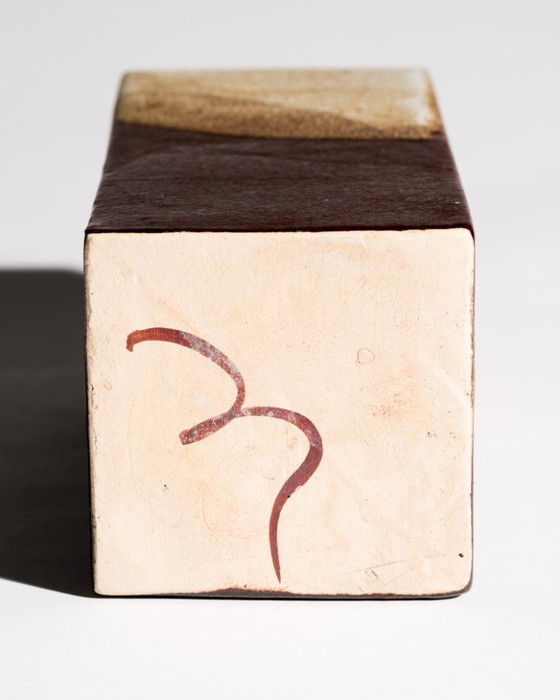
The second vase introduces a more architectural and almost brutalist counterpoint. Executed in rectangular form with asymmetrical shoulder planes and a sharply positioned cylindrical neck, the vessel resembles a miniature modernist building or abstract monolith. Its matte brown body is interrupted by flowing beige and ochre glaze fields descending organically over the geometric structure, softening the austerity of the form with kiln-driven spontaneity.
The dialogue between the two objects is unusually successful: one rounded and contemplative, the other angular and structural. Together they create a composition reminiscent of modernist architecture placed beside naturally eroded stone formations — disciplined yet deeply tactile.
Details
Mushroom-Form Vase
Designer: Till Sudeck
Origin: Germany
Period: ca. 1960s–1970s
Material: Ceramic / Stoneware
Colors: Beige, brown, olive-grey
Finish: Satin / softly textured glaze
Dimensions
Height: 16.5 cm
Width: 13.5 cm
Depth: 13.5 cm
Architectural Rectangular Vase
Designer: Unknown
Origin: Likely Germany or Northern Europe
Period: ca. 1960s–1970s
Material: Ceramic / Stoneware
Colors: Brown, beige, ochre
Finish: Matte with flowing glaze effects
Dimensions
Height: 19 cm
Width: 8 cm
Depth: 8.5 cm
Condition
Both pieces remain in very good vintage condition with minor traces of age and use consistent with studio ceramic production. No major damages or restorations observed.
An exceptionally refined pairing for collectors of:
– German studio ceramics
– Scandinavian and Japanese-influenced modernism
– Wabi-sabi interiors
– Brutalist and architectural decorative arts
– Mid-century ceramic sculpture
This duo functions not merely as decorative pottery, but as a small sculptural landscape — a conversation between geometry and erosion, structure and meditation, surface and silence.
GENERAL INFORMATION
Please explore our profile for more vintage vases!
International buyers: import duties or taxes, if applicable, are the buyer’s responsibility.
All items are photographed and described with care. Vintage pieces may show minimal traces of age; any significant flaws will be clearly mentioned.
Private sale under law: no returns, refunds, or warranties.
Specifications
ConditionVery goodColorsBeige, Brown, Creme, Green, Multi ColorMaterialCeramicNumber of items2Height19 cmWidth8 cmDepth8 cm
Discover more
Seller information
About this seller
Private sellerBerlin, GermanyOn Whoppah since August 2023 • 28 sales