Have it delivered hassle-freeBuyer protectionAll Designer items curated by WhoppahDownload the Whoppah App – get alerts & sell with ease.
Have it delivered hassle-free
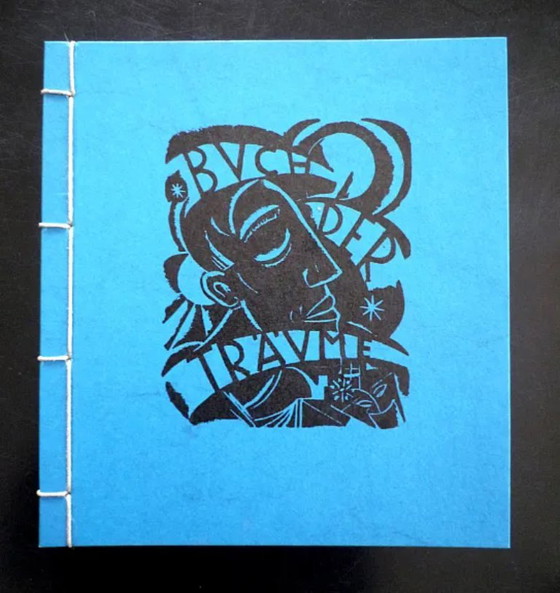
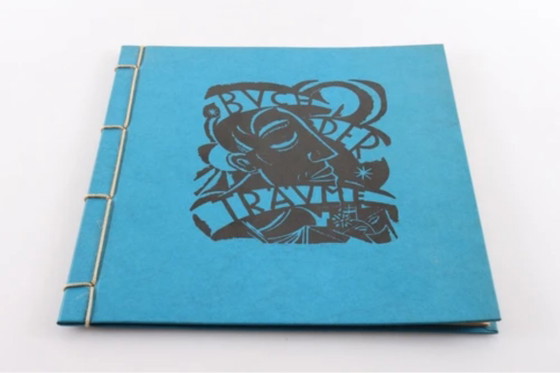
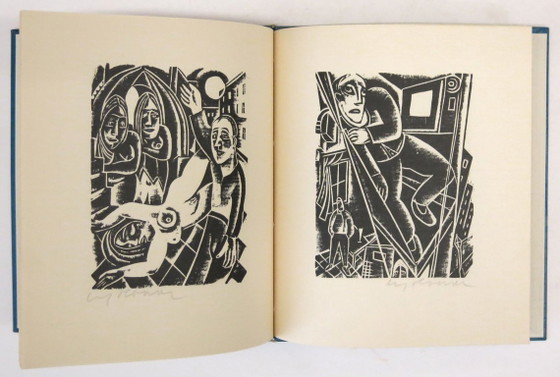
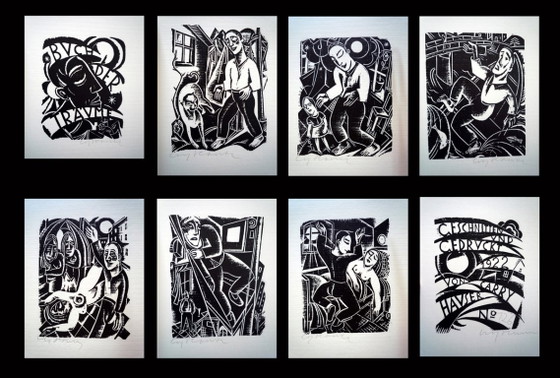
CARRY HAUSER - BOOK OF DREAMS - 8 hand-signed woodcuts
€250Bid from €150
Buy with confidence
Shop & pay safely with Buyer ProtectionDesigner items curated by WhoppahWe only pay the seller once you have safely received the itemTrusted payment methods


About this seller
Private sellerProduct description
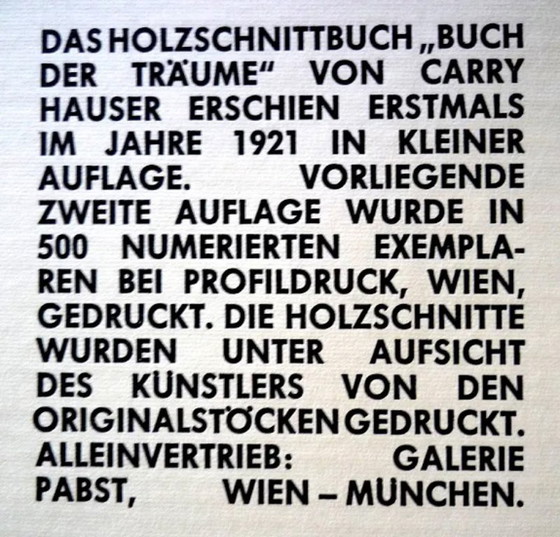
Carry Hauser (1895-1985) Book of Dreams (undated, ca. 1975), 5 leaves in block book binding with 8 hand-signed original woodcuts, cord binding, one of 500 numbered copies of the 2nd edition. The first edition was published in 1921/1922 in a small print run. The woodcuts in this edition were printed from the original woodblocks under the artist's supervision. Dimensions: 22.5 x 20.5 cm. Condition: Very good, several copies available.
_________________________________________
Carry Hauser (born February 16, 1895, in Vienna; died October 28, 1985, in Rekawinkel; also Carl Maria Hauser) was an Austrian painter, stage designer, and poet. Carry Hauser came from a Viennese civil servant family. He attended the Schottengymnasium (a secondary school) and the Graphic Arts Training and Research Institute. He then studied at the Vienna School of Applied Arts, under the tutelage of Adolf Michael Boehm, Anton von Kenner, Alfred Roller, and Oskar Strnad, among others. Afterwards, he embarked on a career as a painter, graphic artist, stage designer, and writer, which was initially interrupted by his participation in the First World War, for which he volunteered in 1914. His wartime experiences, however, transformed him into a pacifist. After the war, he returned to Vienna and met, among others, Franz Theodor Csokor, for whose play *Die rote Straße* (The Red Street) he designed the stage set in 1918. That same year, his first group exhibition was held at the museum in Troppau (Opava), and Arthur Roessler arranged his first major solo exhibition. However, his early works could not be included in these exhibitions due to losses incurred during and after the war. In 1919, he gained further recognition with his portfolio *Die Insel* (The Island). From 1919 to 1922, Hauser was a leading figure in the artists' group Freie Bewegung (Free Movement) and also belonged to the artists' collective Der Fels (The Rock), living for a time in Passau. From 1925 to 1938, he was a member of the Hagenbund, serving as its president in 1927/28. He championed the theater through the Vienna Theater Guild, where he was vice president. In the 1930s, during the era of the corporatist state, he was active in the Fatherland Front. Due to his political views, Hauser was banned from practicing his profession and exhibiting his work by the National Socialists in 1938 after the annexation of Austria. He was unable to accept a professorship at the Melbourne School of Art in 1939 due to the outbreak of World War II. His wife, Gertrud Herzog-Hauser (June 15, 1894, Vienna – October 9, 1953, Vienna), whom he had married in 1922, was forced to emigrate to the Netherlands because of her Jewish heritage, where she survived until 1946. Hauser himself went into exile in Switzerland, where he wrote *A Story of the Prodigal Son* (published privately in 1945) in 1941, the novel *Between Yesterday and Tomorrow* in 1945, and the fairy tale *Painter, Death, and the Virgin* in 1946. In 1947, Hauser returned to Vienna with his wife and participated in the reconstruction efforts. In 1952, he became General Secretary, and later, until 1972, Vice President of the Austrian PEN Club. He was also a member of the executive committee of the Action Against Antisemitism and involved in the re-establishment of the Professional Association of Visual Artists of Austria, of which he later became Vice President. His honorary grave is located in the Hietzing Cemetery (Group 67, Row 11, No. 12). His wide-ranging oeuvre as a portrait, genre, history, and landscape painter, as well as a graphic artist, is represented in the collections of the Wien Museum, the Albertina, and the Belvedere. His work as a stage designer included projects for the Burgtheater, and he created numerous book designs and illustrations. While his earlier works were related to those of George Grosz, Otto Dix, and Ludwig Meidner, he developed his own style in the late 1920s, characterized by New Objectivity and Expressionist elements. His works include "The Kiss of Judas," an oil painting from 1923; a Lenten image in the church of Albrechtsberg near Krems; frescoes at the Simplon Pass; mosaics in the Theresienbad in Vienna (1964); and a Pietà in the church of Am Schöpfwerk (circa 1980).
Specifications
ConditionVery goodColorsBlueMaterialPaperNumber of items1OrientationLandscapeArt sizeSmallHeight21 cmWidth22 cm
Discover more
Seller information
About this seller
Private sellerWien, AustriaOn Whoppah since April 2025 • 1 sale