Have it delivered hassle-freeBuyer protectionAll Designer items curated by WhoppahDownload the Whoppah App – get alerts & sell with ease.
Have it delivered hassle-free
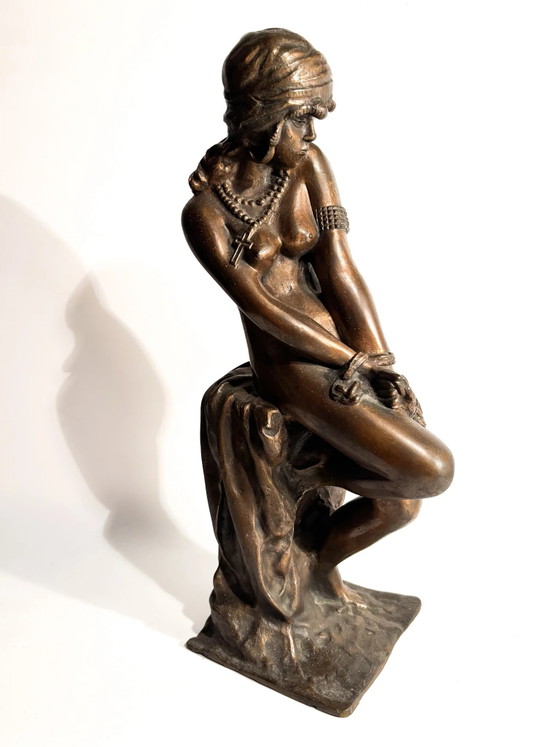
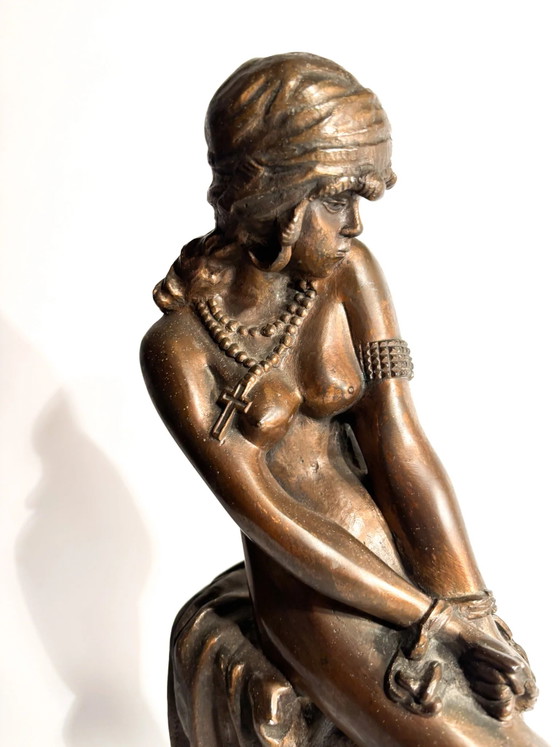
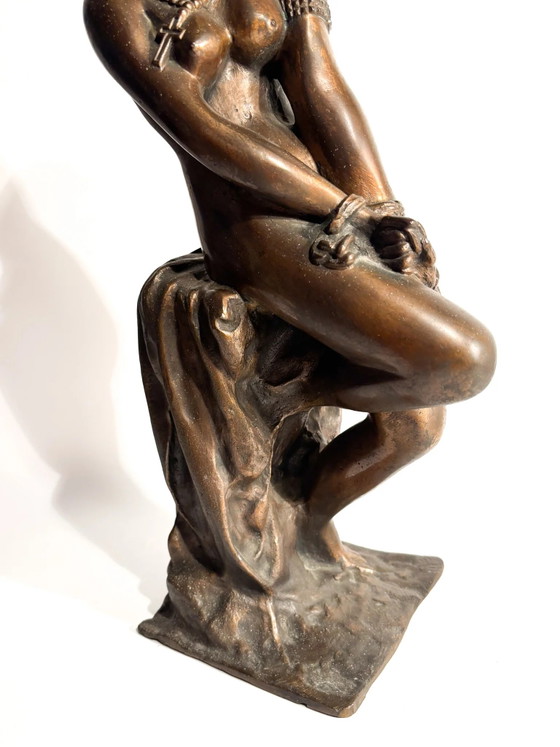
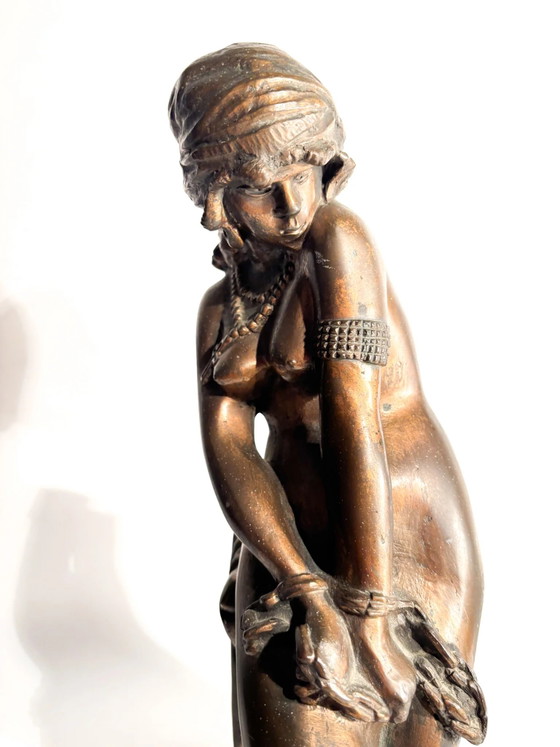
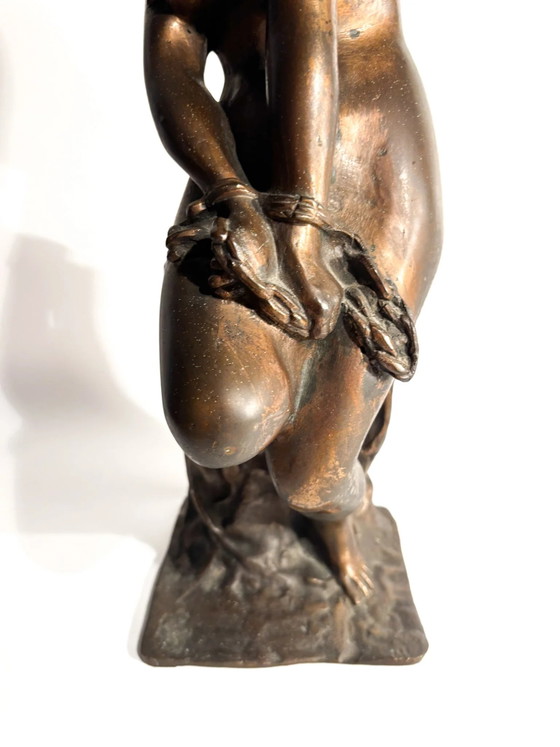
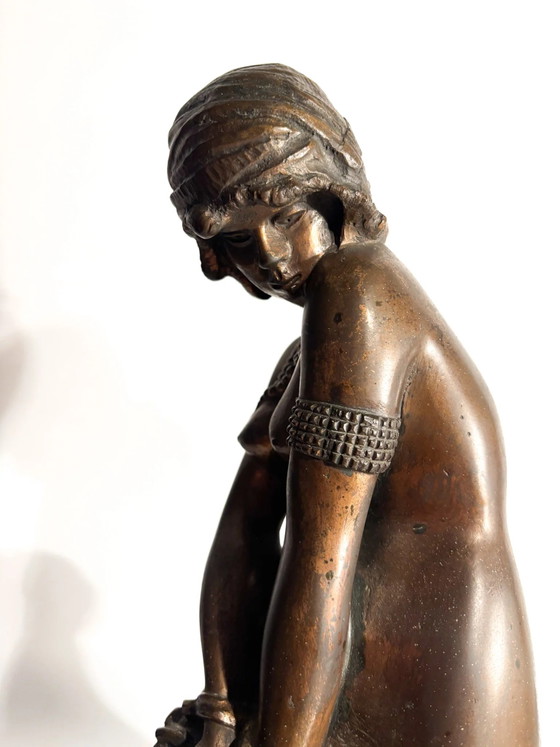
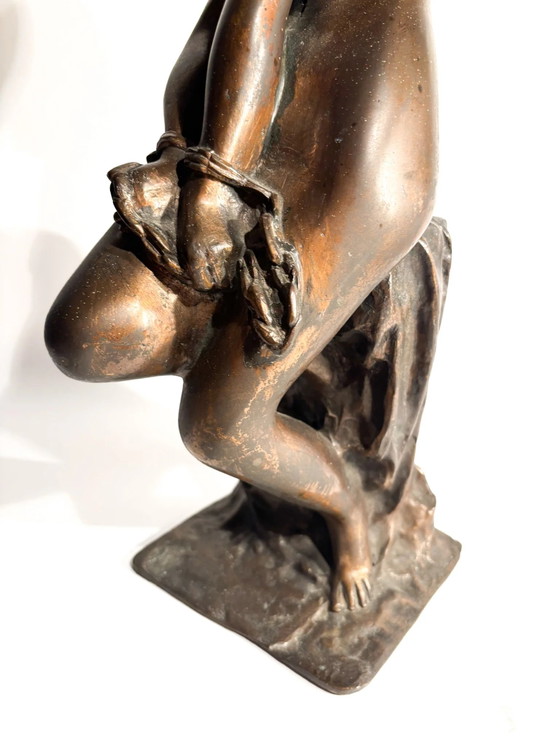
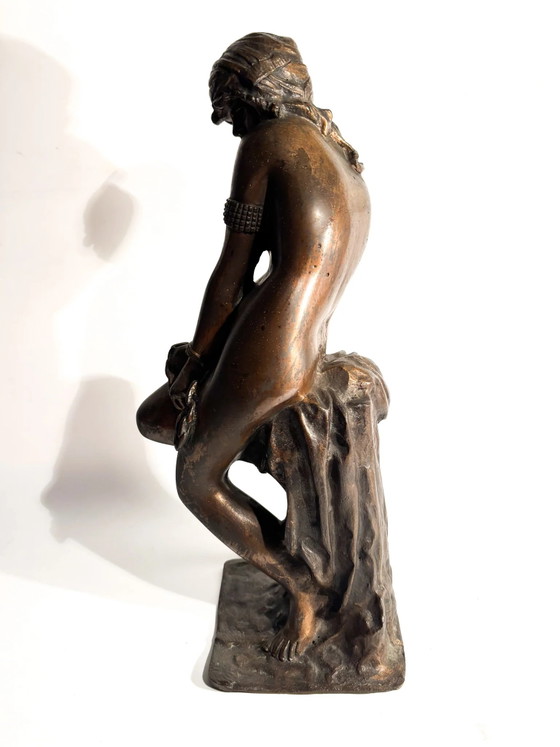
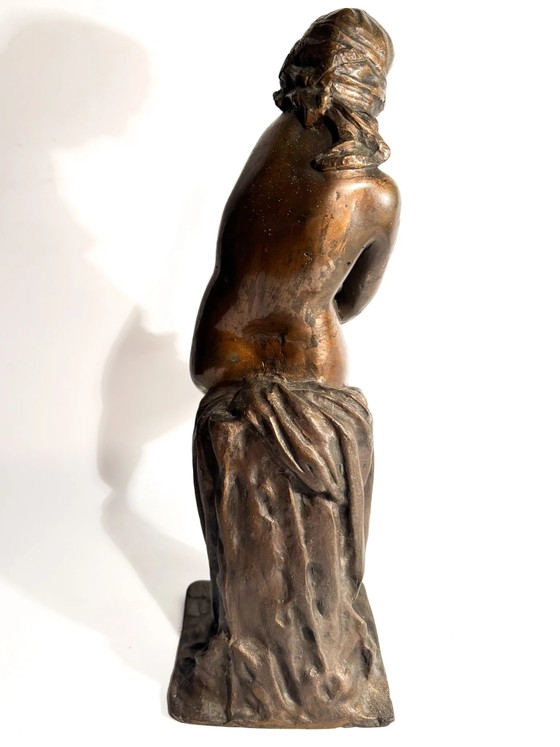
Bronze Sculpture "The Slave" Attributed to Giacomo Ginotti 19th Century
€950Bid from €855
Buy with confidence
Shop & pay safely with Buyer ProtectionDesigner items curated by WhoppahWe only pay the seller once you have safely received the itemTrusted payment methods


About this seller
ProfessionalProduct description
Bronze sculpture "The Slave", whose creation is attributed to Giacomo Ginotti in the 1800s. Diameter 15 cm, Diameter 20 cm, Height 44 cm. Giacomo Ginotti ( ) was an important 19th-century Italian sculptor, known for his works in marble and bronze, often characterized by pictorial realism and a sensual style. Born in Brugaro di Cravagliana, Vercelli, on December 5, 1845, Ginotti initially studied at the Scuola Barolo in Varallo before attending the Accademia Albertina in Turin from 1865 to 1869. There, he was a pupil of distinguished sculptors such as Giovanni Giuseppe Albertoni, Odoardo Tabacchi, and Vincenzo Vela, who influenced his artistic development. In 1869, Ginotti moved to Rome, where he opened a studio and perfected his technique. He achieved considerable success with his work "La Schiava" (The Slave), first exhibited at the National Exhibition of Naples in 1877. This sensual marble sculpture depicting a slave breaking her chains was highly acclaimed and purchased by King Victor Emmanuel II for a new gallery of modern art at the Museum of the Royal Palace of Capodimonte in Naples. "La Schiava" also earned him a gold medal at the 1878 Paris Universal Exhibition, where critics praised his mastery in rendering marble with a fleshy texture. Another notable work by Ginotti is "La Pétroleuse vinta" (The Vanquished Pétroleuse), a bust inspired by the women involved in the Paris Commune of 1871. A bronze version of this work, created in 1887, was recently acquired by the Musée d'Orsay in Paris. Ginotti returned to Turin in 1886, where he was appointed professor at the Accademia Albertina. He also created monumental works, including a fountain for the courtyard of Palazzo Martini e Rossi and the monument to Carlo Nicola di Robilant in Turin.
Additional details:
- Brand: Giacomo Ginotti
- Designer: Giacomo Ginotti
- Style: Realismo pittorico
- Style: Stile sensuale
- Period: XIX Secolo
Specifications
ConditionGoodMaterialBronze
Discover more
Seller information
About this seller
ProfessionalMilano, ItalyOn Whoppah since July 2026 • 0 sales