Have it delivered hassle-freeBuyer protectionAll Designer items curated by WhoppahDownload the Whoppah App – get alerts & sell with ease.
Have it delivered hassle-free
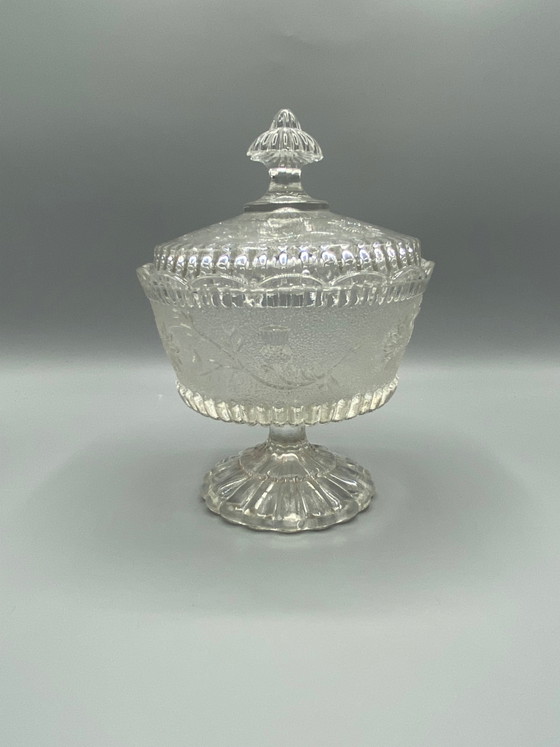
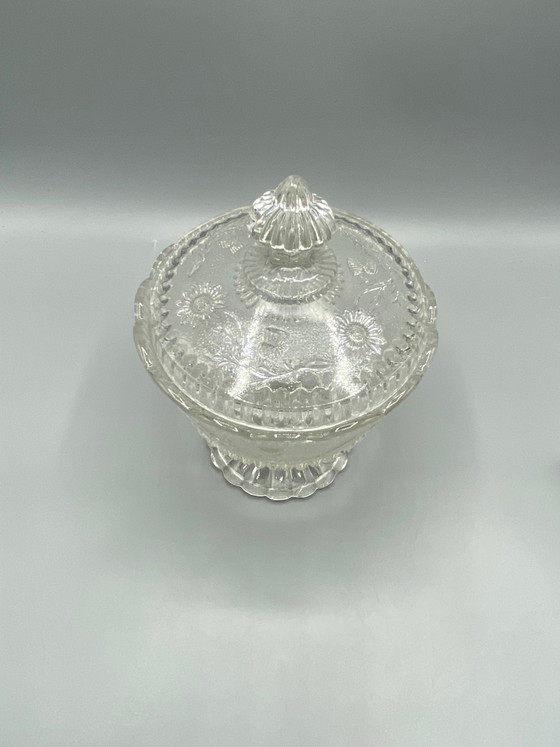
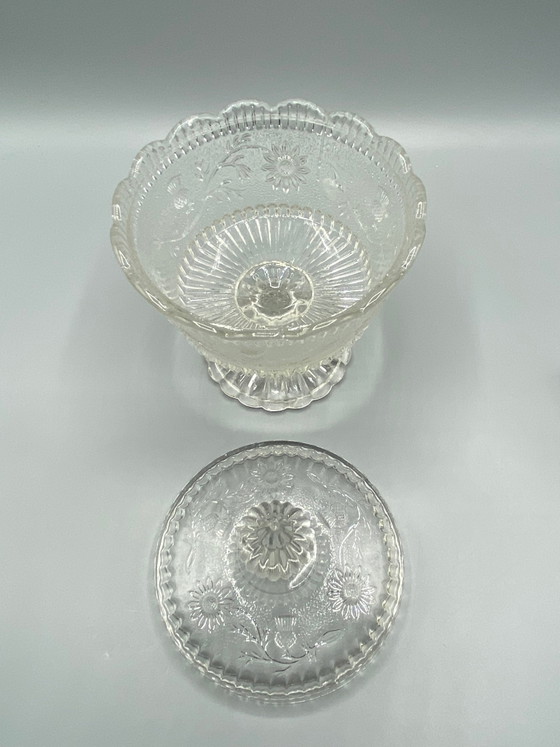
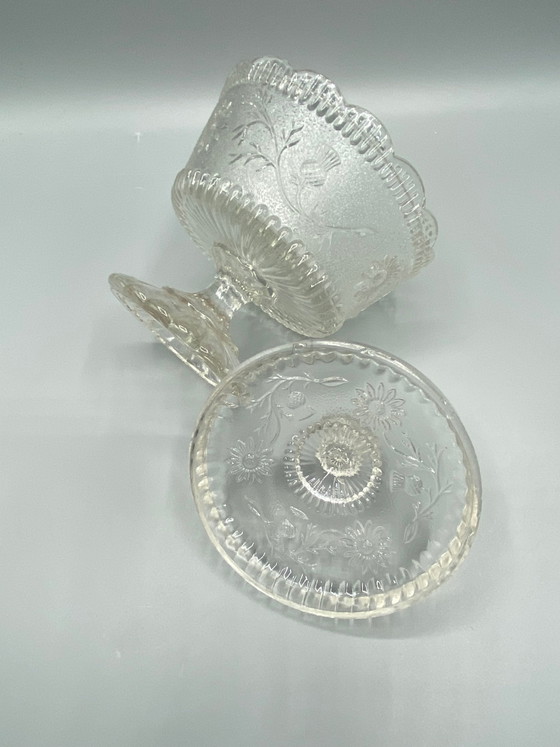
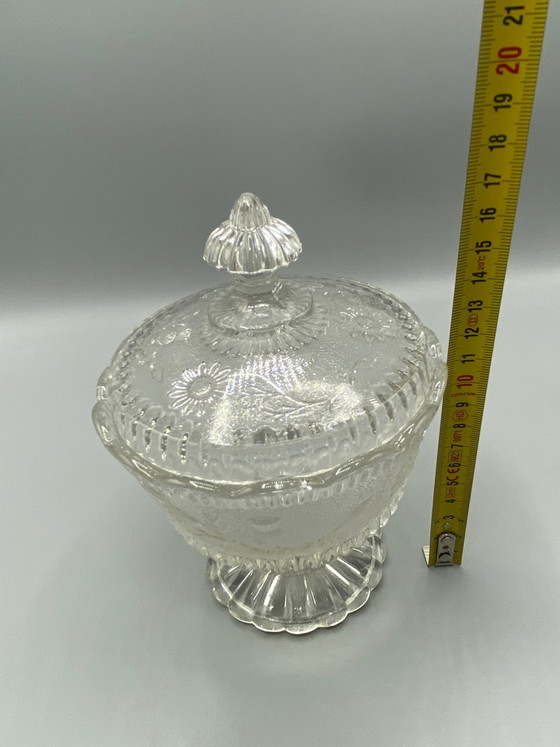
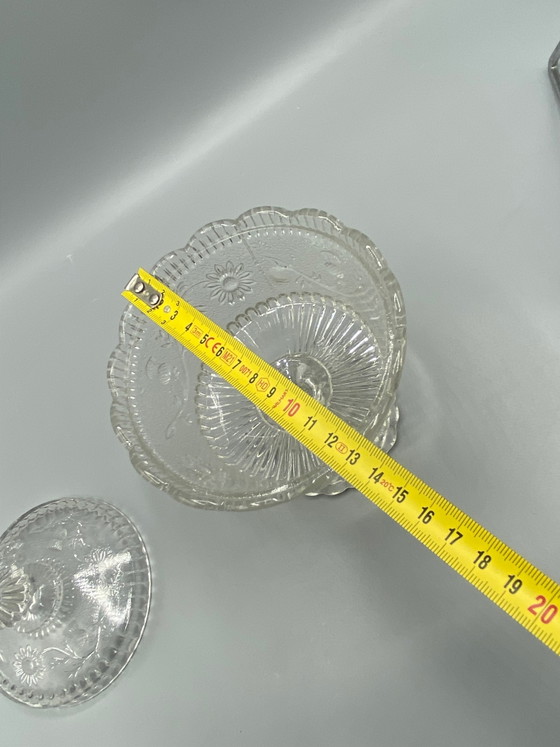
Art Deco Molded Glass Sweet Dish – Portieux Style – circa 1930
€87Bid from €78.30
Buy with confidence
Shop & pay safely with Buyer ProtectionDesigner items curated by WhoppahWe only pay the seller once you have safely received the itemTrusted payment methods


About this seller
ProfessionalProduct description
The 1930s saw glass take on a new prominence on French tables. Molded, pressed, and worked in relief, it captures the light and allowed glassworks to create generously adorned pieces, accessible to a new art of living without sacrificing elegance. This superb pressed-molded glass drageoir fully embodies that expression. Standing on a pedestal base with radiating lines, it displays a rich decoration of large flowers, foliage, and stems molded into the material. The transparent glass alternates smooth surfaces with finely textured backgrounds, giving the patterns a particularly captivating depth. The scalloped edge adds movement to the dish while the lid, entirely decorated in the same spirit, rises to a tall ribbed finial. The piece has a balanced, almost architectural silhouette, where the floral abundance meets the geometric precision characteristic of Art Deco. Its design is in keeping with the taste of productions from the great French glassworks of the East, notably Portieux, whose 1930s catalogs feature sumptuous molded glass drageoirs. The famous Renaissance model, documented in the 1933 Portieux catalog, particularly testifies to this fashion for pedestal pieces with abundantly worked floral decorations. The drageoir then held a prominent place on the table or in the living room. Sugared almonds, candied fruits, chocolates, and other sweets were presented to guests there, under a lid that made their discovery a small ceremony. This one has retained that presence. The daisies appear in the transparent glass, the reliefs become more defined as light passes through the glass, and the base projects its fan-like lines around it. A beautiful French table object in the spirit of Art Deco glassworks of the 1930s, to be rediscovered today as a candy box, drageoir, or simply for the beauty of its worked glass. Transparent pressed-molded glass. Height approximately 16 cm. Diameter approximately 14 cm. Art Deco period, circa .
Additional details:
- Brand: 20eSiecle
- Period: vers
Specifications
ConditionGoodColorsTransparentMaterialGlassStyleArt Deco
Discover more
Seller information
About this seller
ProfessionalSaint symphorien des bois, FranceOn Whoppah since August 2026 • 1 sale