Have it delivered hassle-freeBuyer protectionAll Designer items curated by WhoppahDownload the Whoppah App – get alerts & sell with ease.
Have it delivered hassle-free
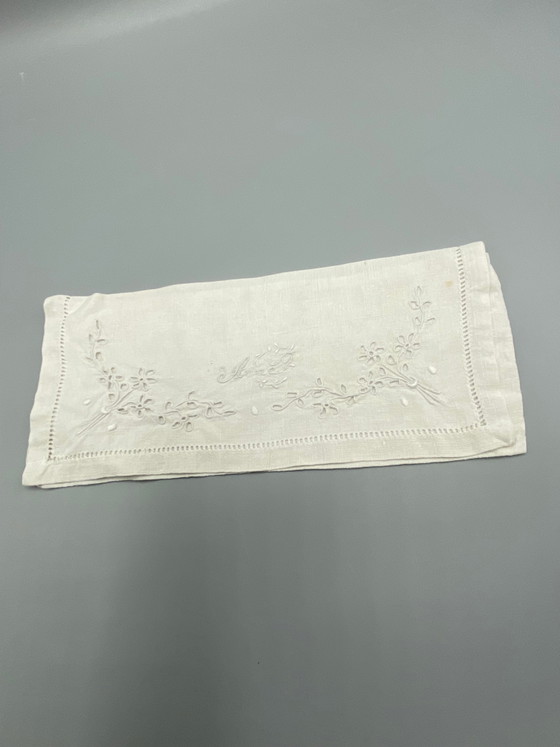
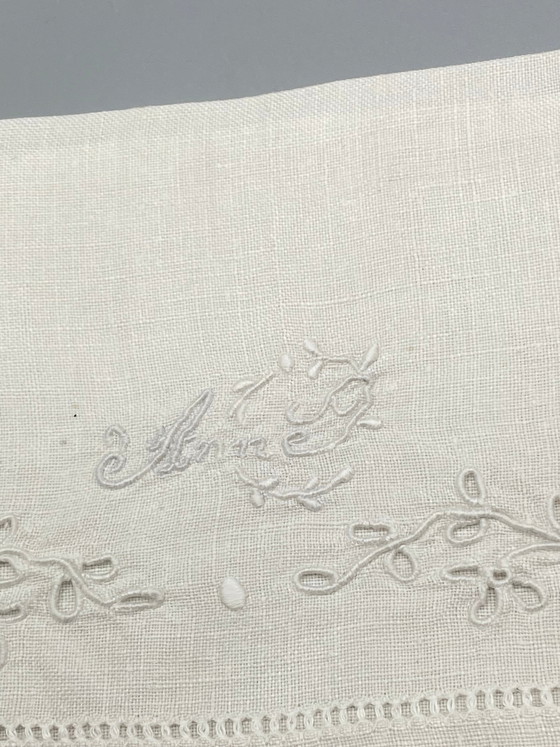
Antique towel holder embroidered "Anne" – trousseau linen circa
€35Bid from €31.50
Buy with confidence
Shop & pay safely with Buyer ProtectionDesigner items curated by WhoppahWe only pay the seller once you have safely received the itemTrusted payment methods


About this seller
ProfessionalProduct description
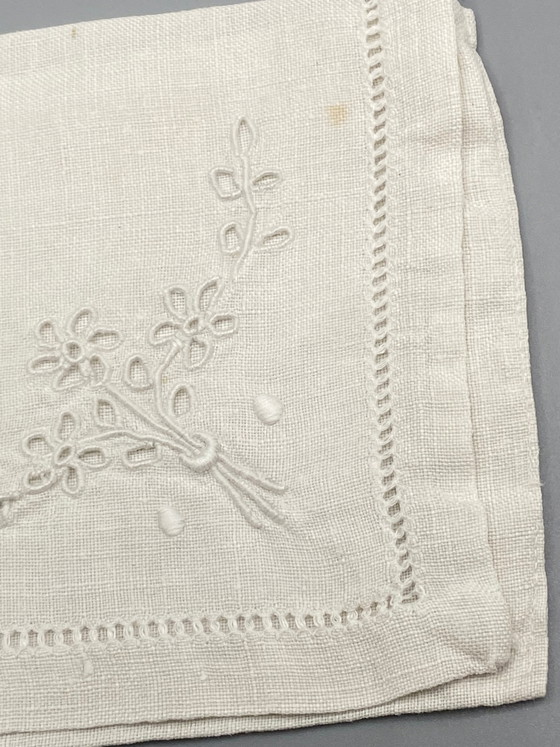
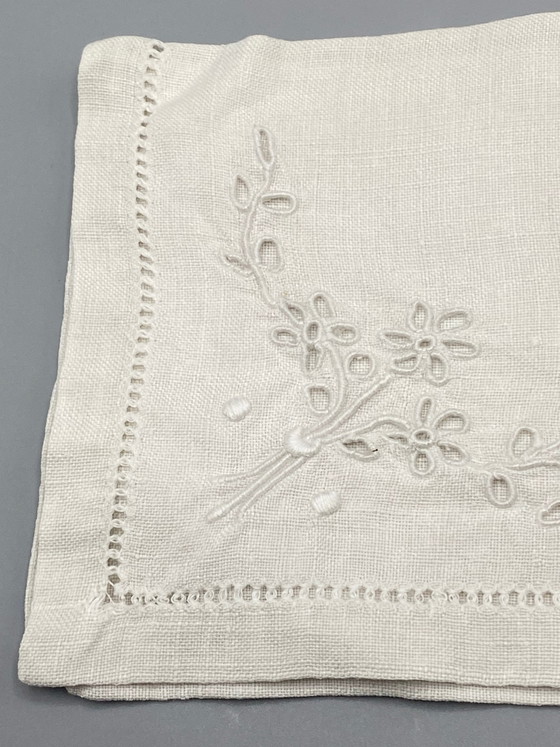
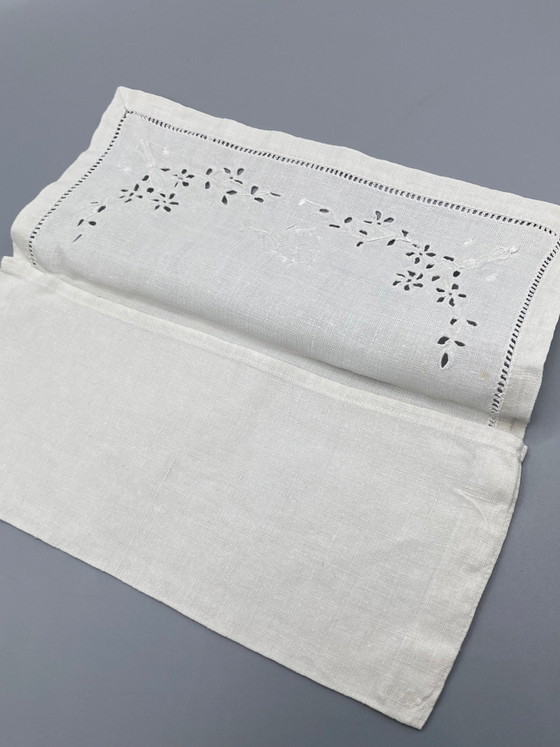
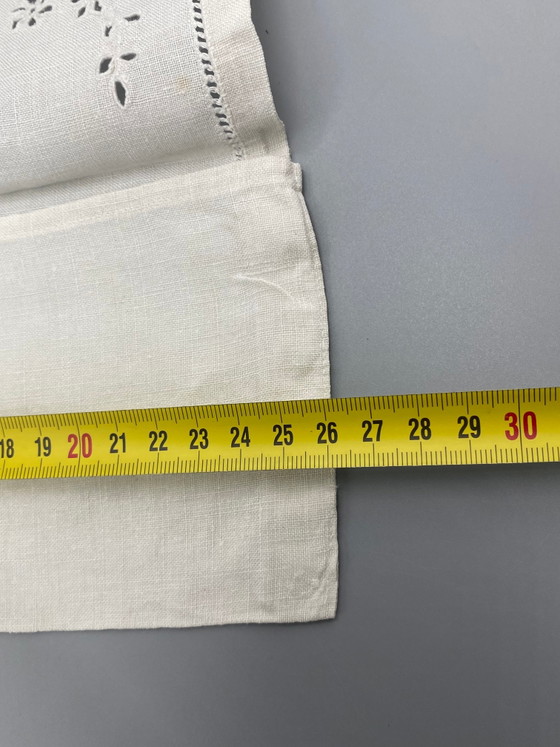
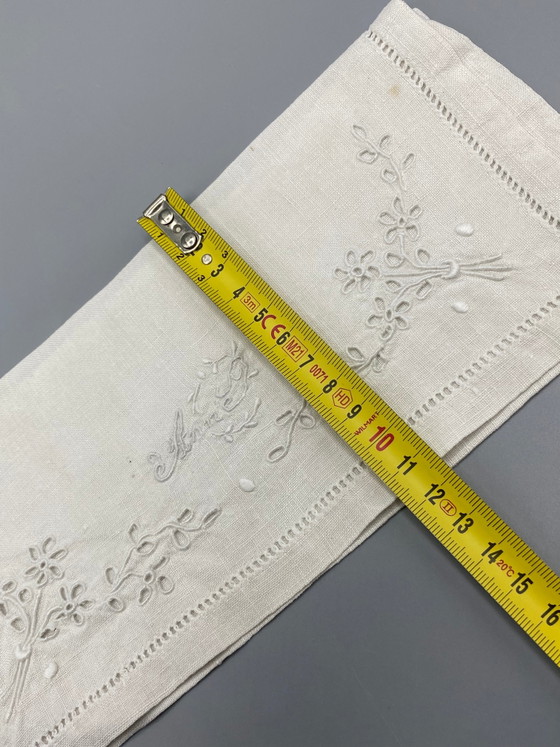
Linen was not simply chosen. It was prepared, embroidered, and passed down. This antique napkin holder belongs to the very intimate world of the feminine trousseau, patiently put together before marriage, where each piece had its function, but also its refinement. Made from an old white fabric, whose appearance and weave suggest a blend of linen and cotton, it features remarkable white embroidery work. The upper part is framed with delicate drawn thread work, then adorned with bouquets and small floral branches crafted with openwork embroidery and satin stitch. At its center appears what gives the piece its full personality: the name "Anne," embroidered in elegant cursive script and accompanied by a small floral motif. This name is not merely decorative. It recalls the primary purpose of these linen items: to identify the personal linen of its owner. In family homes, linen was marked, monogrammed, or sometimes embroidered with the owner's name. The textile forms a pouch designed to hold a folded personal napkin, which was kept this way between meals. An object almost vanished from our customs today, the napkin holder was once one of those small domestic accessories to which considerable care was given. The drawn thread work, the white floral embroidery, the script of the name, and the overall design suggest a creation from the first part of the 20th century, between 1900 and 1930. Dimensions: approximately 29 cm in length by 12 to 13 cm in width. The textile retains discrete traces of its age, with a few small marks and antique nuances appearing particularly near the edges. Anne. More than a century later, her name is still there.
Additional details:
- Brand: 20eSiecle
- Material: Lin
- Period:
Specifications
ConditionVery goodColorsWhiteMaterialTextile, Cotton
Discover more
Seller information
About this seller
ProfessionalSaint symphorien des bois, FranceOn Whoppah since August 2026 • 0 sales