Have it delivered hassle-freeBuyer protectionAll Designer items curated by WhoppahDownload the Whoppah App – get alerts & sell with ease.
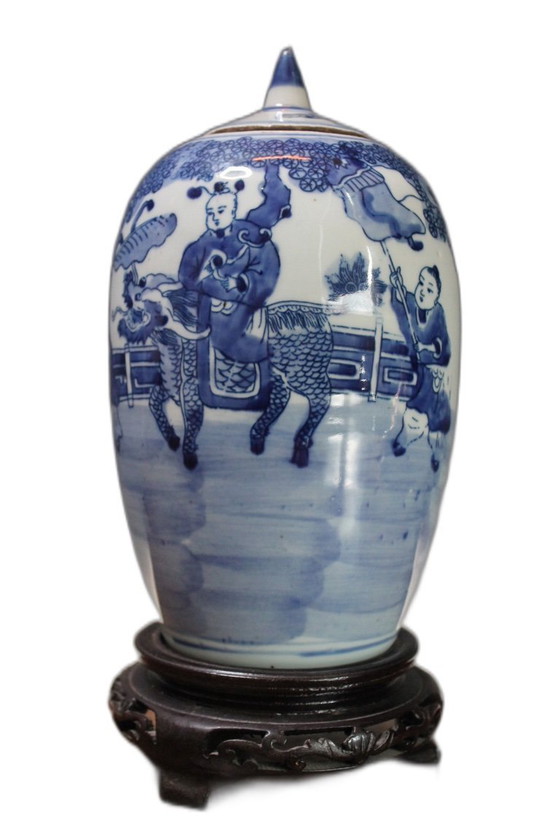
Antique Chinese blue & white lidded jar depicting Quilin
€650€399-39%Bid from €300
Buy with confidence
Shop & pay safely with Buyer ProtectionDesigner items curated by WhoppahWe only pay the seller once you have safely received the itemTrusted payment methods


About this seller
Private sellerProduct description
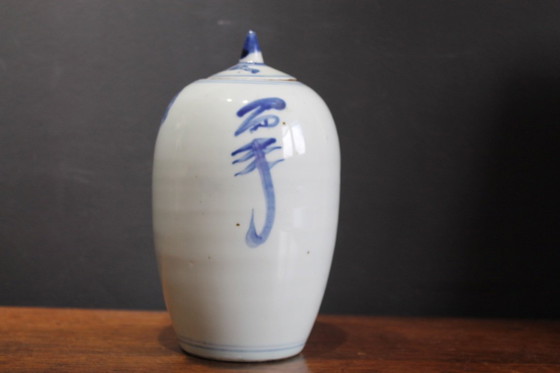
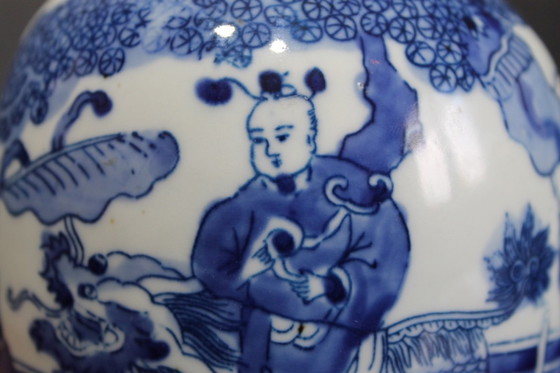
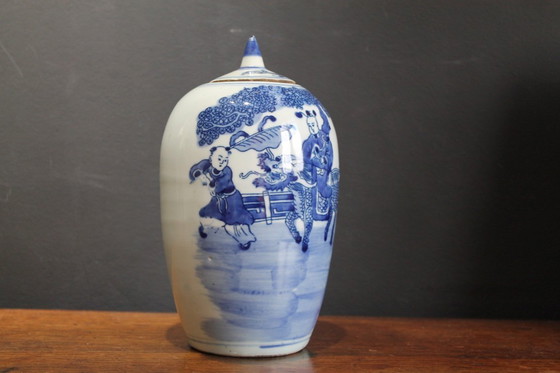
China, late Qing Dynasty (1644-1912) – Republic Period (1912-1949). This lidded jar is of an ovoid shape features a cobalt blue painting of a dignitary perhaps, riding a Quilin accompanied by his attendants. Rotating the jar, one finds a symbol or lettering, assumed to be a signature .
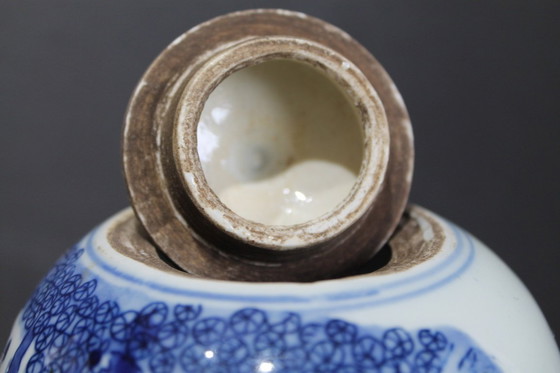
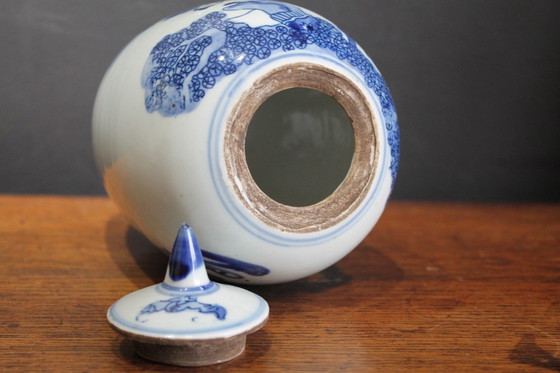
To the lid, one finds images of bats in flight, a Chinese symbol of prosperity and good fortune.
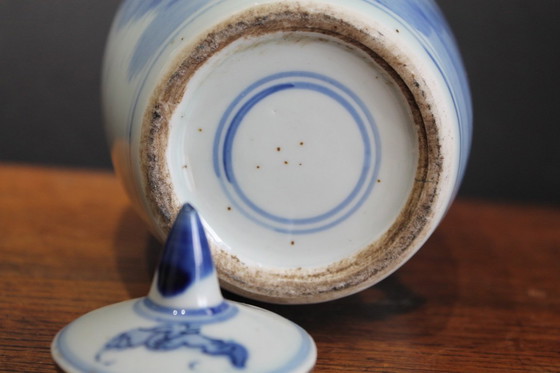
The base is marked with two blue circles , often associated with Chinese ceramics from the early Qing dynasty onwards.
The figure riding on the back of the Quilin appears to hold a small object, likely a ruyi scepter. The ruyi scepter is a traditional Chinese symbol of power, good fortune, and authority. The ruyi is commonly associated with granting wishes or bringing good luck, and it is a symbol of respect in Chinese culture.
This scene likely refers to a famous legend in which the Quilin appeared to the mother of Confucius, a great philosopher from ancient China, to announce the birth of her son and his future importance. The Quilin is considered a benevolent and auspicious creature in Chinese mythology, and many families pray to it for the blessing of children, particularly when seeking a virtuous or noble heir.
Condition: Very good condition, no cracks, no chips, some firing flaws including glaze bubbles
Provenance: Gordon collection, Lancashire, England. This lot was acquired by second generation members of the Gordon family after 1970 and has remained in the family ever since.
Weight:
Dimensions: Height 20 cm
Specifications
ConditionExcellentColorsBlueMaterialCeramicNumber of items1Height20 cmWidth12 cmDepth12 cm
Discover more
Seller information
About this seller
Private sellerLancaster, United KingdomOn Whoppah since March 2025 • 0 sales