Have it delivered hassle-freeBuyer protectionAll Designer items curated by WhoppahDownload the Whoppah App – get alerts & sell with ease.
Have it delivered hassle-free
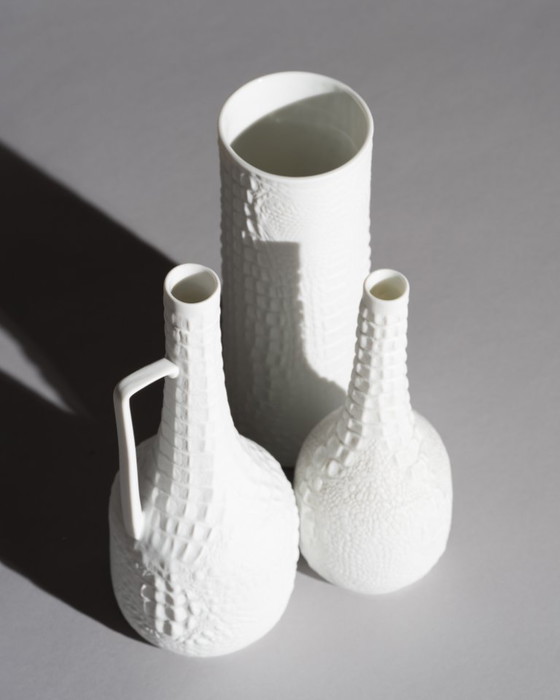
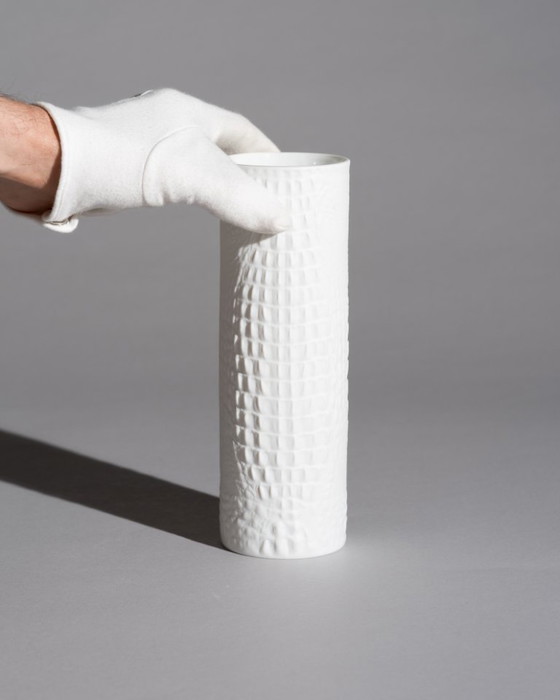
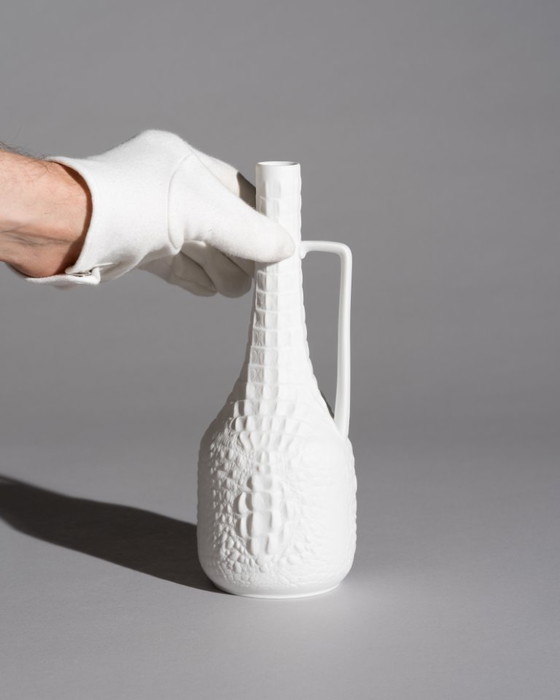
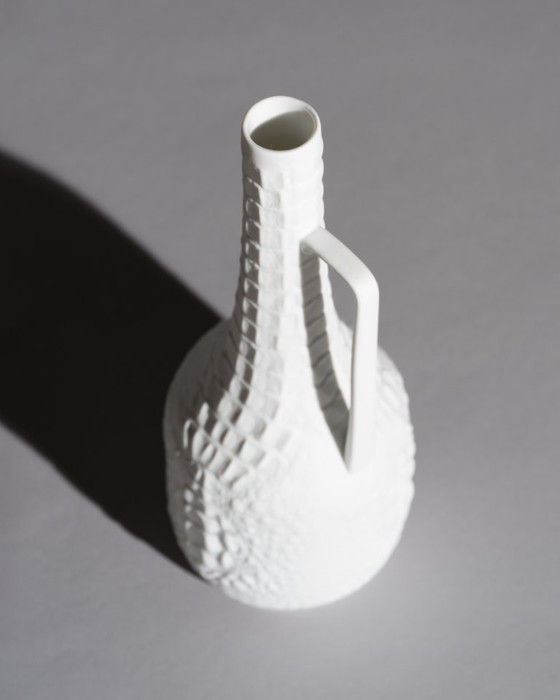
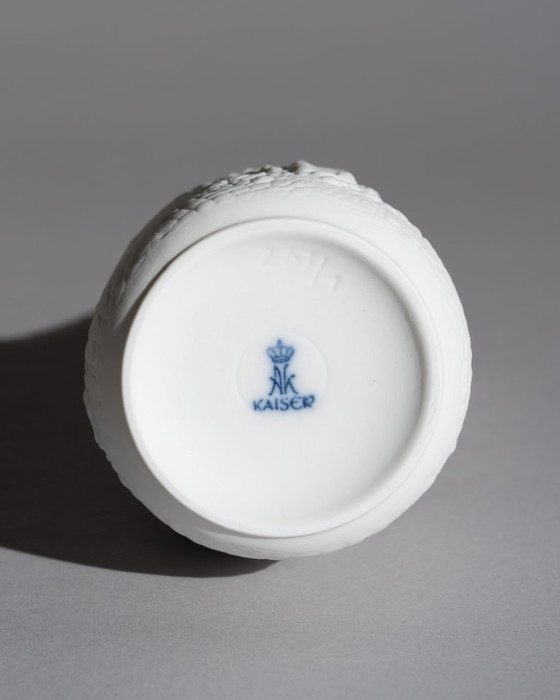
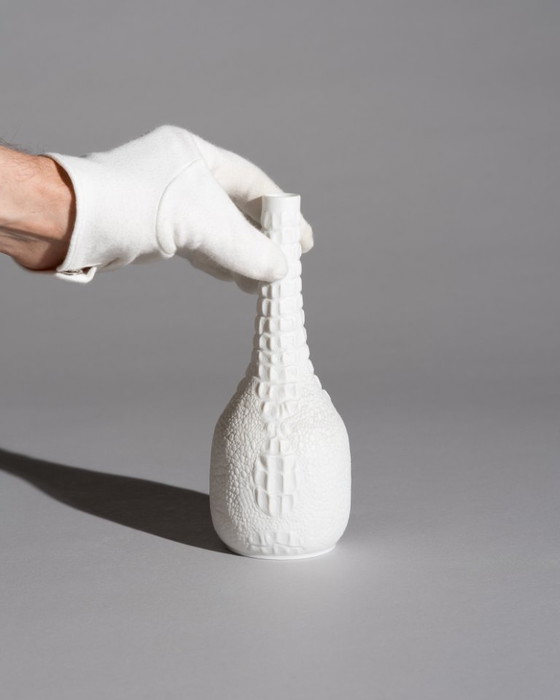
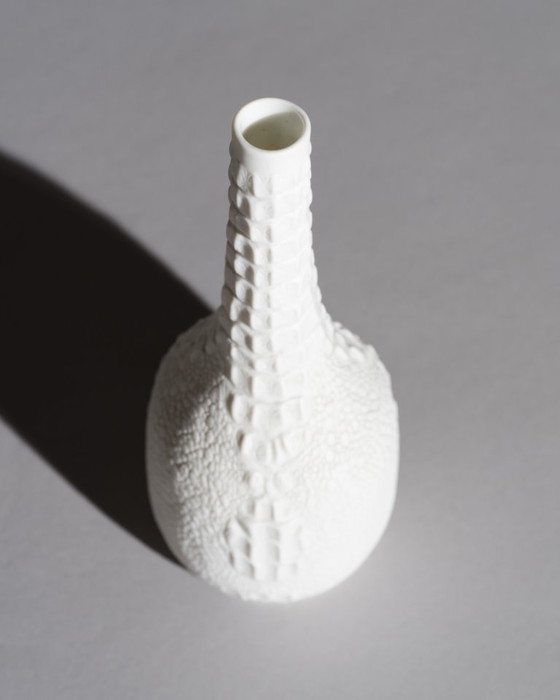
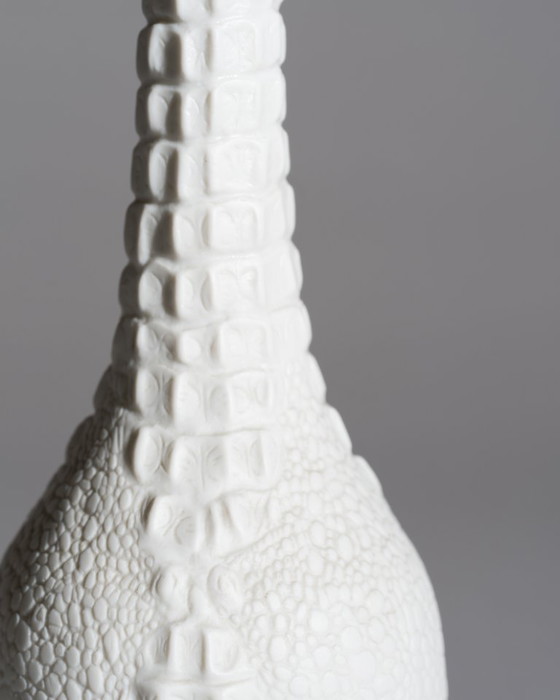
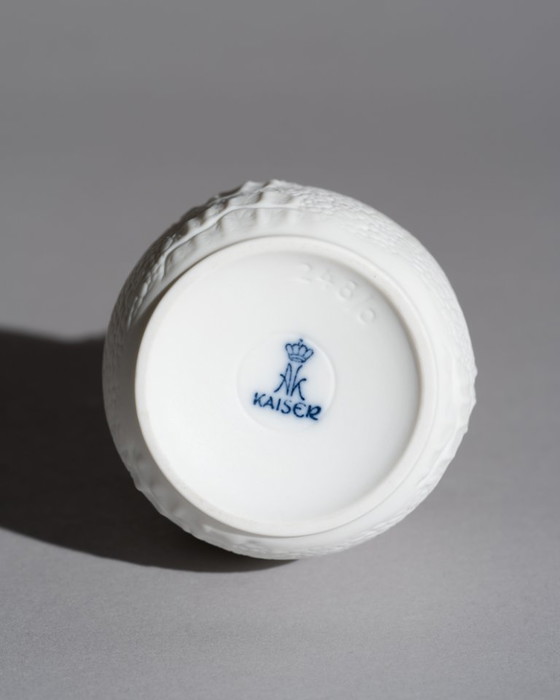
AK Kaiser Biscuit Porcelain Reptile Crocodile Vase Trio Manfred Frey Germany 70s
€249Bid from €199
Buy with confidence
Shop & pay safely with Buyer ProtectionDesigner items curated by WhoppahWe only pay the seller once you have safely received the itemTrusted payment methods


About this seller
Private sellerBerlin, GermanyOn Whoppah since August 2023 • 32 sales
Product description
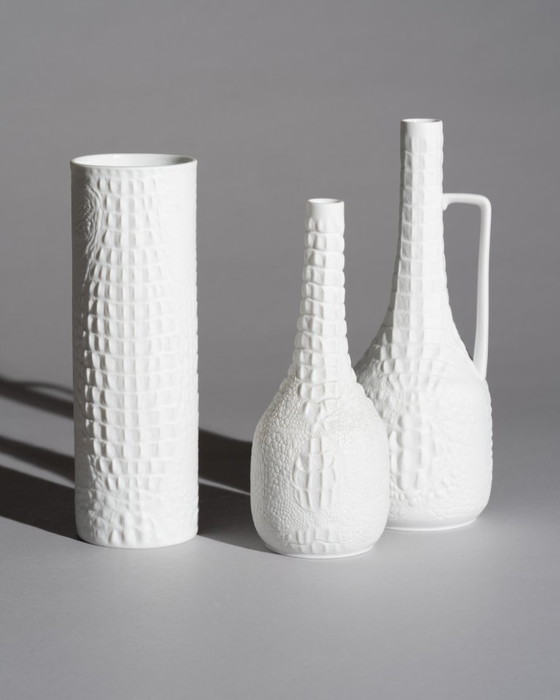
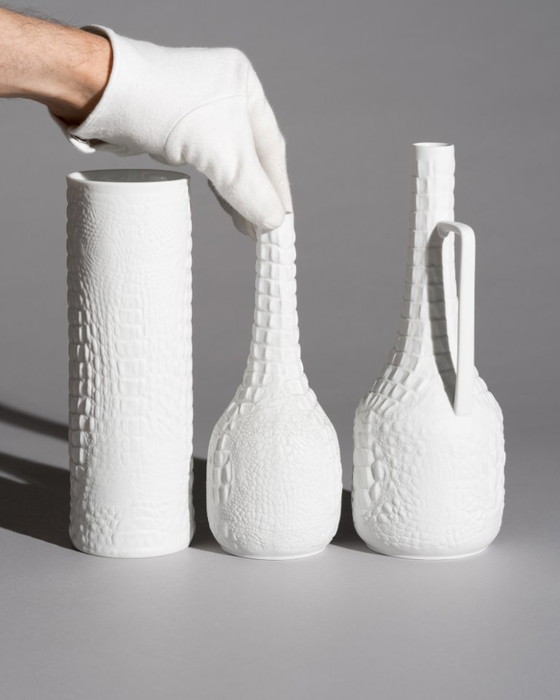
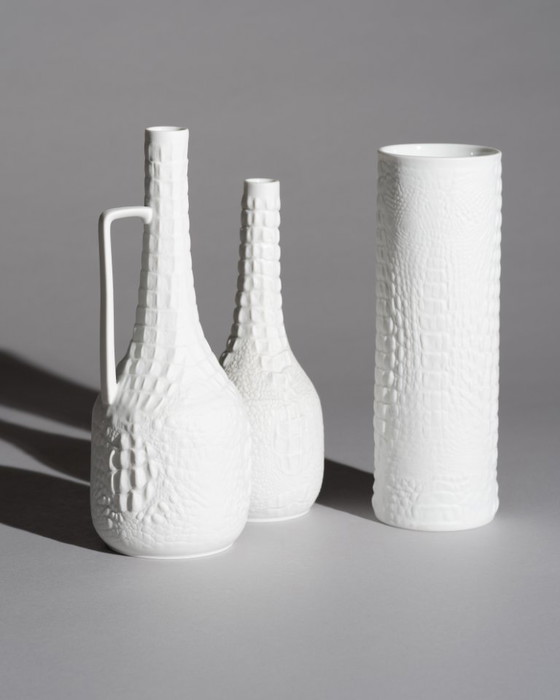
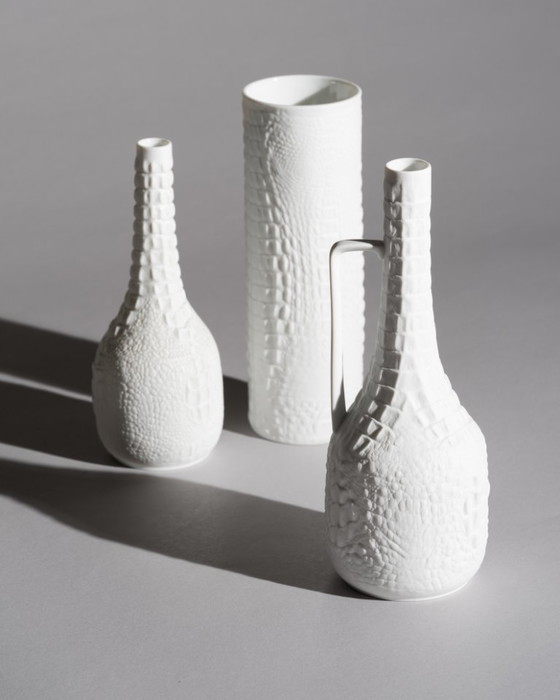
AK Kaiser Biscuit Porcelain “Reptile” Vase Trio – Manfred Frey, Germany, 1970s
An exceptional trio of sculptural biscuit porcelain vases produced by AK Kaiser in West Germany during the 1970s, including two documented designs by Manfred Frey and a highly compatible third form from the same celebrated “Reptile” relief series.
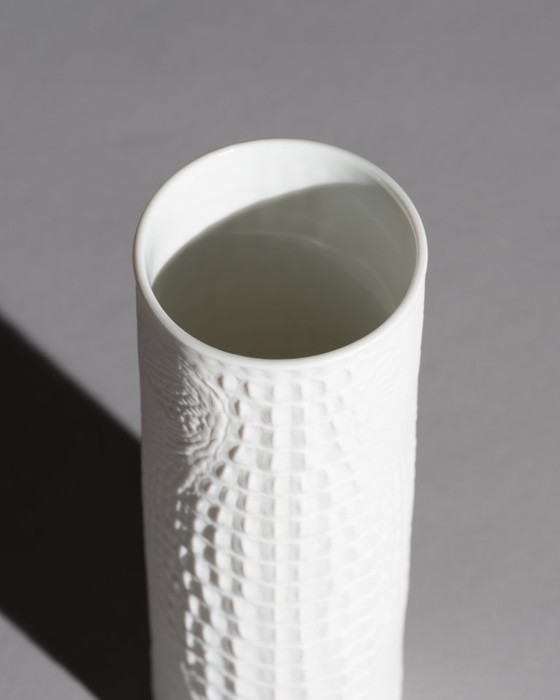
Executed in matte white unglazed porcelain, the ensemble captures the uniquely German interpretation of late modernist design: rigorous yet sensual, architectural yet organic. The deeply textured reptilian surface relief — simultaneously evoking crocodile skin, mineral formations, and Brutalist geometry — transforms these vessels into tactile sculptural objects rather than merely decorative vases.
The trio demonstrates the remarkable design language developed at AK Kaiser during the height of postwar West German porcelain innovation. Under designers such as Manfred Frey, the company moved beyond traditional porcelain aesthetics toward highly experimental surface structures and sculptural abstraction, aligning German ceramics with broader international developments in Op Art, Brutalism, and biomorphic modernism.
The tallest cylindrical form (model 267/1) presents the relief pattern with almost architectural clarity, its elongated proportions emphasizing the vertical rhythm of the textured grid. The smaller bottle-shaped vase (model 248/6), attributed to Manfred Frey, softens the same vocabulary into a more organic silhouette, where the reptilian texture appears to dissolve into pebble-like cellular structures near the body.
The third vase (model 245/22) introduces an elegant minimalist counterpoint to the ensemble. More restrained and linear in form, its slim cylindrical silhouette and refined proportions create a dialogue between surface ornament and modernist purity. Together, the three pieces form a highly balanced curatorial grouping that perfectly reflects the sculptural ambitions of 1970s German porcelain design.
The matte biscuit porcelain surface is particularly important here. Unlike glazed porcelain, biscuit porcelain absorbs and diffuses light softly across the relief, dramatically enhancing the tactile depth of the surfaces. Depending on lighting conditions, the vases oscillate between minimal monochrome objects and richly textured sculptural studies.
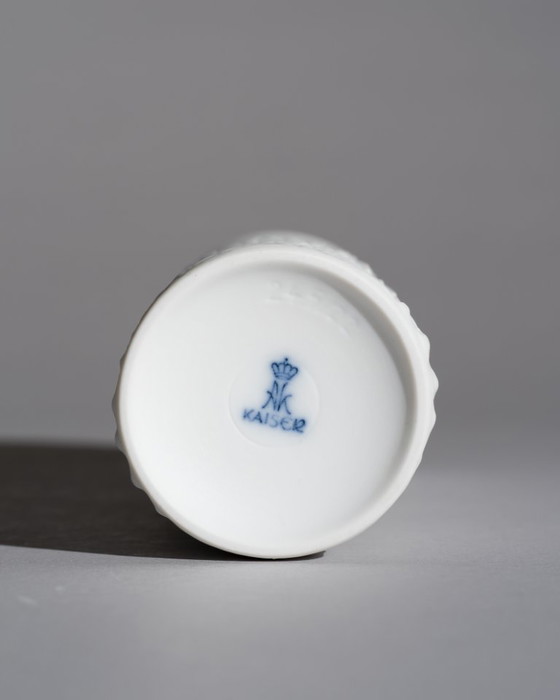
AK Kaiser (Alboth & Kaiser), founded in Staffelstein in Bavaria in 1872, became one of West Germany’s most important porcelain manufacturers during the mid-20th century. Particularly during the 1960s and 1970s, the company gained international recognition for combining traditional porcelain craftsmanship with highly contemporary design aesthetics. Today, AK Kaiser’s modernist biscuit porcelain objects are increasingly appreciated by collectors of European postwar ceramics and interior design.
Dimensions:
Model 267/1:
Height: 24 cm
Model 248/6:
Height: 20 cm
Model 245/22:
Height: 21.5 cm
Diameter: 6.5 cm
Material:
Biscuit porcelain (unglazed matte porcelain)
Color:
White
Country of Origin:
Germany
Period:
1970s
Condition:
Excellent vintage condition overall. No cracks or repairs observed. The matte biscuit surfaces remain beautifully preserved with crisp relief detail throughout.
General Information
Please explore our profile for more vintage vases!
International buyers: import duties or taxes, if applicable, are the buyer’s responsibility.
All items are photographed and described with care. Vintage pieces may show minimal traces of age; any significant flaws will be clearly mentioned.
Specifications
ConditionVery goodColorsWhiteMaterialPorcelainNumber of items3Height22 cmWidth6 cmDepth6 cm
Discover more
Seller information
About this seller
Private sellerBerlin, GermanyOn Whoppah since August 2023 • 32 sales