Why secondhand is the most powerful thing you can do for design's carbon footprint
Buying a vintage chair instead of a new one isn't just thrift. It is the single highest-impact climate decision most of us can make in furnishing a home. Here's the honest math, the caveats, and why I keep coming back to it.

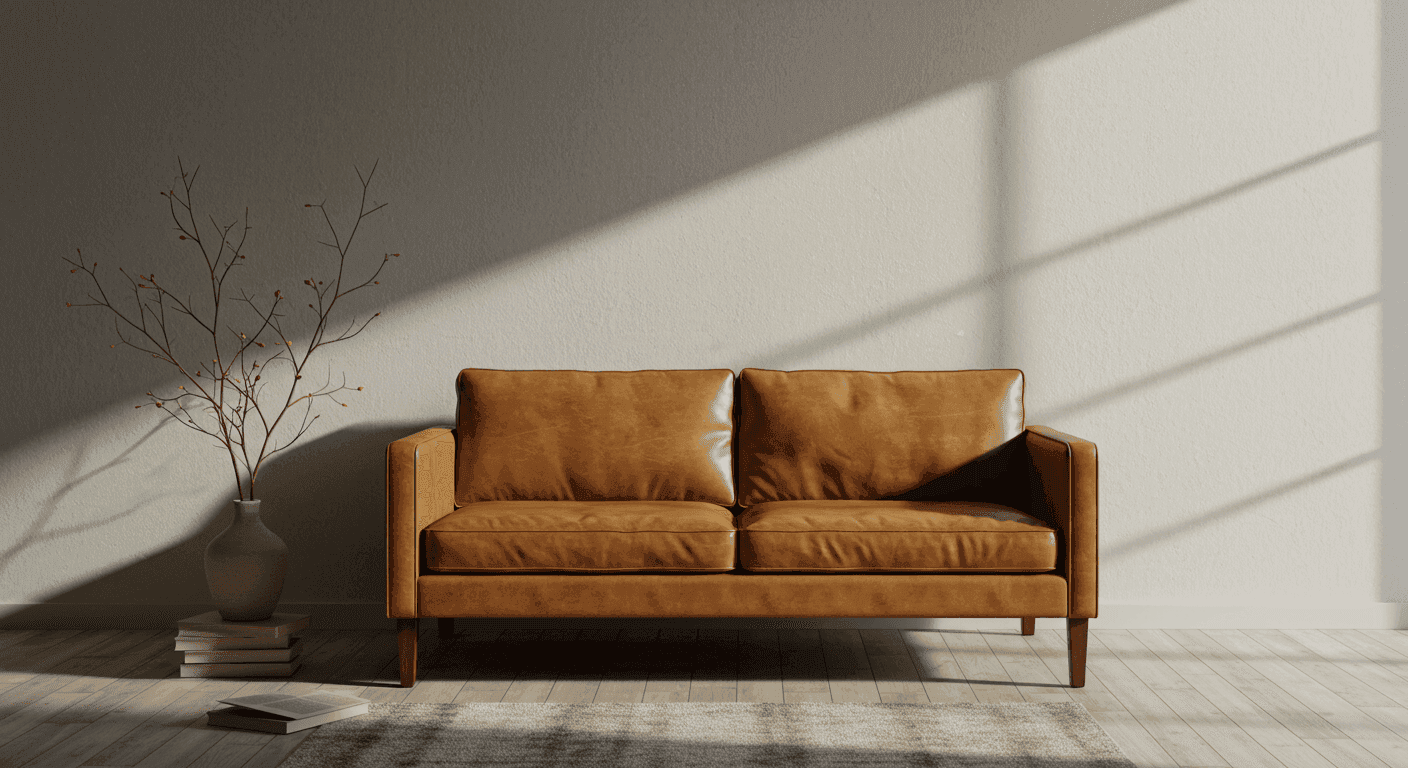
Whoppah was built on a simple premise: every piece sold here doesn't get built new somewhere else. That's the core of why I started the company. The carbon argument is real but the more interesting one is cultural, and I'll get to that.
A claim that sounds too neat to be true
When I tell people that buying secondhand designer furniture is one of the highest-impact climate decisions they can make in their home, I get a familiar reaction. A polite raised eyebrow. The implication being: nice idea, surely you're overstating it for marketing reasons.
I want to walk through the math here, because I think the math is genuinely on our side, and I'd rather you reach the conclusion yourself than take my word for it. The short version is that a new mid-tier designer sofa carries somewhere between 250 and 400 kilograms of CO2 equivalent in its production. A vintage one carries effectively zero (the emissions happened sixty years ago and are already in the atmosphere). Choosing the vintage piece avoids the new emissions, full stop.
That displacement is bigger than a year of switching from steak to a plant-based diet. It is bigger than not flying to Berlin for a weekend. It is bigger than installing LED bulbs throughout your apartment. And it is something you do once and don't think about again, which is the part I find most genuinely useful.
Where the carbon actually goes in a new sofa
Let me break down where those 250 to 400 kilos come from, because the numbers are more interesting than they sound.
The frame is usually kiln-dried hardwood (oak, beech) or engineered hardwood. The kiln drying alone is around 40 kilos of CO2 for a typical sofa frame, just from the energy needed to dry the wood enough to be structurally stable.
The foam is petroleum-derived polyurethane. A three-seat sofa contains roughly 15 to 25 kilograms of foam, and producing that foam emits 3 to 4 kilos of CO2 per kilo of foam. That's 60 to 100 kilos of CO2 just from the cushions.
The upholstery fabric or leather is the variable. Synthetic fibres (polyester, nylon) carry around 7 kilos of CO2 per kilo of finished fabric. Wool is around 11. Leather, with the energy-intensive tanning process, is significantly higher: around 40 kilos of CO2 per square metre of finished hide. A leather sofa carries roughly 150 to 200 kilos of CO2 just in the upholstery.
Manufacturing energy (motors, lighting, climate control in the factory) adds another 20 to 30 kilos.
Shipping (typically from Asia or Eastern Europe to a Western European buyer) adds 30 to 70 kilos depending on distance and container loading.
Add it up and a new mid-tier upholstered sofa is responsible for 250 to 400 kilos of CO2 equivalent before it leaves the factory. That's the same as driving a small petrol car for about 2,000 kilometres.
What a secondhand sofa carries
A vintage sofa carries the original manufacturing footprint, but that footprint already happened. Buying the vintage piece doesn't add anything to the atmosphere; the emissions are sunk costs from the 1970s or 80s. The only new emissions are the courier journey from the seller to you, which is roughly 8 to 15 kilos of CO2 for a typical European route via a van-based courier like Brenger.
That's the comparison: 250 to 400 kilos of new emissions versus 8 to 15. The vintage piece is roughly 25 to 50 times lower in climate impact.
The caveats I want to be honest about
I'm being slightly generous to the secondhand case. Let me steelman the new-furniture argument.
If you buy a low-quality new sofa and replace it after 8 years, your annual footprint is roughly 30 to 50 kilos a year. If you buy a high-quality new piece (a Cassina or B&B Italia) and keep it for 25 years, your annual footprint drops to 10 to 16 kilos a year. So a really high-quality new purchase is closer to neutral over a long life.
But a vintage piece from the 1970s that you keep for another 25 years has roughly 1 kilo of annual footprint (mostly the original transit cost amortised). The vintage piece still wins, decisively.
The other caveat is that not all vintage is durable. A flimsy 1970s sofa from a non-canonical brand may genuinely fail in 5 years, and at that point the embodied carbon advantage starts to erode. This is exactly why curation matters: a curated marketplace filters out the pieces that won't go the distance.
What Whoppah is doing about this
This isn't a corporate-responsibility paragraph. I want to be specific. Every item that goes through Whoppah's curation is reviewed for structural integrity (will the frame hold for another 20 years), authenticity (so the piece is identifiable and will retain value), and condition (so the buyer knows what they're getting). The pieces that fail any of those checks don't make it to the platform.
The result is that the secondhand pieces on Whoppah have, on average, a longer remaining useful life than the pieces on open-marketplace alternatives. That's not a marketing claim; it's the consequence of the curation rules.
Whoppah also publishes a "carbon saved" estimate on most listings, calculated from category averages. The figure is conservative (we estimate low rather than high), and it's specifically the avoided new-production emissions for an equivalent new piece in the same category.
The thing I want you to take away
Climate decisions in our personal lives tend to feel small. Skipping one steak. Cycling instead of driving once. Taking a slightly cooler shower. They add up over years, but the per-decision impact is modest.
Furniture is different. One sofa purchase, one chair purchase, one sideboard purchase: each is a decision you make once a decade or once a lifetime. The climate impact of choosing secondhand for that decision is genuinely large, and you don't have to keep making the decision every day.
That's why I keep coming back to it. Choose vintage where you can, choose well-made-new where you can't find vintage, and you'll have done more for the climate footprint of your home than almost any other consumer decision on offer.