Vintage and secondhand design in Amsterdam: a friendly guide for buyers and sellers
Amsterdam is one of the best European cities to live with vintage design. Strong Dutch design heritage, active secondhand market, and Brenger delivery makes pickup easy. Here's the practical guide.

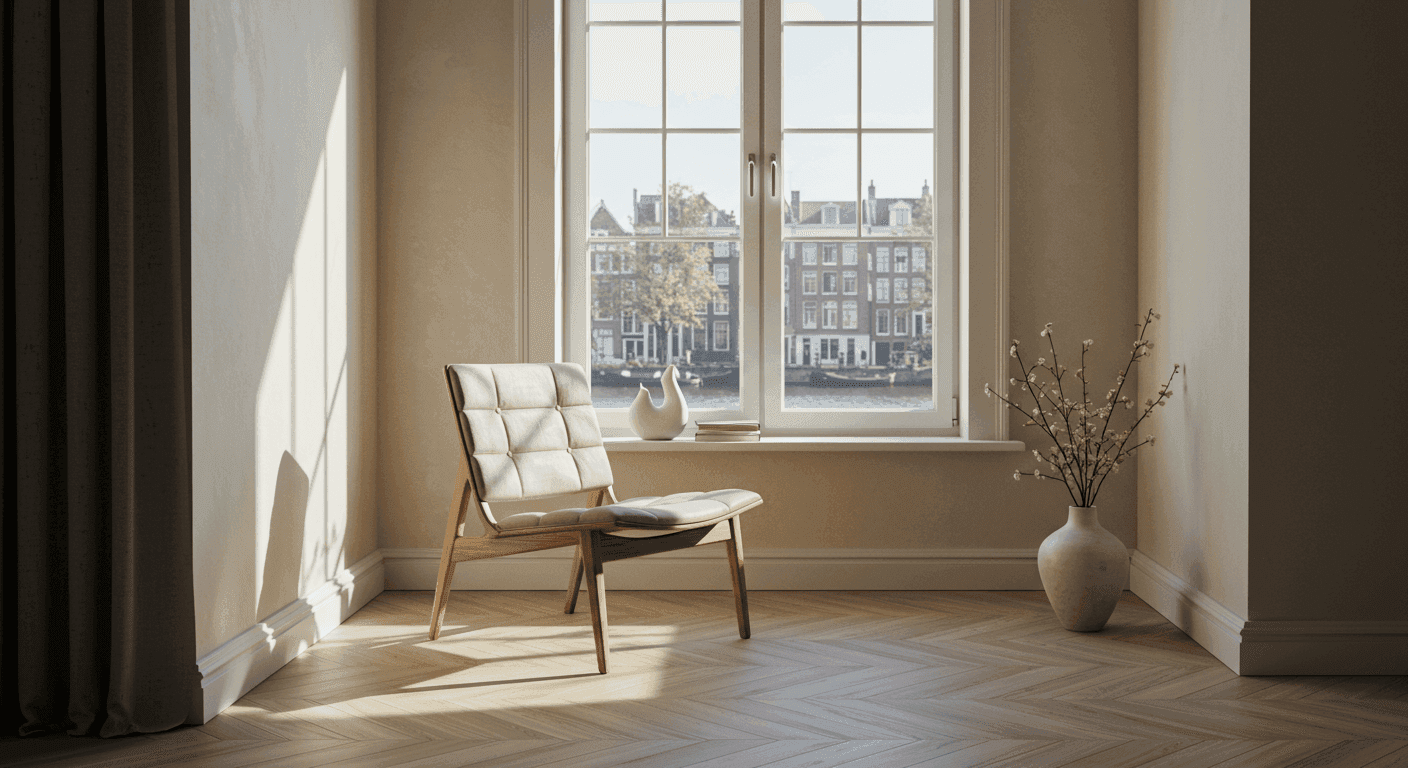
Amsterdam is where Whoppah's curation room sits, and where I personally walk through new arrivals most weeks. On any given Wednesday morning our team is unpacking pieces from the Pijp, the Jordaan, Amsterdam-Zuid and the IJburg suburbs. The mix tells you a lot about how the city lives.
Why Amsterdam is a particularly good city for this
If you live in Amsterdam, you have one of the best European secondhand-design markets at your door. Three things make this true. First, the Dutch design tradition (Rietveld, Pastoe, Hella Jongerius, Maarten Baas, Marcel Wanders, Piet Hein Eek) means there's a deep local supply of pieces with strong provenance. Second, Amsterdam's apartment-living tradition means turnover is high; people move and they let pieces go. Third, Brenger (our courier partner) is headquartered in Amsterdam, so within-city pickup and delivery is fast and cheap.
On any given day, Whoppah has a meaningful number of active listings in or near Amsterdam, across furniture, lighting and art. The strongest categories are Dutch mid-century (Pastoe, Topform, Artifort, Leolux), Scandinavian mid-century imported during the 1960s and 70s, and Italian post-war design.
What kind of design Amsterdam is known for
Dutch design has a particular character that's worth knowing if you're shopping locally.
The De Stijl movement (Rietveld, Mondrian, van Doesburg) gave Dutch design its language of primary colour and geometric clarity. You won't often find an original 1920s Rietveld piece for sale (those are mostly in museums), but Cassina-produced Rietveld reissues from the 1970s onward are around, and original-period Dutch furniture from the 1930s influenced by De Stijl is part of the local supply.
Pastoe under Cees Braakman (1948 to 1978) is the dominant Dutch mid-century brand. Modular cabinets, dining sets, bookcases, all in teak or oak with bent-plywood elements. Pastoe is one of the most rewarding brands to live with if you want Dutch mid-century at sensible prices.
The post-war Dutch tradition then ran through Artifort (Maastricht, the Paulin work), Leolux (Venlo), and the smaller Tilburg upholsterers like Topform.
More recent Dutch design, the 1990s onward, includes Marcel Wanders, Maarten Baas, Piet Hein Eek, Hella Jongerius and Studio Job. Pieces from these designers are starting to appear on the secondhand market and are worth catching now while prices are still moderate.
Where to see iconic pieces in person
If you're starting to develop an eye for Dutch design and want to see the canon up close before buying, three Amsterdam institutions help.
The Stedelijk Museum's design collection includes Rietveld, Wim Rietveld, Friso Kramer and substantial Dutch contemporary work. Worth a focused visit on a quiet weekday.
The Rijksmuseum has a small but well-curated 20th-century design section, with strong holdings on De Stijl.
The Premsela section of the Cultuurfonds maintains an archive of Dutch design history that's accessible by appointment to researchers.
For more contemporary work, the Frame Magazine offices in Amsterdam West occasionally host design events; Vlaamse Studio in De Pijp is a working contemporary design gallery worth visiting.
How delivery works for Amsterdam buyers
Amsterdam is in the core Brenger service area, which means most furniture deliveries within the city cost between €40 and €100 depending on item size and floor of pickup and delivery. The booking flow appears automatically in your Whoppah checkout when you buy an Amsterdam-listed piece.
For pieces being shipped to Amsterdam from elsewhere in the Netherlands (which is most cross-city movement in this market), expect €60 to €150 depending on item size and route. From Belgium or northern Germany, €120 to €280.
If you're picking up a piece yourself, most Amsterdam sellers can accommodate a one-hour pickup window if you coordinate via the listing chat. Bring a friend for anything larger than a single chair, and bring moving blankets.
What's typically active on Whoppah for Amsterdam right now
The categories I see most often:
- Pastoe cabinets and dining sets, often from sellers in Amsterdam-Zuid or Oost, in the €600 to €2,200 band
- Artifort lounge chairs, particularly the Paulin Tongue and Mushroom, €700 to €2,500
- Topform leather sofas in original cognac or brown, €1,200 to €2,500
- Mid-century Danish (Wegner, Mogensen, Jacobsen) imported in the 1970s, often well-cared-for, €400 to €2,000 depending on model
- Italian post-war lighting (Castiglioni, Magistretti) from Dutch design-conscious estates, €400 to €1,500
- Contemporary Dutch design (Piet Hein Eek crates, early Wanders pieces) starting to appear, mostly under €1,500
A note on Amsterdam-specific buyer dynamics
A few things worth knowing if you're new to the local secondhand-design market.
First, Amsterdam sellers tend to price more honestly than the European average. The expat-and-design-aware buyer pool is informed enough that aspirational pricing fails. If a piece is listed at a reasonable price, that's usually the price.
Second, condition disclosure is generally strong. The cultural norm is to disclose flaws upfront and not negotiate down from a deceptive listing. If something is missing from the description, ask in chat; you'll usually get an honest answer.
Third, the buyer audience is competitive on iconic pieces. A genuinely good Pastoe cabinet at a fair price will get multiple bids within hours. Save searches on Whoppah for the models you want and react fast.
Whether you're starting your first apartment in Oud-West or upgrading a piece in a long-established home in Amsterdam-Zuid, the local secondhand design market is one of the genuinely good things about living here. It's worth using.