Verner Panton: the colourist who saw the future in fibreglass
Panton designed in saturated colour at a time when Danish design was disciplined and quiet. He's one of the most distinctive voices of mid-century furniture, and his pieces still cost less than they should.

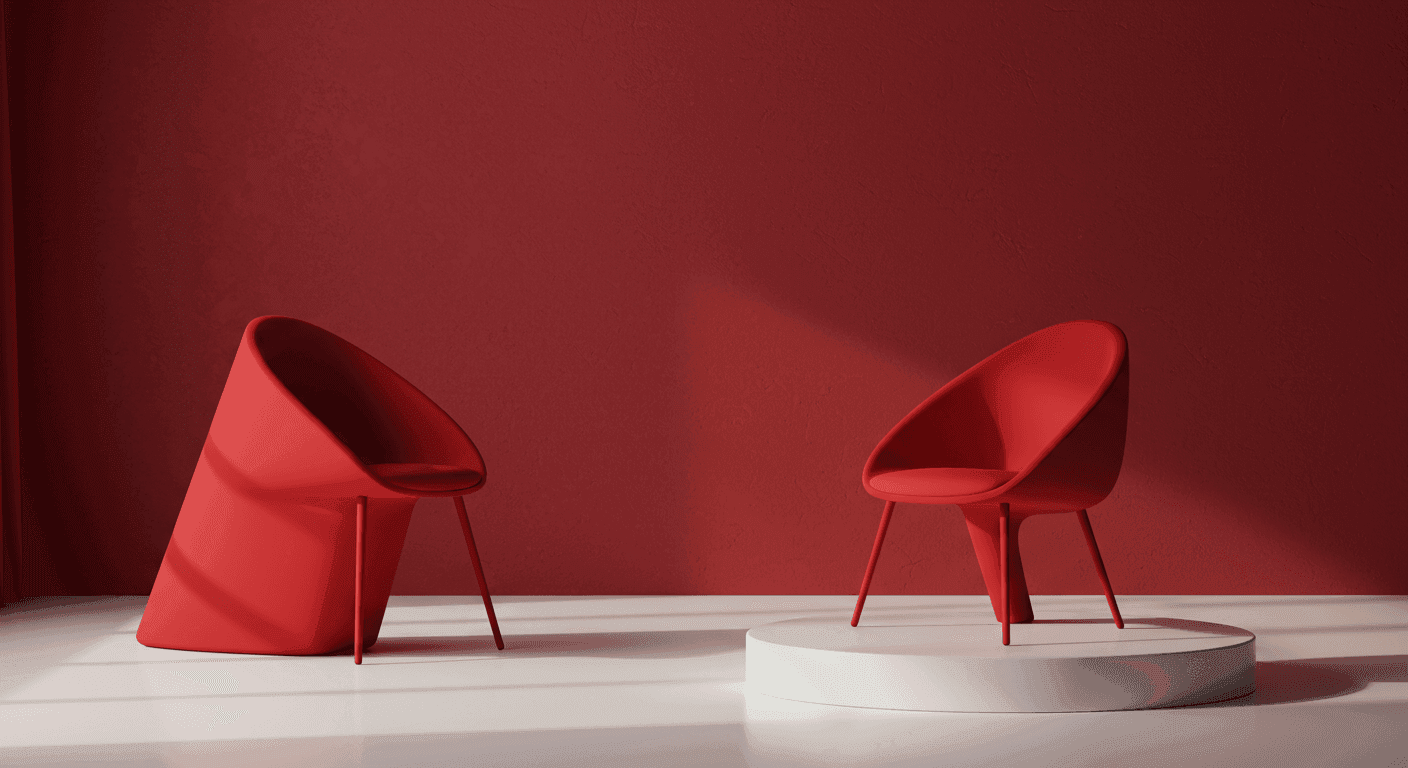
Panton listings sit in a particular niche on Whoppah; less volume than the Danish masters but a sharply specific buyer pool. Our team has learned to be patient with Panton; the right buyer always shows up.
The Dane who didn't act Danish
Verner Panton (1926 to 1998) is the outlier in Danish mid-century design. Where his contemporaries (Wegner, Mogensen, Juhl) worked in oak, teak and wool, in restrained palettes, Panton worked in plastic, fiberglass, foam and saturated colour. He famously fell out with the Danish design establishment in the early 1960s and moved to Switzerland to keep working. The Danes have since claimed him back. The work is too important to ignore.
His ideas came from the Space Age but also from textiles, op art and Pop. If you've seen a 1960s film with a futuristic interior, there's a decent chance you're looking at Panton's work, either directly or copied.
The pieces that mattered
The Panton chair (1959 to 1960, first production 1967) is the headline. The world's first single-piece moulded plastic chair, cantilevered, in saturated colour. Originally produced by Vitra under licence, and still in production today. Vintage Vitra Panton chairs from the 1970s in original colours (red, white, black, brown) sell for €300 to €700 on Whoppah. The current Vitra retail is around €280, so the secondhand premium is real for early examples in good condition.
The Heart Cone chair (1959) is the velvet-upholstered heart-shaped lounge chair. Beautiful object. €1,500 to €3,500 in good vintage condition.
The Phantom chair (1998), one of his last designs, is the polyethylene "S"-shaped piece. Smaller market, but a clean €600 to €1,200 used.
His lighting work is also worth mentioning. The Flowerpot pendant (1968), now made by &Tradition, has been in continuous production. Original Louis Poulsen Flowerpots from the 1960s, in the original metallic colours, sit at €200 to €500 used. Reissues are around €300 retail.
Why he undersells
Panton's secondhand market is, in my opinion, a little soft relative to the quality of the work. Part of this is that the original colours can shift over fifty years (especially the chrome and metallic finishes), which makes condition assessment tricky. Part of it is that the Danish establishment took decades to acknowledge him, so the prestige catch-up is still happening.
The practical implication for you: a Panton chair is one of the better-value 1960s designer pieces you can buy right now. If you want a saturated colour accent in a room of restrained wood, this is the chair.
What to look for
Vintage Vitra Pantons have a sticker on the underside identifying the model and production year. The colour should be saturated, with no fading at the edges where light has hit it. Cracks at the cantilever (where the seat meets the back) are the structural weak point and are not repairable. Walk away from any chair with a hairline there.