Vintage and secondhand design in Milan: the deepest Italian post-war market in Europe
Milan is the home market for the entire Italian post-war design canon. Cassina, B&B Italia, Flos, Artemide and dozens of others are based here. The secondhand market reflects that density. Here's the friendly guide.

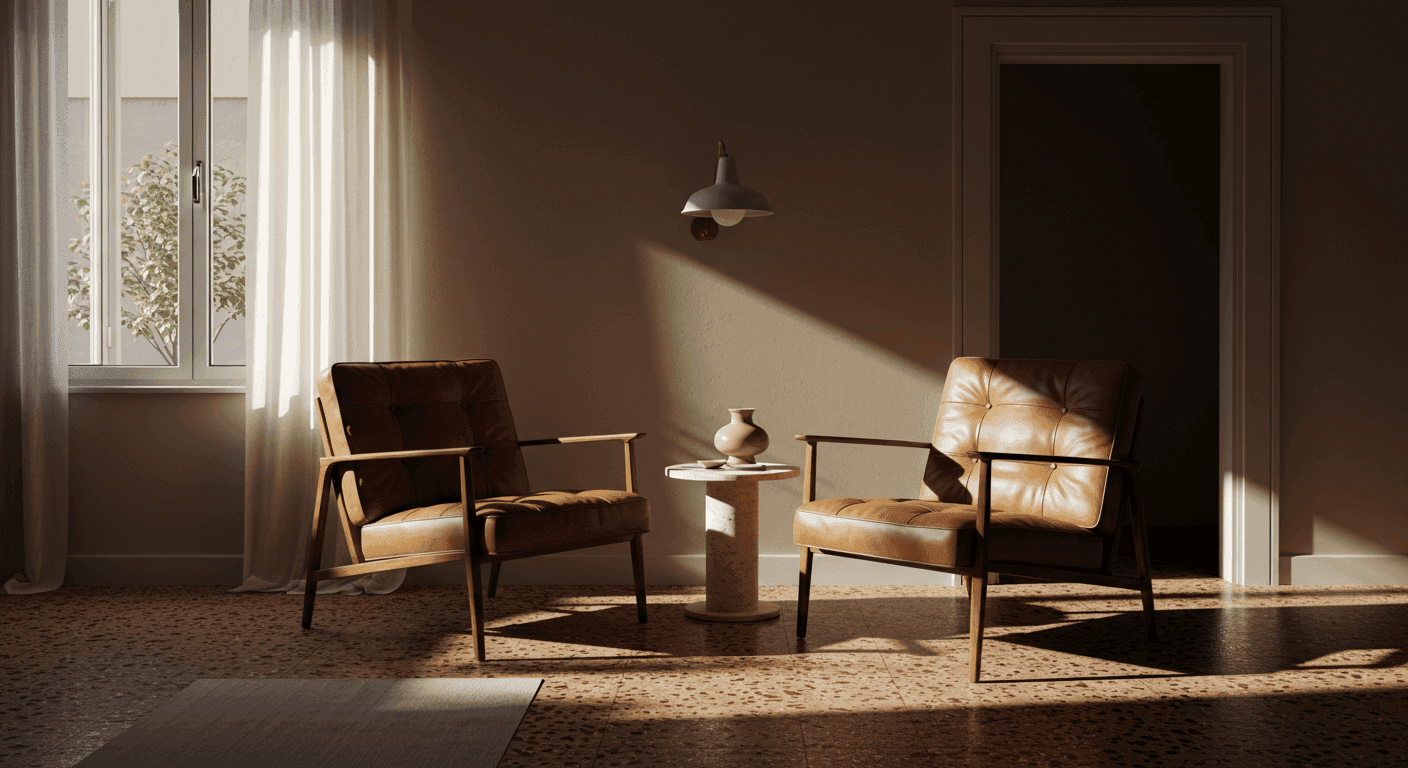
Milan is where the design originally came from for a meaningful share of what's on Whoppah. We have a small but growing Italian seller base, and the inventory that comes out of Milan apartments is unlike anything else in our system.
Why Milan is the Italian design market
If you care about Italian post-war design and you live in or near Milan, you're in the best secondhand market in the world for that work. Cassina (Meda, 25 km north), B&B Italia (Novedrate, 30 km), Poltrona Frau (Tolentino, but the Milan presence is large), Flos (Brescia, 75 km), Artemide (Pregnana Milanese, just outside Milan), Magis (Motta di Livenza), Cappellini (Arosio): the entire Italian high-end furniture industry is within driving distance of Milan, and Milan itself is where the design community has lived and worked for 80 years.
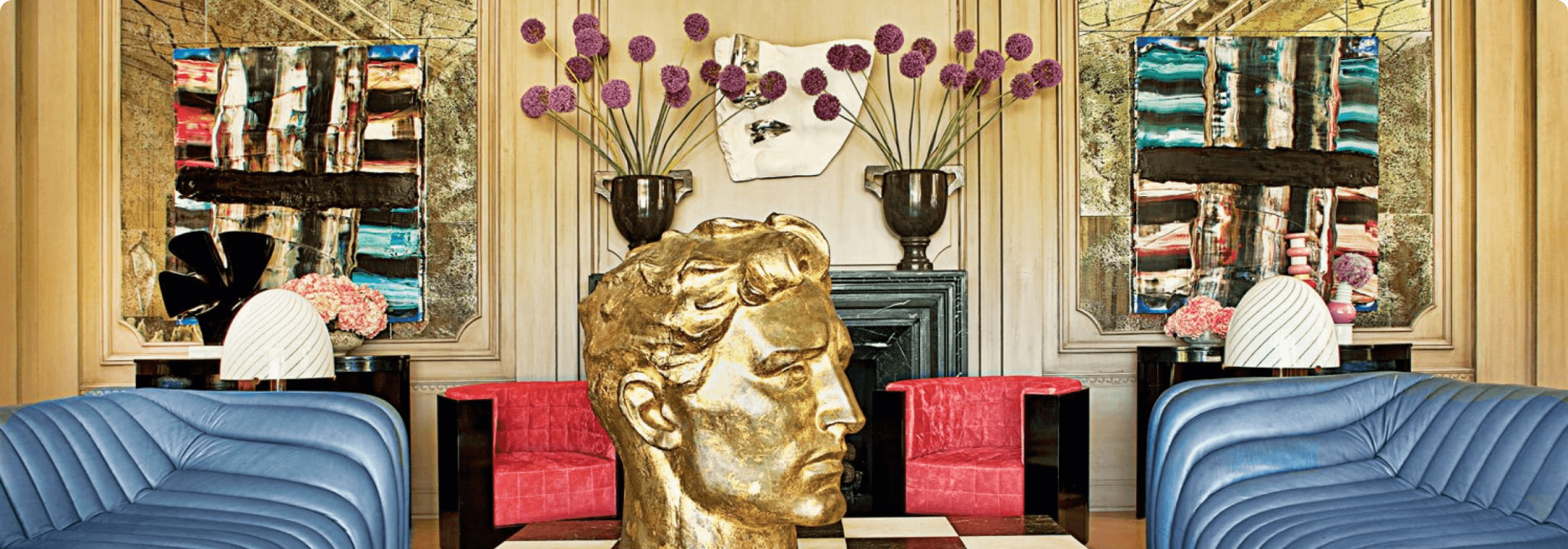
The result is that the Milan secondhand market has the deepest local inventory of Italian post-war design anywhere. Whoppah's Milan inventory typically includes Castiglioni lighting, Magistretti seating, Bellini sofas, Sottsass pieces (both Olivetti-era and Memphis-era), Aulenti lighting, and a great deal of anonymous but well-made Italian production from the 1960s and 70s that doesn't carry famous designer attributions but is structurally and aesthetically excellent.
What Milan is known for
Italian post-war design is a deep, complex tradition. A short version.
Gio Ponti is the founding father. Through his magazine Domus (founded 1928, edited by Ponti for 50 years) he shaped what Italian design discourse became. His own design output (the Superleggera 699 chair for Cassina, the Distex armchair, the Pirelli Tower architecture) is the canonical reference.
The Castiglioni brothers (Achille and Pier Giacomo) defined Italian post-war lighting through their work with Flos. The Arco floor lamp (1962) is the icon, but the catalogue is much deeper: the Snoopy, the Toio, the Taraxacum, the Frisbi pendant.
Mario Bellini defined Italian post-war upholstered furniture through his work with Cassina and B&B Italia. The Cab chair (1977), the Camaleonda sofa (1970), the 932 sofa (1967), the Le Bambole sofa series (1972).
Vico Magistretti is the more disciplined Italian designer. The Maralunga sofa (1973), the Selene chair (1969), the Atollo lamp (1977).
Ettore Sottsass led two careers: the Olivetti industrial-design years (the Valentine typewriter, 1968) and the Memphis movement (the Carlton bookcase, 1981).
Gae Aulenti, Joe Colombo, Bruno Munari, Marco Zanuso, Tobia Scarpa, Carlo Mollino: the depth of the Italian tradition is substantial.
More recent: Patricia Urquiola (the most-cited contemporary designer in Milan today), Konstantin Grcic (based in Germany but a regular Milan presence), the Fronzoni and Bouroullec collaborations.
Where to see iconic pieces
Milan is essentially a permanent design exhibition. A short list.
The Triennale Milano (Viale Alemagna 6) is the institutional anchor. Permanent collection plus rotating exhibitions of contemporary Italian design.
The Castiglioni Studio Museum (Piazza Castello 27) is the late Achille Castiglioni's actual studio, preserved and opened to the public. A small but extraordinary visit.
The Vico Magistretti Foundation (Via Conservatorio 20) is similar, his preserved studio.
The Brera Design District, particularly during the annual Salone del Mobile in April, is the city's most concentrated design experience. Outside Salone week, the district's permanent galleries and showrooms (Cassina's flagship at Via Durini, B&B Italia at Via Durini, Flos at Corso Monforte) are open year-round.
The Galleria Antonia Jannone (Corso Garibaldi 125) is a commercial gallery specialising in 20th-century Italian design with strong holdings.
How delivery works for Milan buyers
Milan is in the Brenger Italian service network. Within-Milan delivery costs €60 to €140 depending on item size; Milan to other Italian cities (Florence, Rome, Turin) runs €140 to €280. Milan to Switzerland (Zurich, Geneva) €180 to €320. Milan to Paris or Amsterdam, €260 to €420.
Milan's historic centre has many buildings without lifts, so floor-of-pickup pricing matters. A genuine palazzo apartment on the third or fourth floor with no lift adds meaningfully to the courier cost.
Self-pickup within Milan is feasible but parking is constrained. If you're picking up yourself, coordinate carefully with the seller about loading-zone access.
What's typically active in Milan
The categories I see most often:
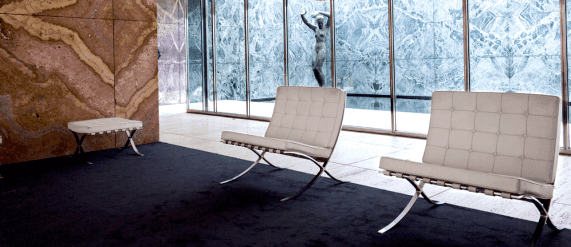
- Cassina-produced Bellini, Magistretti, and Le Corbusier reissues, often from Milan design estates, €1,200 to €5,500 depending on model
- Flos lighting (Arco, Snoopy, Toio, plus less famous pieces), €600 to €4,000
- Artemide lighting (Tolomeo, Eclisse, Tizio, Atollo), €200 to €1,500
- B&B Italia upholstered pieces (vintage Camaleonda modules, Bambole sofas), €1,500 to €5,000
- Magis seating (Air-Chair, Chair One, Bouroullec's Steelwood), €280 to €900
- Anonymous Italian post-war (Italian Deco, 1950s and 60s Milan workshop production), €500 to €2,500
A note on Milan-specific dynamics
A few things worth knowing.
First, the Milan market is competitive at the iconic-piece level, particularly during and immediately after Salone del Mobile each April. Prices spike during Salone week as international buyers visit. The window from October to February is the quieter buying season.
Second, condition disclosure in Milan listings is variable. Some sellers are excellent and detailed; some assume the buyer knows what they're looking at. Always ask in chat for additional photos of the underside, the maker's plate, and any reupholstery work.
Third, Milan has a strong restoration ecosystem. Local upholsterers and finishers can refurbish pieces to high standards at moderate prices. If a piece interests you but the condition needs work, the local restoration network is part of why Milan is a good market.
Whether you're furnishing an apartment in Brera, the Navigli, or Porta Romana, Milan's secondhand-design market is one of the best in Europe. It rewards patience and a developing eye.