Vintage and secondhand design in Berlin: where the mid-century inventory is deeper than you'd expect
Berlin has one of Europe's quietly excellent secondhand design markets. Strong Bauhaus heritage, deep mid-century supply, and a culture of careful renovation make the city a buyer's market. Here's the friendly guide.

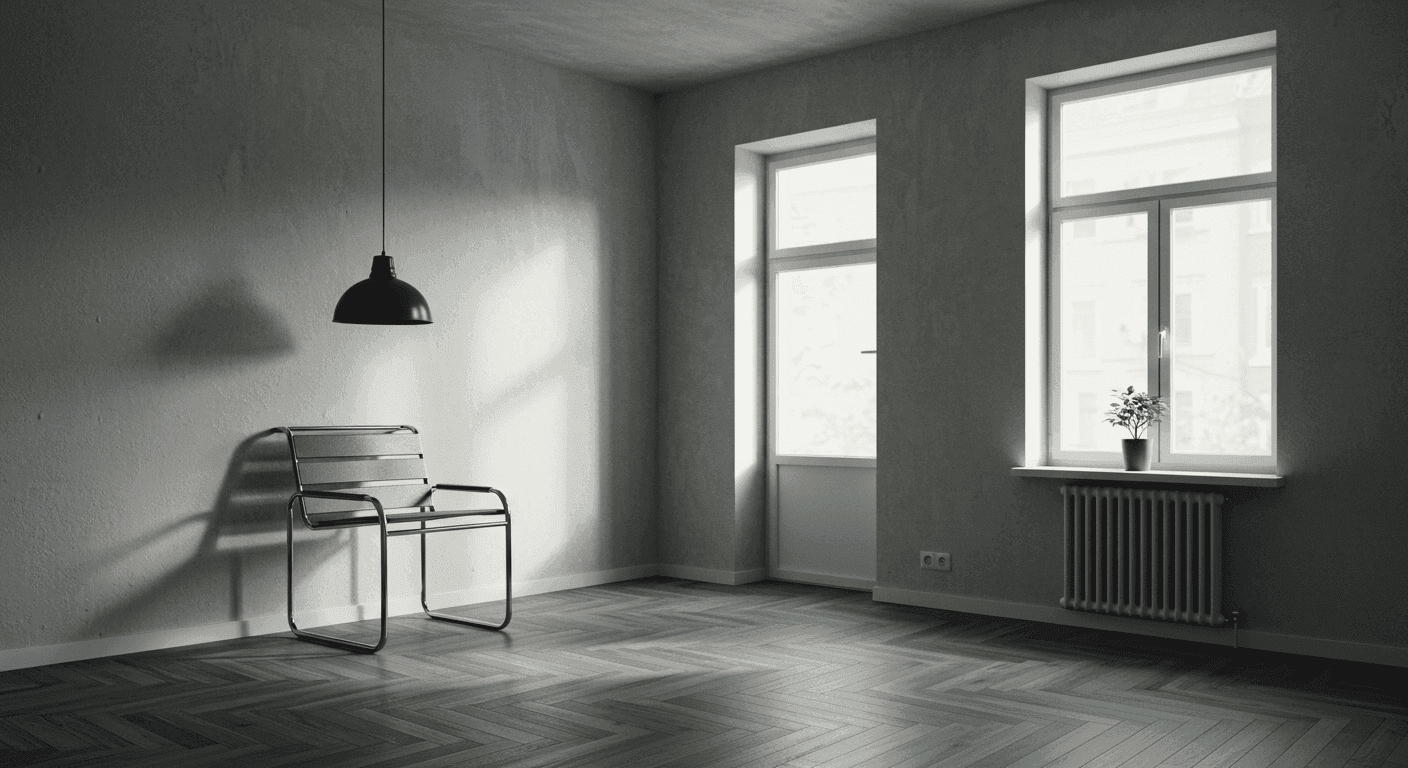
Berlin is one of our fastest-growing markets on the buy side; on the sell side it's still earlier, but our German pickups via Brenger have roughly tripled in the last 18 months. The Berlin market has a particular taste that's worth understanding before you start.
Why Berlin is underrated for vintage design
Berlin doesn't have the international design-tourist reputation of Milan or Copenhagen, but the local secondhand market is one of the deepest in Europe. Three factors make this true. First, Bauhaus is a Berlin lineage (Dessau, where the school moved in 1925, is two hours away; the final Berlin chapter of the school in 1932-33 is part of the city's design DNA). Second, the city has been an architecture and design centre for over a century, which means the housing stock has been continuously furnished by design-conscious owners. Third, Berlin rents have, until recently, been low enough that creative-class buyers could afford serious pieces and have time to develop their taste.
The result is that Whoppah typically has strong inventory in Berlin across furniture, lighting and art, with particular depth in Bauhaus tubular-steel reissues, post-war German modernism (Walter Knoll, Wilkhahn, USM Haller), and contemporary German design from the 2000s onward.
What Berlin is known for, design-wise
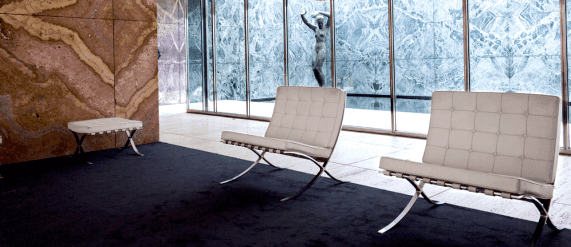
The most important name in 20th-century Berlin design is Bauhaus, even though the school itself spent most of its life in Weimar and Dessau. The final years (1932 to 1933) in Berlin under Mies van der Rohe consolidated the Bauhaus identity before the school closed under political pressure. The Bauhaus Archive on Klingelhöferstrasse, designed by Walter Gropius himself, is the city's institutional anchor for this period.
Post-war German modernism was shaped substantially by Berlin-trained or Berlin-influenced designers. Egon Eiermann (whose 1949 SE 18 folding chair is still produced by Wilde+Spieth) and the Ulm School influence run through this tradition. The work is quiet, structurally rigorous, and tends to fly below the international design-magazine radar.
Contemporary Berlin design (2000 onward) has produced strong work from Konstantin Grcic, Werner Aisslinger, Stefan Diez, and a generation of younger designers based in Kreuzberg and Mitte. Pieces from these designers are starting to appear on the secondhand market.
Where to see iconic pieces
Three Berlin institutions are essential viewing if you want to understand the local design lineage before buying.
The Bauhaus Archive (Klingelhöferstrasse 14) is the obvious starting point. The collection holds Breuer, Mies, Reich, Wagenfeld, and the broader Bauhaus production output. Worth a focused half-day.
The Kunstgewerbemuseum (the Berlin State Museums' decorative arts collection) has substantial 20th-century holdings including Wilhelm Wagenfeld lighting and post-war German furniture.
The Werkbundarchiv (Museum der Dinge) in Kreuzberg holds the Werkbund's archive, which is the broader context for understanding German design as a movement (the Werkbund founded in 1907 was the predecessor that the Bauhaus emerged from).
For more contemporary work, the Galerie Klemm's, Galerie Buchholz, and the gallery cluster around Auguststrasse in Mitte host design exhibitions worth visiting.
How delivery works for Berlin buyers
Berlin sits inside the Brenger service area but is at the eastern edge of typical Dutch-headquartered courier routes. Within-Berlin delivery costs €60 to €140 depending on item size; Berlin to Amsterdam or Rotterdam runs €180 to €320; Berlin to Paris €260 to €420.
If you're buying a piece in Berlin, the courier slot windows are typically 3 to 7 days from booking confirmation. Berlin has more multi-flat-building living than most other German cities, so floor-of-pickup pricing matters. A fifth-floor walk-up adds meaningfully to the courier price.
Self-pickup within Berlin is common and cheap; the city has good cargo-bike infrastructure for smaller pieces, and rental vans are reasonable. Most Berlin sellers can coordinate evening or weekend pickup windows.
What's typically active in Berlin
The categories I see most often:
- Bauhaus reissues (Knoll Wassily, Cesca, MR10, Barcelona) from German collectors, often well-maintained, €400 to €4,000 depending on model and era
- Post-war German modernism (Walter Knoll lounge chairs, Wilde+Spieth chairs, early USM Haller) at €300 to €1,800
- USM Haller modular cabinets and tables, often from Berlin offices being refurbished, €500 to €2,500 per configuration
- Scandinavian mid-century imported in the 1970s, particularly Wegner and Mogensen, €400 to €1,800
- Contemporary German design (Konstantin Grcic, Stefan Diez) starting to appear, €400 to €2,000
A note on Berlin-specific dynamics
Berlin's market has a particular character worth knowing.
First, condition disclosure tends to be more thorough than the European average. The buyer audience is informed (a lot of architects, designers and design-conscious creatives) and sellers know they need to be honest.
Second, the city has a strong "freecycling" culture that runs alongside paid secondhand. Excellent pieces sometimes appear on Kleinanzeigen or via word-of-mouth at very low prices. Whoppah's curation lets us flag the genuinely good pieces, but Berlin's secondhand-design ecosystem is broader than any one marketplace.
Third, the post-pandemic increase in Berlin rents has started to compress the local market. Pieces are moving faster and prices are slowly catching up to the rest of Western Europe. The buyer's-market window of the 2010s has narrowed, but the inventory is still deeper here than in most cities.
Whether you're furnishing a Mitte loft or a Kreuzberg Altbau, Berlin's secondhand-design market is one of the city's underrated assets. Worth knowing about, worth using.