Vintage and secondhand design in Barcelona: where Spanish modernism meets Mediterranean sensibility
Barcelona's secondhand-design market sits at the intersection of Spanish modernism, Italian post-war imports, and Mediterranean indoor-outdoor design sensibility. Here's the friendly guide.

Barcelona is the youngest of our major European markets and the one I'm most excited about. The city's design density rivals Milan and the secondhand culture is genuinely emerging now, not borrowed from somewhere else.
Barcelona's particular character
Barcelona has its own design tradition that often gets undersold in international discussions of European design. The Spanish post-war design generation (Antoni Gaudí for the modernista period, Antoni Bonet i Castellana, Federico Correa, Miguel Milà, Oscar Tusquets, Patricia Urquiola in our time) produced work that is genuinely important without ever becoming as internationally recognised as Italian or Danish design. The local secondhand-design market reflects that asymmetry: deep local supply of Spanish work at moderate prices, complemented by Italian post-war imports from the 1960s and 70s.
Whoppah's Barcelona inventory tends to be deepest in Spanish post-war design (BD Barcelona, Santa & Cole production, anonymous Spanish 1960s and 70s pieces), Italian post-war lighting and seating imported into Catalan design-conscious estates, and contemporary Spanish design from the 2000s onward.
What Spain is known for, design-wise
Spanish modernism has multiple phases worth knowing.
The Catalan modernista period (1888 to about 1920) is the Gaudí era. Original Gaudí furniture is essentially museum-only, but anonymous Catalan modernista pieces appear on the secondhand market and are increasingly appreciated.
The mid-century Spanish design period (1950s to 70s) ran in parallel with Italian post-war design and produced work from designers like Antoni Bonet i Castellana (the BKF butterfly chair, 1938, designed by Bonet with Juan Kurchan and Jorge Ferrari Hardoy), Federico Correa, and Miguel Milà (whose TMM floor lamp from 1962 is one of the most recognisable Spanish design pieces). BD Barcelona, founded in 1972 by Oscar Tusquets and Lluís Clotet, has been the main Spanish design manufacturer of the post-war and contemporary periods.
The contemporary Spanish design generation (post-2000) is led by Patricia Urquiola (born in Spain, based in Milan, working for Italian manufacturers but with a Spanish design sensibility), Jaime Hayon (working internationally for Fritz Hansen, BD Barcelona, Magis), Tomás Alonso, and a healthy contemporary Barcelona design scene.
Where to see iconic pieces
Three Barcelona institutions are essential.
The Museu del Disseny de Barcelona (Plaça de les Glòries Catalanes 37) is the city's design museum. Comprehensive Catalan and Spanish design collection.
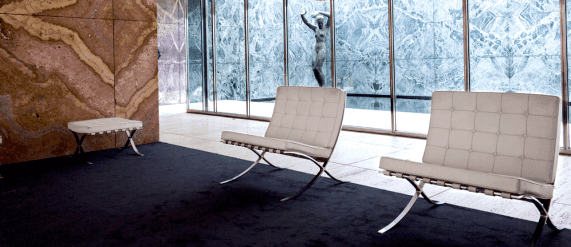
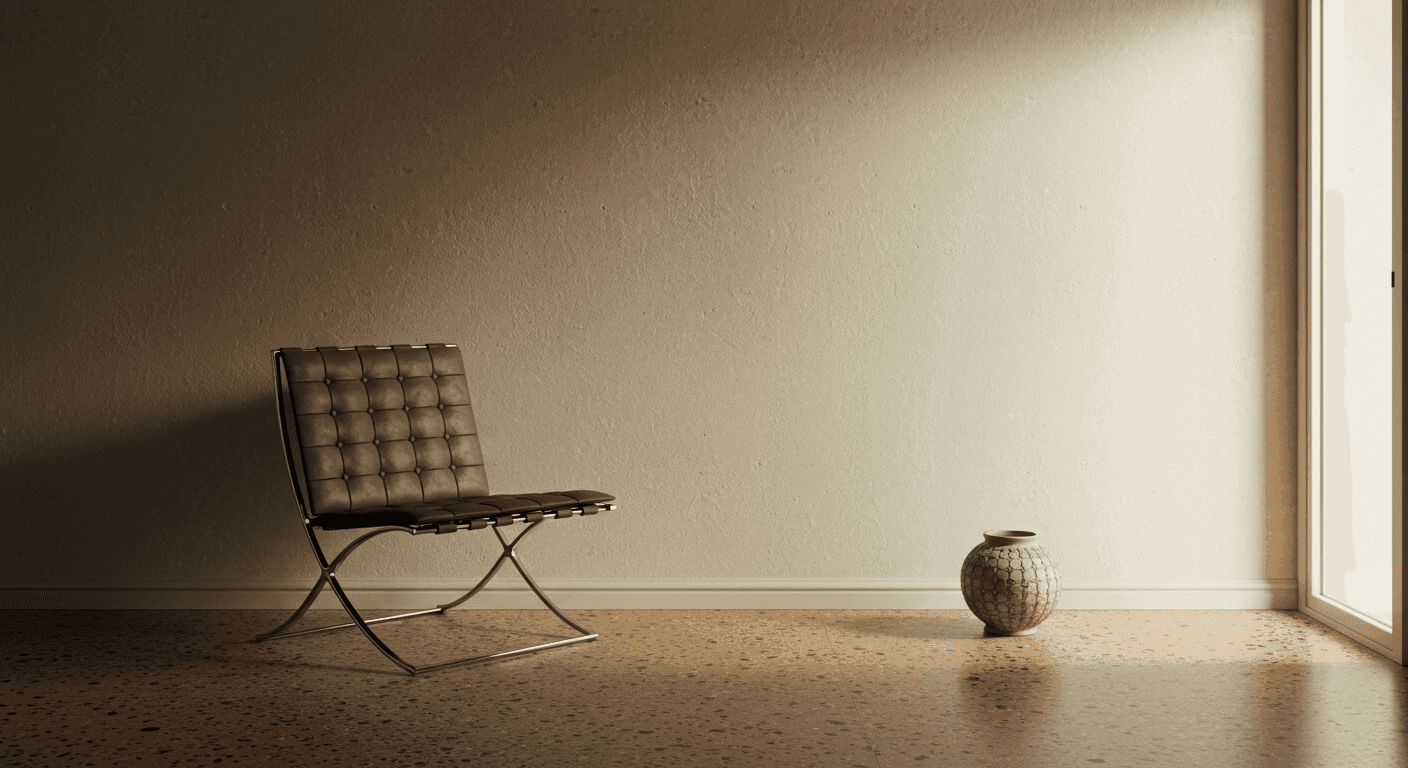
The Mies van der Rohe Pavilion (Av. Francesc Ferrer i Guàrdia 7) is the reconstructed 1929 Barcelona Pavilion, the building the Barcelona chair was designed for. Essential viewing.
The Fundació Joan Miró has rotating design exhibitions within its broader art programme.
For commercial viewing, BD Barcelona's flagship (Ramon Turró 126) is open to the public, as is Santa & Cole's showroom. The Eixample district has several design-focused galleries worth visiting.
How delivery works for Barcelona buyers
Barcelona is at the edge of Brenger's southern European network. Within-Barcelona delivery costs €60 to €140; Barcelona to Madrid runs €180 to €320; Barcelona to Paris €260 to €420; Barcelona to Milan €280 to €450.
Self-pickup within Barcelona is moderately constrained by traffic but generally feasible. Most sellers can coordinate weekend or evening pickup windows.
A specific consideration: Spain's Iberian peninsula geography means cross-border courier costs to Barcelona from northern Europe are higher than to other major European cities. If you're shopping cross-border, factor this into total purchase cost.
What's typically active in Barcelona
The categories I see most often:
- BD Barcelona pieces (Tusquets, Clotet, Hayon, Urquiola), €400 to €2,500
- Santa & Cole lighting (Antoni de Moragas, Miguel Milà), €280 to €1,400
- Anonymous Catalan modernista furniture from the 1900-1920 period, €600 to €4,500
- Spanish mid-century (Bonet, Correa, anonymous Spanish 1960s and 70s), €350 to €2,000
- Italian post-war lighting imported into Catalan design estates, €400 to €2,000
- Contemporary Spanish design (Hayon for BD Barcelona, anonymous contemporary Barcelona work), €400 to €1,800
A note on Barcelona-specific dynamics
A few things worth knowing.
First, the Spanish secondhand-design market is generally less competitive than Northern European markets. Listings sit longer, sellers are more open to negotiation, and pieces that would sell within days in Amsterdam or Copenhagen can be available for weeks in Barcelona.
Second, condition disclosure is more variable than in Northern Europe. Spanish listing culture is less detail-heavy than Dutch or Danish. Ask in chat for specific photos and condition details rather than assuming the listing covers everything.
Third, the cross-border dynamic with France matters. Barcelona is 90 minutes from the French border, and there's meaningful design-piece traffic between southern France and Catalonia. Some Barcelona listings are pieces that were imported from France in recent years, which can affect provenance.
Fourth, the climate consideration is real but not as severe as you might expect. Mediterranean humidity can affect upholstered pieces over decades, but well-cared-for pieces in Barcelona apartments tend to be in similar condition to pieces from northern European apartments.
If you're furnishing a Barcelona apartment, particularly in the Eixample or the Gothic Quarter, the local design market is genuinely good. If you're shopping cross-border into Barcelona, the inventory of Spanish mid-century at moderate prices justifies considering pieces from the local market.