Vintage and secondhand design in Paris: where French post-war design still moves quietly
Paris has one of Europe's most curated vintage-design markets. French post-war heritage, deep Italian imports, and a culture that takes design seriously make the city a strong but selective buying environment. Here's the friendly guide.

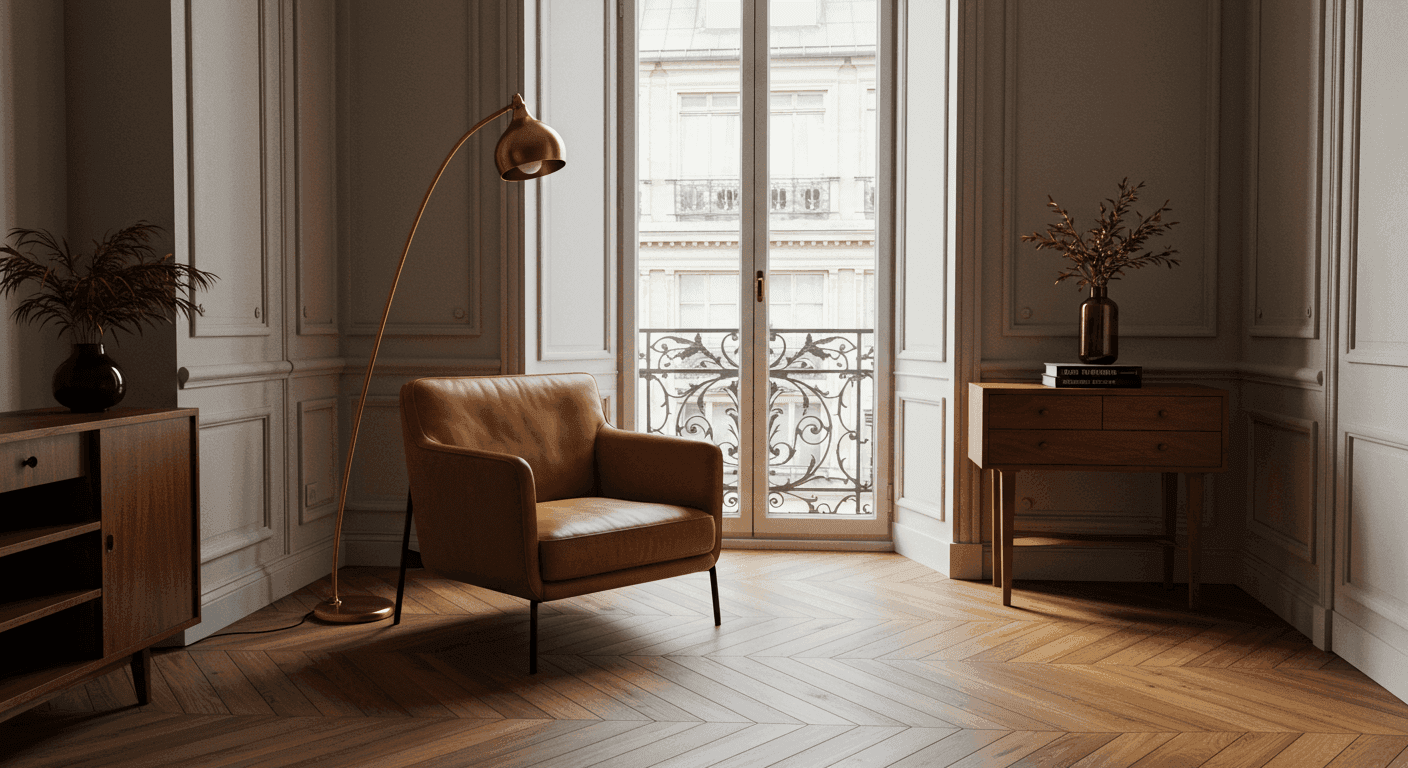
Paris was the third European market we opened pickup routes to, after the Netherlands and Belgium. What I've learned is that Paris sells what the rest of Europe buys: Jeanneret, Perriand, Royère, and the French mid-century names that the Anglo market is just now catching up to.
Why Paris has its own particular character
Paris's secondhand-design market is unlike any other European city's. The French post-war design tradition (Pierre Paulin, Jean Prouvé, Charlotte Perriand, Pierre Jeanneret, Roger Tallon, Olivier Mourgue) is genuinely important and locally rooted, the gallery system around Rue de Bonaparte and the Marais is sophisticated, and the buyer pool is informed enough that aspirational pricing fails. This combination produces a market that's serious, expensive at the high end, and unusually rewarding at the middle tier.
Whoppah's Paris inventory tends to be deepest in French post-war (Paulin, Mourgue, Tallon, anonymous French Deco) and in Italian post-war that was imported into Paris during the 1960s and 70s. Less depth in Scandinavian mid-century than you'd find in Amsterdam, but the French pieces compensate.
What Paris is known for
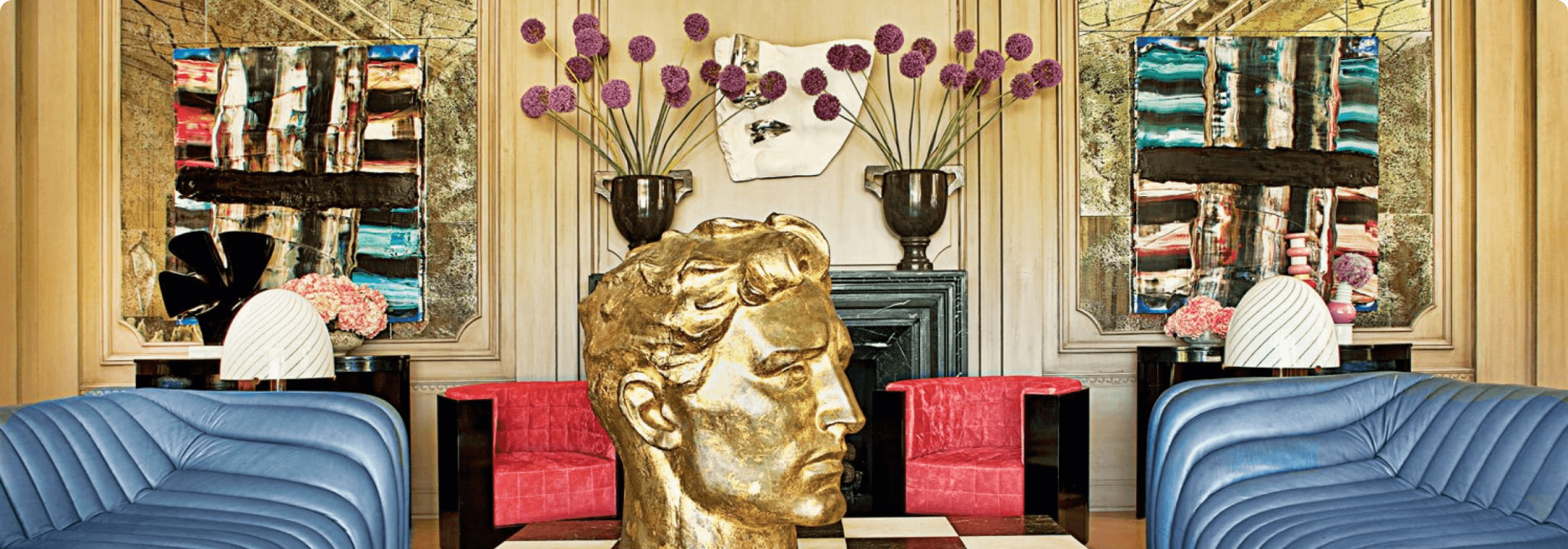
French post-war design has a specific character. Where the Danes worked in restrained wood, the Italians in sculptural foam, and the Germans in disciplined steel, the French post-war designers worked in saturated colour upholstery, polished aluminium, and surprising forms. Pierre Paulin's work for Artifort is the most internationally recognised; his Élysée Palace commissions (under Pompidou in 1971 and Mitterrand in 1983) gave the work particular national standing.
Jean Prouvé's work bridges architecture and furniture: the Standard chair (1934), the EM Table (1952), the Antony chair (1954). Authentic Prouvé pieces are now in the upper four to five figures, but Vitra-produced reissues from 2002 onward are accessible at €700 to €2,500 used.
Charlotte Perriand's solo post-war work (after she left Le Corbusier's studio in 1937) is finally getting the credit it deserves. The Tunisie bookcase (1952), the Les Arcs ski-resort interiors (1967), and the Synthèse des arts cabinets (1955) are her marquee pieces.
Olivier Mourgue's Djinn series (1965), made famous by Stanley Kubrick's 2001: A Space Odyssey, is the Space Age moment in French design. Original Djinn lounges sell for €2,500 to €5,500 on Whoppah.
Roger Tallon's work (the Module 400 set for Galerie Lacloche, 1965) is the most architectural French mid-century.
Where to see iconic pieces
Three Paris institutions are essential.
The Musée des Arts Décoratifs at the Louvre has the most comprehensive French 20th-century design collection. Worth multiple visits.
The Centre Pompidou has substantial Le Corbusier holdings and rotating exhibitions of French and international post-war design.
Galerie Patrick Seguin and Galerie Jousse Entreprise (both in the Marais) are commercial galleries that specialise in French post-war and define the high-end market for these pieces. Even if you can't afford their pricing, the displays are educational.
For more accessible viewing, the Saturday-morning Marché aux Puces de Saint-Ouen has a genuine secondhand-design section, particularly in the Marché Paul Bert Serpette.
How delivery works for Paris buyers
Paris is at the edge of Brenger's core service area. Within-Paris delivery costs €80 to €180 depending on item size and arrondissement (Brenger's local pricing handles the narrow doorways and small lifts characteristic of Haussmannian buildings). Paris to Amsterdam or Brussels runs €220 to €380. Paris to Marseille or Lyon, €260 to €420.
A specific Paris consideration: many sellers in central arrondissements have buildings without lifts, or with lifts too small to take furniture. The "floor of pickup" pricing on the Brenger quote reflects this, and it can add €40 to €120 for fifth-floor walk-ups.
Self-pickup within Paris is more difficult than in other European cities because of parking constraints. If you're picking up a piece yourself, coordinate the time window carefully with the seller, and have a backup plan if the loading window doesn't work.
What's typically active in Paris
The categories I see most often:
- Pierre Paulin (Tongue, Mushroom, Ribbon, plus less famous F560-series pieces), often from Paris design estates, €700 to €4,500 depending on model and condition
- Jean Prouvé reissues from Vitra (Standard chair, EM Table, Antony chair), €500 to €2,500
- Anonymous French post-war (Roger Capron ceramics, anonymous French Deco furniture from the 1930s) at €400 to €2,500
- Italian post-war lighting and furniture imported into Paris in the 1960s and 70s, €600 to €3,500
- Maison Jansen pieces (the Paris design house active 1880 to 1989), €1,500 to €8,000 depending on object
A note on Paris-specific dynamics
A few things worth knowing.
First, the Paris market is competitive at the iconic-piece level. Genuine Paulin or Prouvé pieces at fair prices get multiple bids within hours.
Second, the gallery system in Paris means some sellers price aggressively, expecting buyers to be informed enough to walk if the price is wrong. This is different from Berlin or Amsterdam, where sellers price more accommodatingly. The negotiation register in Paris listings is wider; don't be afraid to offer 80% of asking on pieces that have been listed for over 60 days.
Third, condition disclosure varies more in Paris than in other major European cities. Ask specific questions in chat (about reupholstery, refinishing, structural repairs) rather than assuming the listing covers everything. Most sellers will answer honestly when asked directly.
Whether you're furnishing a Marais loft or a Haussmannian apartment in the 16th, the Paris market is worth navigating carefully. It rewards patience and a developed eye.