The case against new: when designer furniture should never be bought brand new
I'm not anti-new-furniture. I've bought new pieces myself when there was no realistic vintage alternative. But for several specific categories, buying new is almost always the wrong call. Here's the honest breakdown.

I run a marketplace for secondhand, so you'd expect me to argue against buying new. I don't. But there's a narrower question worth asking, and it's the one I find myself answering for friends most often.
A nuanced argument, not an absolutist one
I want to start by saying: I'm not anti-new furniture. I've bought new pieces in my own life. Some categories don't work well secondhand, some pieces aren't available secondhand, and some buyer situations genuinely benefit from the certainty of a new purchase. I'll cover those cases honestly.
But there are specific categories of furniture where buying new is almost always the wrong call, and where vintage secondhand is structurally cheaper, more interesting and more sustainable. I want to spend this article on those categories, because I think the case for vintage is sometimes hidden behind brand marketing.
Case 1: Iconic mid-century designer chairs in current re-production
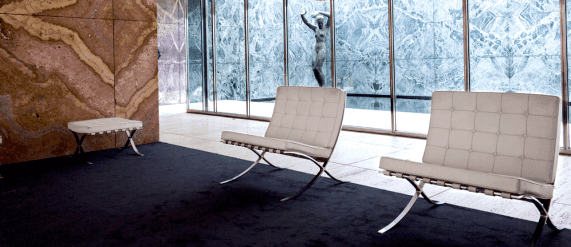
The Eames Lounge Chair, the Wegner Wishbone, the Barcelona chair, the LC2 Petit Confort, the Tulip chair, the Womb chair, the Egg, the Swan, the Maralunga, the Cab. These pieces are all currently produced new by their authorised manufacturers (Vitra, Knoll, Carl Hansen, Cassina, Fritz Hansen). The new retail prices are roughly:
- Eames Lounge Chair: €8,500 new (Vitra)
- Wegner CH24 Wishbone: €930 new (Carl Hansen)
- Barcelona chair: €7,500 new (Knoll)
- LC2 Petit Confort: €4,800 new (Cassina)
- Tulip chair: €2,400 new (Knoll)
- Egg chair: €10,500 new (Fritz Hansen)
- Maralunga sofa: €7,000 new (Cassina)
The secondhand prices on Whoppah for the same models in original-period production:
- Eames Lounge Chair (1980s-2000s, Vitra): €3,000 to €5,000
- Wegner Wishbone (1960s-90s, Carl Hansen): €500 to €1,000
- Barcelona chair (1980s-2000s, Knoll): €2,500 to €4,500
- LC2 Petit Confort (1970s-90s, Cassina): €1,500 to €3,500
- Tulip chair (1970s-90s, Knoll): €600 to €1,400
- Egg chair (1980s-2000s, Fritz Hansen): €3,500 to €7,000
- Maralunga sofa (1980s-90s, Cassina): €2,500 to €5,500
These are functionally identical objects. The brands have maintained production specifications carefully across decades. The secondhand pieces are made with the same materials, in the same factories, often by the same workers' direct successors. The vintage pieces are usually 40 to 70% cheaper than the new equivalents.
Buying these new makes sense only if you specifically want a piece with no patina, in a current-catalogue colour that isn't available on the secondhand market, with current warranty coverage. That's a specific use case. For most buyers, vintage is the rational choice.
Case 2: Industrial / Bauhaus tubular steel furniture
The Wassily, the Cesca, the MR10, the Brno chair. These chrome-and-leather pieces are still produced by Knoll and Thonet. They're also widely available secondhand from the 1970s to 90s production, at 40 to 60% of current retail.
The chrome on a 1970s Wassily, properly maintained, is structurally identical to current chrome. The bent-steel frame doesn't degrade in any meaningful way over decades. Saddle leather on a 1980s Barcelona patinates beautifully and is structurally stronger than new leather.
There is essentially no rational reason to buy these pieces new unless you want a colour or upholstery option that isn't in vintage circulation.
Case 3: Storage furniture and case goods
Sideboards, credenzas, dressers, bookcases, vitrines, dining tables. Anything that's primarily a wooden structural object rather than a soft upholstered piece.
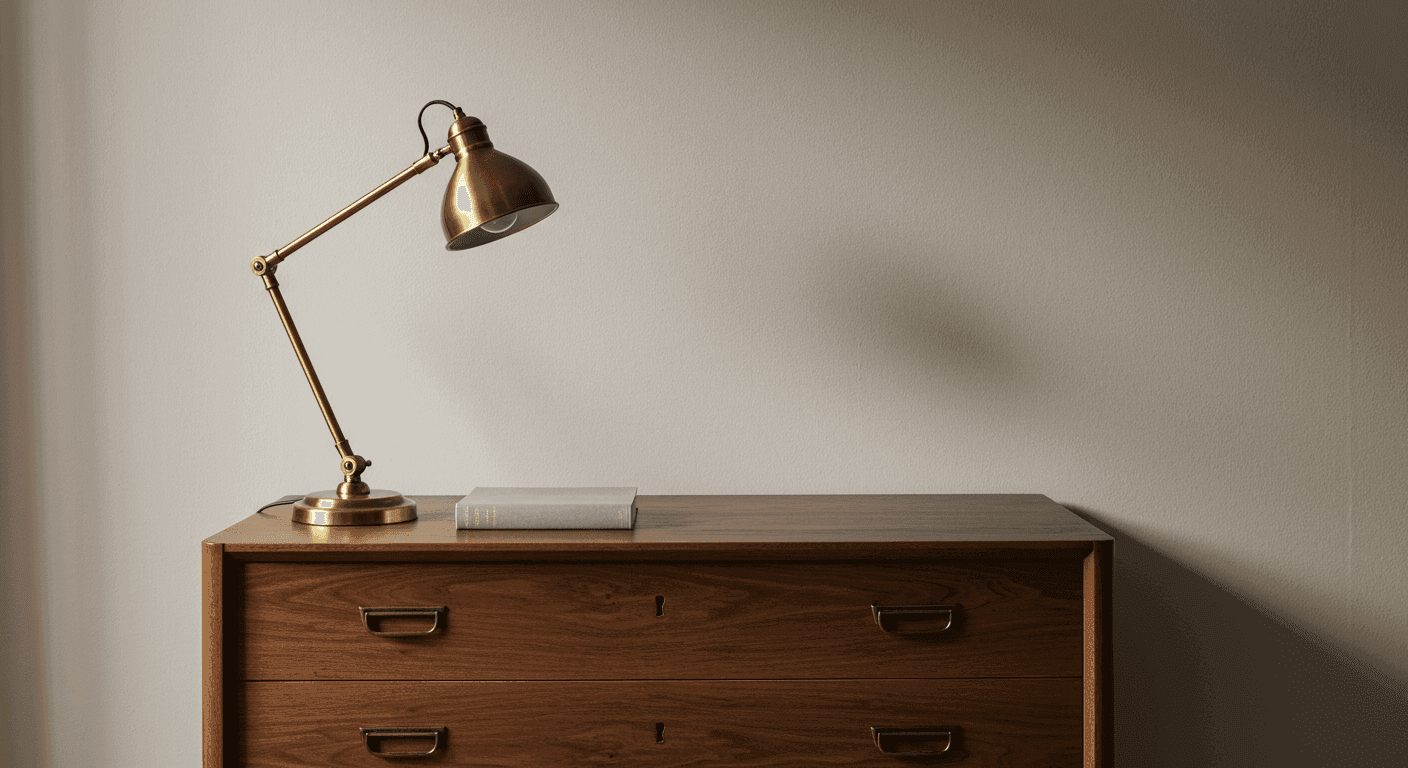
A solid-walnut Florence Knoll credenza from 1970 is exactly as structurally sound as a Florence Knoll credenza from 2026, and looks better because the walnut has acquired forty years of patina. The new piece costs €6,500. The vintage piece costs €2,200 to €5,000. The buying argument for vintage is almost unanswerable in this category.
The exception is when you specifically need a particular size or configuration that doesn't exist on the secondhand market. Custom dining tables in non-standard dimensions, for instance. Even then, ordering custom from a small workshop often produces a better result than buying mass-market new at scale.
When new actually makes sense
I want to be honest about the cases where buying new is the right call.
Genuinely contemporary designers. If you want a Patricia Urquiola, a Konstantin Grcic or a Ronan and Erwan Bouroullec piece from the last 5 years, the secondhand market for those is thin because they're still in their first owner's hands. Buy new, or wait 10 years for the secondhand market to develop.
Children's furniture. Cot mattresses, high chairs, anything that contacts food or that babies bite. Buy new for hygiene and current safety-standard compliance.
Standard mattresses. Mattresses have a 7 to 10 year useful life and the secondhand market for them is appropriately small. Buy new.
Specific accessibility needs. If you need a chair with a specific height, a specific armrest configuration, or a specific load rating, and the secondhand market doesn't have what you need, buy new from a maker who can confirm the specifications.
Pieces where the new retail is below the secondhand average. This happens occasionally with current-production budget pieces from Hay, Muuto and Ikea. If a new Hay chair costs €120 and the typical secondhand price is €80, the carbon advantage of secondhand is real but small, and the convenience cost of secondhand might not be worth it.
The summary
For iconic mid-century designer pieces, for industrial tubular steel furniture, and for storage furniture and case goods, the structural case for vintage over new is almost unanswerable. You save money, you reduce embodied-carbon footprint, you often get a more interesting object, and the build quality of the period is typically equal to or better than current production.
For contemporary designers, children's furniture, mattresses, accessibility-specific needs, and current-production budget pieces, buying new is sometimes the right call.
The decision isn't between secondhand-everything and new-everything. It's about knowing which categories work which way, and making each individual purchase deliberately.