How to buy secondhand designer furniture safely, without losing sleep over it
Buying a designer piece from a stranger online can feel daunting. It really doesn't need to. These are the seven checks I run before I click Buy, whether on Whoppah or anywhere else, written as plainly as I can.

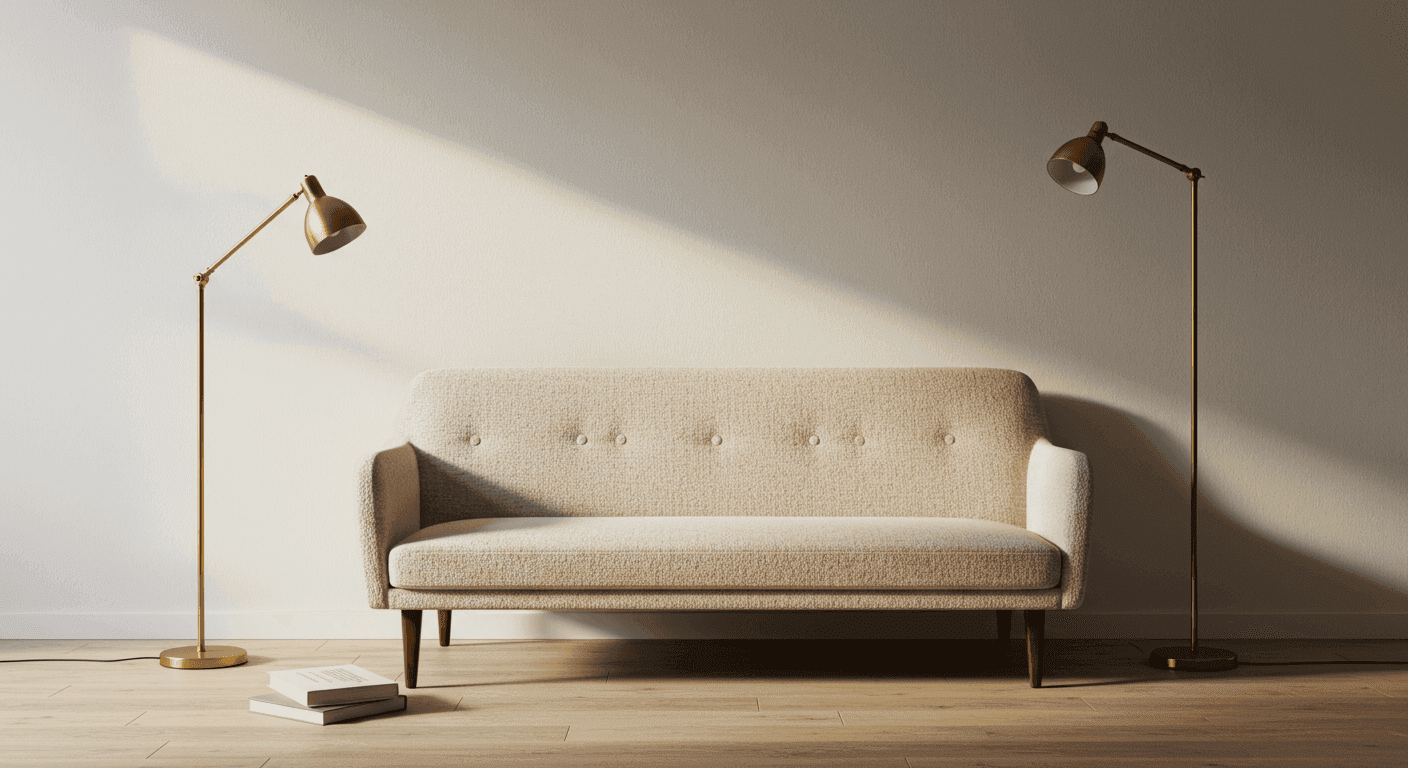
Half the questions our buyer-success team in Amsterdam handles are some version of 'how do I avoid getting burned on a secondhand designer piece?' We've put what they answer most often into this guide.
Start with the question, not the search
Before you open any marketplace, do me a small favour. Write down three things on paper or in your phone. What room is this for. What dimensions does it need to fit. What's the absolute ceiling on what you'd spend. If you can't write all three, the search isn't ready yet.
I'm not being precious. The most expensive mistakes I see on secondhand furniture all start the same way: vague intent. Get those three things clear, and almost every other decision gets easier.
1. Verify the brand and designer
Every listing on Whoppah names the brand and (where relevant) the designer. Before you commit, confirm independently that:
- The designer actually designed for that brand. Hans Wegner designed for Carl Hansen & Son. He did not design for Knoll. Sellers occasionally swap these around, sometimes by mistake.
- The piece you're looking at corresponds to a real product reference. Search the brand's archive page if they publish one. Cassina, Vitra, Carl Hansen, Knoll and Louis Poulsen all maintain useful online archives.
- The model name matches. A Wegner CH24 is the Wishbone. A Wegner CH25 is not the Wishbone, it's the Easy Chair. Easy mistake, but worth catching before you bid.
If a piece has been re-issued in modern production, check whether the listing is for an original-period example or a recent re-issue. The price gap can be three to five times.
2. Read the photos like a structural engineer
Listings with five good photos are fine. Listings with twenty acceptable photos are better. Look at:
- Joints. Dovetails on drawers, mortise-and-tenon on chair frames. Cracks at joints mean structural compromise.
- Underside. Maker's plate, frame construction, any visible repairs. A piece with no underside photo is hiding something. Politely ask for one.
- Upholstery seams. Machine-perfect stitching on a 1960s piece often means modern reupholstery, which is fine if disclosed.
- Veneer corners. Lifting or chipping veneer is the most common condition issue on mid-century pieces.
- Wood colour gradient. Significantly different shades across panels suggest replaced parts.
If you can't see something critical, message the seller for a specific photo. A seller who refuses or makes excuses is a seller you can skip. Most sellers are happy to help.
3. Compare the asking price against the market
For any piece by a named designer in a recognised brand, there's a price range. Three references I check, in order:
- Recent sold listings on Whoppah for the same model (search the slug)
- The brand's current retail for the re-issue, if any. This sets the ceiling.
- One auction-house archive. Most major houses publish sold-price archives.
If a listing is 30% above the typical range, ask why in the chat. There might be a good reason (rare colour, exceptional provenance, original packaging). If it's 40% below, ask why too. Bargains do exist, but suspiciously cheap pieces often have an undisclosed issue, and you'd rather know.
4. Confirm condition specifically, not generally
"Good condition" means nothing without specifics. Before you pay, get explicit confirmation on:
- Original finish or refinished. Refinishing is usually a value-decreaser for mid-century pieces unless done conservatively.
- Original upholstery or reupholstered. Reupholstery is fine but should be transparent.
- Any structural repairs. Re-glued joints are fine if disclosed.
- Any replaced parts. Replaced shock mounts, casters, fittings. Very common, transparent disclosure is what matters.
On Whoppah, the seller is contractually obliged to disclose these. Bidding without explicit confirmation in chat puts you at risk of an "as described" dispute later, and that's hassle nobody needs.
5. Use the buyer protection mechanism
Whoppah holds your payment in escrow until you confirm delivery and condition. Please don't shortcut this. Paying a seller directly outside the marketplace (PayPal Friends & Family, bank transfer to a private IBAN, anything like that) eliminates your protection. Even when the seller seems trustworthy and the price drops 5%, that 5% costs you the full price if something goes wrong.
If a seller suggests off-platform payment, that's a hard stop. Report the listing to us and walk away. We'll thank you.
6. Think through delivery before bidding
A 200 kg sideboard in Berlin shipped to Amsterdam will cost €300 to €600 in insured courier delivery. Factor that into your total budget before you place a bid. Whoppah's integrated Brenger pickup handles most NL/BE/DE/FR routes, and the quote is generated automatically in checkout. For pieces outside the standard service area, get a specific shipping quote before you commit.
Self-pickup is the cheapest option but requires a van, two people for anything large, and a few moving blankets. Plan accordingly.
7. Plan the post-purchase week
Allow time on arrival to:
- Unwrap and inspect within the 48-hour buyer-protection window
- Compare to the listing description item by item
- Take your own condition photos in case you need to raise a dispute
Most pieces arrive exactly as described. The 48-hour window exists for the rare exception, and it's there to protect you. Don't skip the inspection.
A note on bidding strategy
Most sellers price about 10 to 15% above what they expect to accept. So place a first bid at 80% of the listed price, expect a counter, meet in the middle if the counter is reasonable. Don't lowball under 70%. Sellers ignore those offers, and you lose the chance to engage on something you actually wanted.
If the listing has been live for more than 30 days at the same price, the seller is usually more willing to negotiate. Recently-listed pieces with active interest are less negotiable. Read the situation, then act.
The final test
Before clicking Buy, picture the piece in your room for ten years. If it still looks right, click. If you're uncertain, sleep on it. The right pieces are rare enough that one missed opportunity is far cheaper than one wrong purchase.
If you want a second pair of eyes on a listing before you commit, our chat is open. We'd much rather help you decide than have you wonder later.