Charlotte Perriand: the designer the 20th century is finally crediting properly
For most of the 20th century, Perriand's work was credited to Le Corbusier. The catalogues are correcting this now. Her solo career (1937 onward, after she left Le Corbusier's atelier) is one of the most important bodies of furniture design from the period.


Charlotte Perriand listings have grown sharply on Whoppah in the last two years. Our curators have watched her market value catch up to her male contemporaries and the listings reflect that; sellers price more confidently now.
A name that should have been on the chairs all along
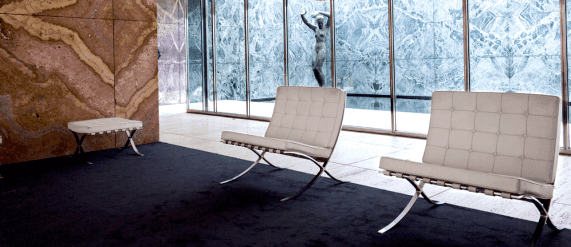
Charlotte Perriand (1903 to 1999) joined Le Corbusier's atelier in October 1927. She had applied to work there earlier that year and Corbusier reportedly told her "we don't embroider cushions here". She showed him her Salon d'Automne installation (a chrome-and-leather bar with stools) the next month, and he hired her on the spot. She stayed for ten years and designed most of what the world now calls "Le Corbusier furniture": the LC2, LC3, LC4 chaise, LC1 sling chair, LC6 table, and the rest of the 1928 to 1929 series.
She left the atelier in 1937 to develop her own practice. The Vichy government's invasion of France in 1940 sent her to Japan, where she spent the war years working in wood (steel was rationed). She came back to France in 1946 with a completely transformed material vocabulary. The post-war Perriand is, in many ways, the more interesting Perriand.
Her solo work
The Tunisie bookcase (1952, in collaboration with Sonia Delaunay on the colour panels) is one of her signature pieces. Modular open shelving with painted sliding panels in primary colours. Authentic period production from Steph Simon, who edited her work, sells for €4,000 to €12,000 on Whoppah depending on size and condition.
The Cassina re-editions, started in 2007 by the brand's "Cassina I Maestri" program, are the easiest entry into Perriand's solo catalogue. The Cassina Tunisie is around €8,000 retail; vintage Steph Simon originals are higher.
Her Les Arcs ski resort interiors (1967 onward) produced a whole vocabulary of low-line modular seating and storage that you'll occasionally see on Whoppah. Mostly anonymous, period-marked production, in the €600 to €2,500 band.
The Synthèse des arts cabinets (1955), the painted wooden cabinets in saturated colour blocks, are her most graphic work. Originals trade in five figures.
Why she matters
Two things, I think.
First, the credit correction is overdue. The LC series is among the most recognised furniture in the world, and it was substantially Perriand's design. Walking around museum displays in 2026 and seeing "Le Corbusier, Pierre Jeanneret, Charlotte Perriand" finally appearing on the labels is a small thing that matters.
Second, her solo post-war work is genuinely distinct. She introduced wood, woven cane, modular construction, and a more domestic scale into a design vocabulary that Corbusier had kept architectural. If you want furniture that has the rigour of modernism but the warmth of craft, Perriand is the designer.
What to look for
Steph Simon-produced originals are the collectible peak; Cassina reissues are the accessible alternative. Both are legitimate. Watch for unattributed pieces sold as "Perriand-style" that are actually Les Arcs anonymous production or French regional copies. Whoppah's curation differentiates carefully.