Muuto: the Danish brand that built a contemporary Scandinavian catalogue from scratch
Muuto was founded in 2006 in Copenhagen. They produce contemporary Scandinavian design with a focus on small-format upholstered seating, lighting and storage. Here's the short story.

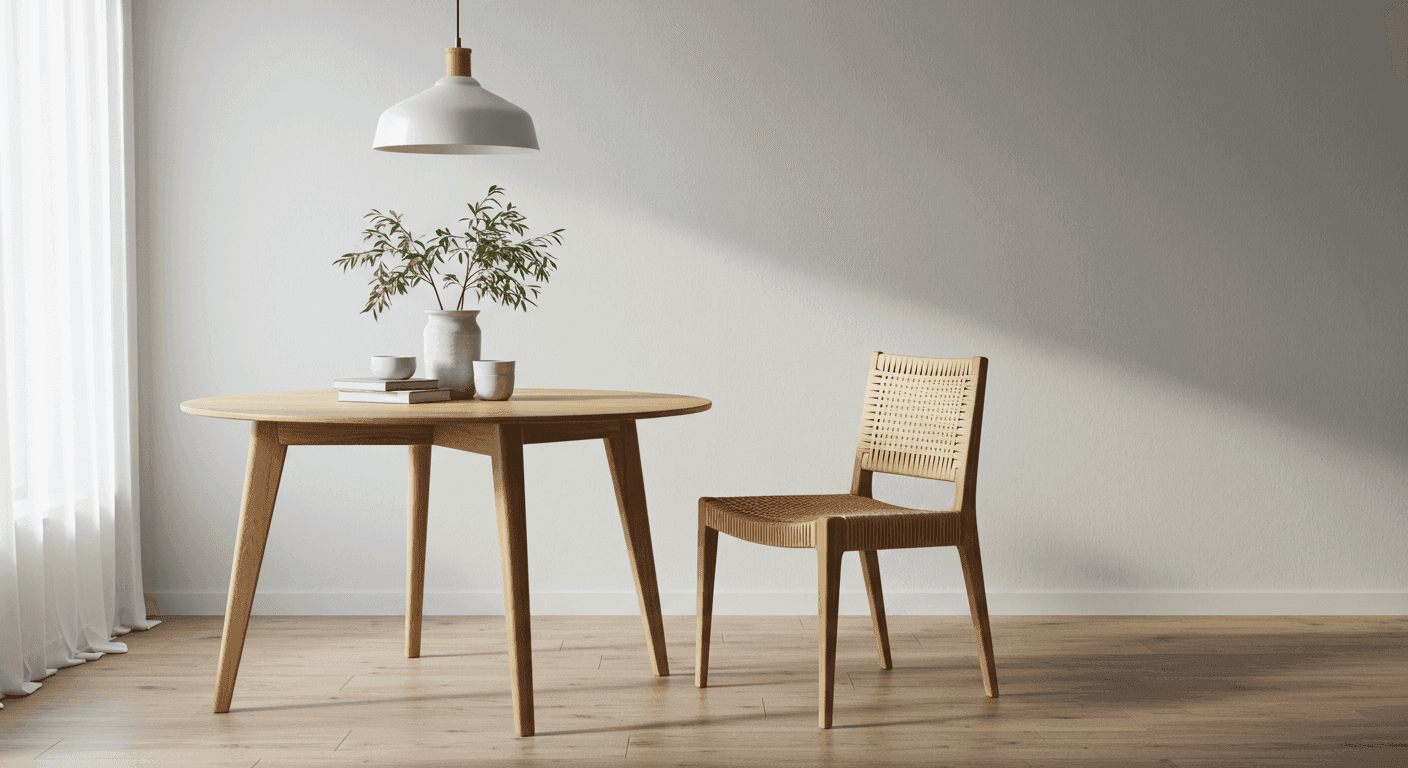
Muuto built a contemporary Scandinavian catalogue from scratch, and its speciality is the upholstered piece that fits a small apartment without dominating the room. Peter Bonnén and Kristian Byrge founded the brand in Copenhagen in 2006, taking the name from the Finnish muutos, meaning new perspective. On Whoppah the Fiber chair (Iskos-Berlin, 2014) sells at €180 to €380 and the Cover lounge chair (Thomas Bentzen, 2017) at €600 to €1,200. Buy it for use rather than appreciation: the Fiber shells hold up well, and the Outline sofa upholstery typically runs 10 to 12 years before the corners show. Our curators check upholstery condition carefully, because the textiles are part of the value.
Muuto was founded in 2006 in Copenhagen by Peter Bonnén and Kristian Byrge. The name comes from the Finnish word "muutos", meaning "new perspective". The brand sits in the contemporary Scandinavian space alongside Hay and &Tradition: born after 2000, drawing on mid-century Danish discipline, pricing for contemporary apartments rather than collectors.
The catalogue is built around small-format upholstered pieces (the Outline sofa series by Anderssen & Voll, 2014), wall-mounted lighting and storage (the Visu chair by Mika Tolvanen, 2013), and accent lighting (the E27 pendant by Mattias Ståhlbom, 2010). Muuto's specialty is the upholstered piece that fits in a small apartment without dominating the room.
What does a used Muuto Fiber chair cost on Whoppah?
The Fiber chair (Iskos-Berlin, 2014) is one of the more-collected Muuto pieces: a moulded composite shell on various base options (wood, steel, swivel). Vintage examples on Whoppah at €180 to €380.
The Cover lounge chair (Thomas Bentzen, 2017) is the upholstered lounge piece. €600 to €1,200 in good vintage condition.
The Restore basket (Mika Tolvanen, 2013), the Stacked storage system (Julien De Smedt, 2010), and the Restore basket are the storage workhorses.
What should you check when buying Muuto secondhand?
What to look for on the secondhand market: Muuto carries a brand label on the underside or inside of each piece. The build quality is solid contemporary, not couture: the Fiber chair shells hold up well, the Outline sofa upholstery typically lasts 10 to 12 years before showing wear at corners. Muuto is excellent value for contemporary Scandinavian design, but isn't the kind of furniture you collect for resale appreciation.
Counterfeits of Muuto are uncommon (the brand isn't yet famous enough to be widely copied), so authentication is generally straightforward.
Vintage early-Muuto pieces from 2008 to 2014 sometimes appear on Whoppah with the original Muuto branding intact, which collectors increasingly value as the brand's catalogue grows.