Opgehaald en bezorgd vanaf €29KopersbeschermingAlle Designer items gecureerd door Whoppah Download de Whoppah App. Altijd op de hoogte.
Opgehaald en bezorgd vanaf €29
Vintage Okiagari-Koboshi Kokeshi
€ 25,-Bied vanaf € 20,-
Koop met vertrouwen
Koop & betaal veilig met KopersbeschermingAlle designeritems door Whoppah gecureerdWe betalen de verkoper pas uit als jij het item goed hebt ontvangenVertrouwde betaalmethoden


Over deze verkoper
Particuliere verkoperProductomschrijving
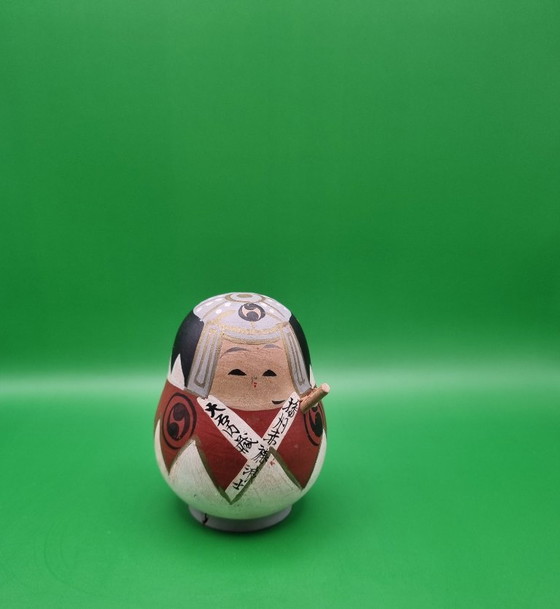
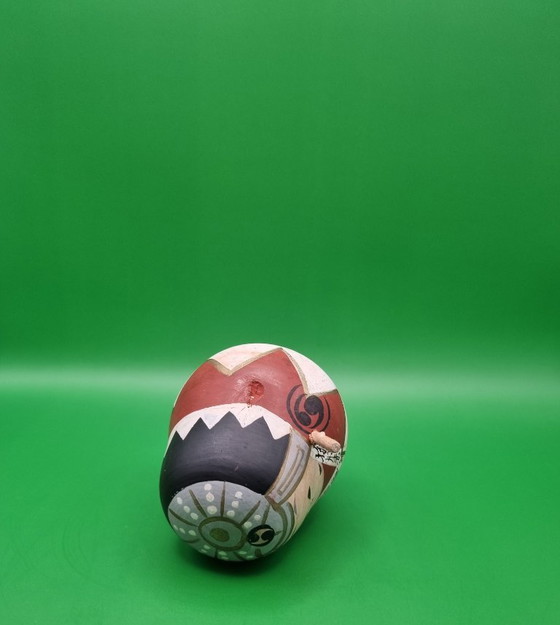
Vintage Okiagari-Koboshi Kokeshi.
Dit is geen traditionele houten kokeshi-pop, maar een kokeshi-vormige rammelaar of een speciaal type traditioneel Japans speelgoed (vaak aangeduid als een okiagari-koboshi of een houten rammelaar/fluitje, herkennen aan het houten steeltje/fluitmondje aan de zijkant en het gat aan de onderkant).
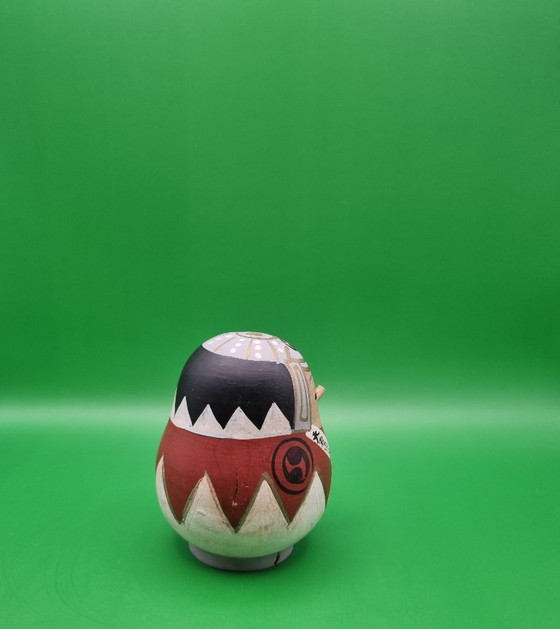
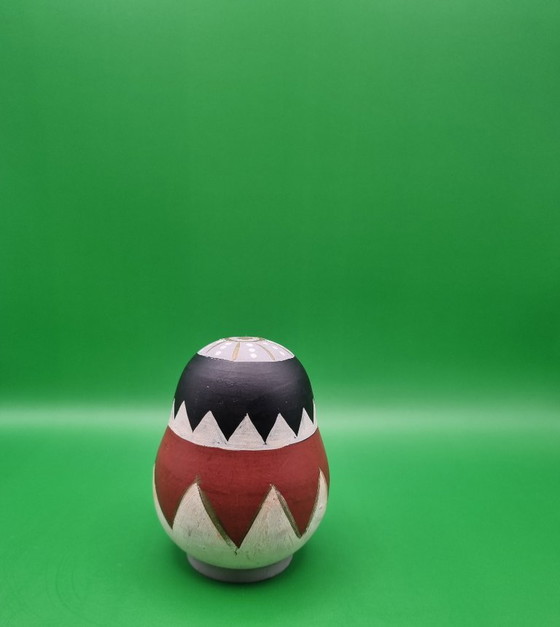
Het heeft de typische ronde vorm van een kokeshi of een daruma-pop, maar dan met volkskunstachtige beschildering in wit, zwart, rood en goud.
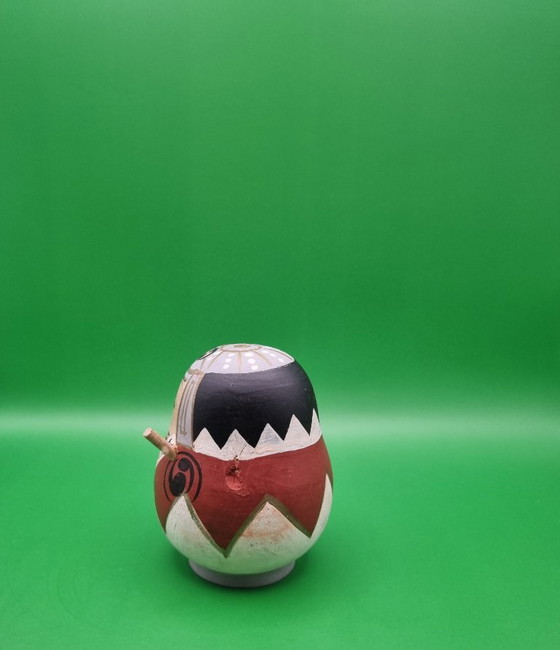
Op het lichaam zie je een tomoe-symbool (het draaikolk- of comma-patroon dat vaak in de Japanse heraldiek en shinto wordt gebruikt) en typische geometrische driehoekspatronen (zoals de kikkou of bergpatronen die doen denken aan traditionele kokeshi-stijlen zoals Togatta of Naruko).
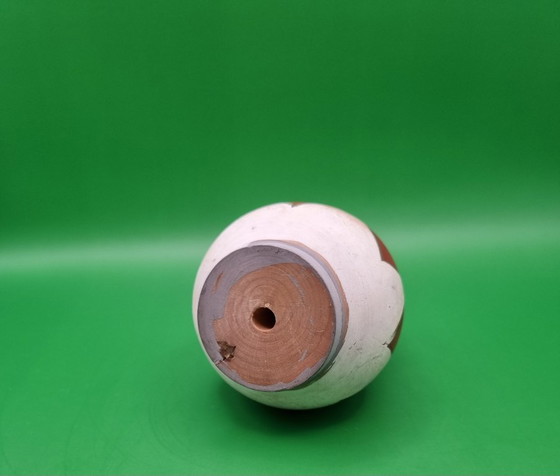
Aan de zijkant steekt een houten steeltje of mondstuk uit en de onderkant heeft een holle kern met een gat in het midden. Dit wijst erop dat het object tevens dienst doet als houten fluitje (in Japan bekend als een tsuchibue of houten equivalent, of een volksspeeltje genaamd kiji-guruma / houten fluitpop).
De pop is handgemaakt van hout, beschilderd met traditionele pigmenten en heeft door de jaren heen een barstje aan de onderzijde en een butsje aan de zijkant opgelopen.
De hoogte is 8 cm, voor de conditie bekijk de foto's.
Let op: de kokeshi-poppen zijn niet nieuw, dus er zullen altijd in meer of mindere mate krassen, verkleuringen en/of scheurtjes aanwezig zijn.
=========================================================
Vintage Okiagari-Koboshi Kokeshi.
This is not a traditional wooden kokeshi doll, but a kokeshi-shaped rattle or a special type of traditional Japanese toy (often referred to as an okiagari-koboshi or a wooden rattle/whistle, recognizable by the wooden stem/mouthpiece on the side and the hole at the bottom).
It has the typical round shape of a kokeshi or a daruma doll, but with folk art-style painting in white, black, red, and gold.
On the body, you can see a tomoe symbol (the vortex or comma pattern often used in Japanese heraldry and Shinto) and typical geometric triangle patterns (such as the kikkou or mountain patterns reminiscent of traditional kokeshi styles like Togatta or Naruko).
A wooden stem or mouthpiece protrudes from the side, and the bottom has a hollow core with a hole in the center. This indicates that the object also serves as a wooden whistle (known in Japan as a tsuchibue or wooden equivalent, or a folk toy called kiji-guruma / wooden flute doll).
The doll is handmade from wood, painted with traditional pigments, and has acquired a small crack on the bottom and a dent on the side over the years.
The height is 8 cm; please view the photos for the condition.
Please note: the kokeshi dolls are not new, so there will always be scratches, discoloration, and/or cracks present to a greater or lesser extent.
Specificaties
ConditieGoedKleurenMeerdere kleurenMateriaalHoutAantal stuks1Hoogte8 cmBreedte4 cmDiepte7 cmGebruikssporenBarst/scheur, Krassen, Vlekken, Verkleuring
Ontdek meer
Verkopersinformatie
Over deze verkoper
Particuliere verkoperKerkrade, NederlandOp Whoppah sinds april 2023 • 0 verkopen