Opgehaald en bezorgd vanaf €29KopersbeschermingAlle Designer items gecureerd door Whoppah Download de Whoppah App. Altijd op de hoogte.
Opgehaald en bezorgd vanaf €29
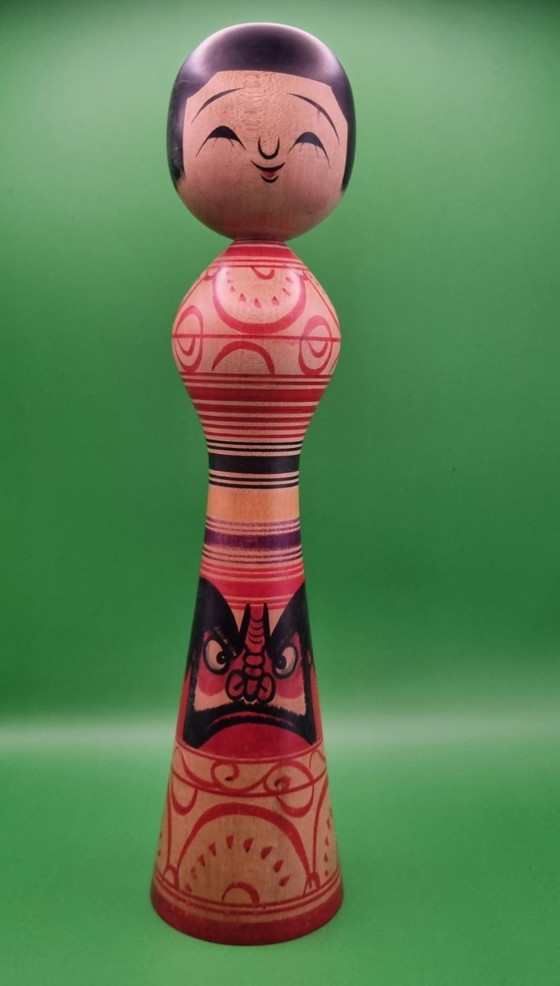
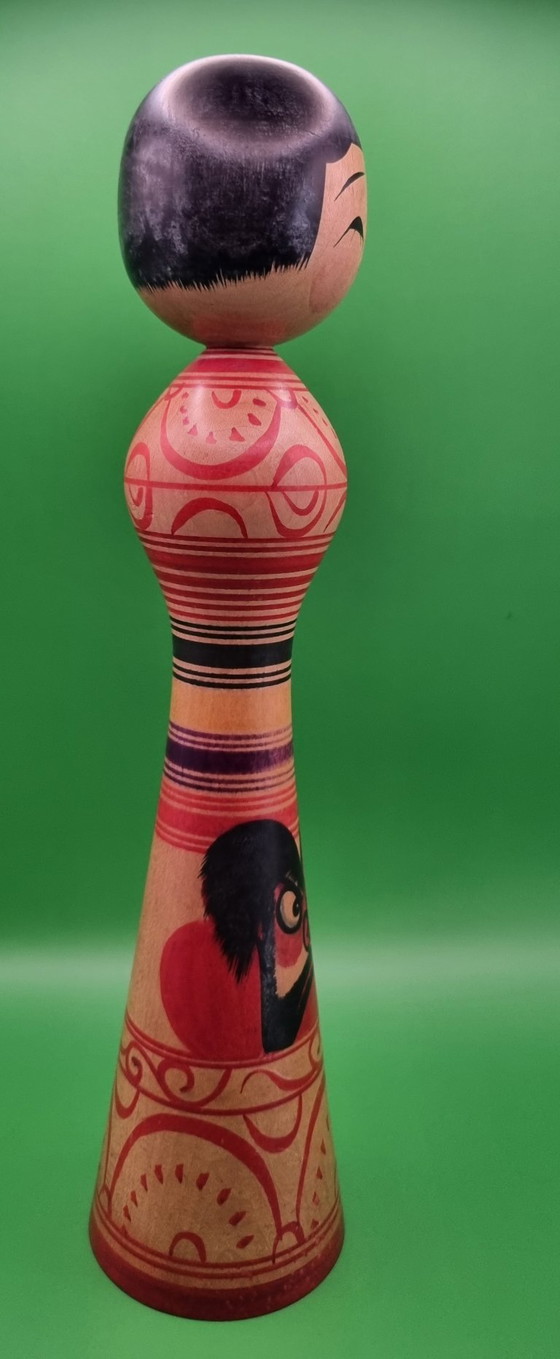
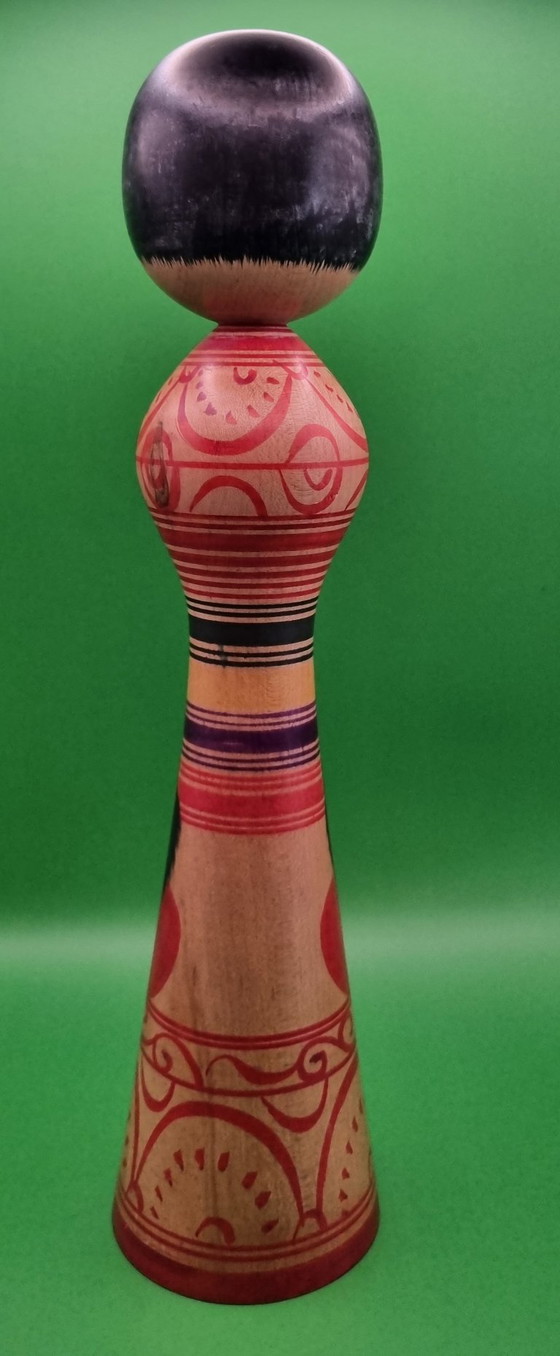
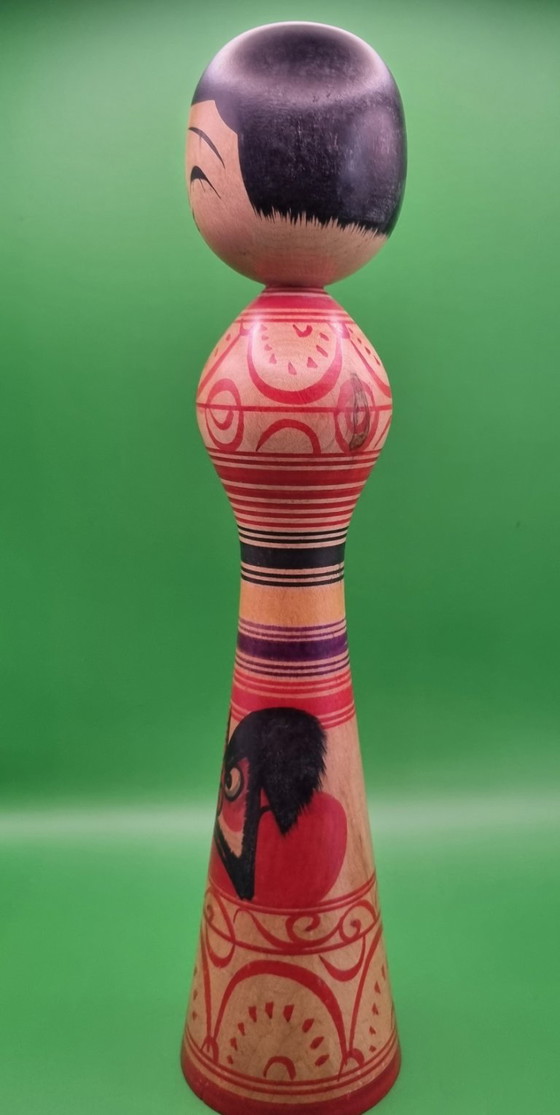
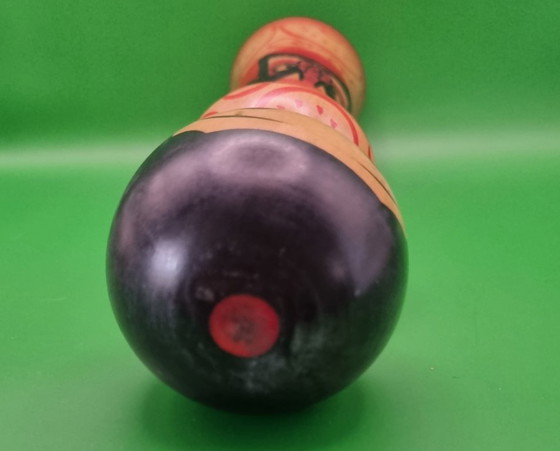
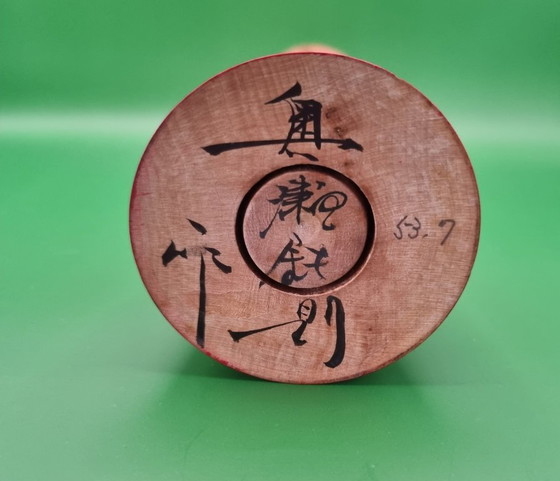
Tsugaru Kokeshi van Tetsunori Okuse uit 1978 (30 Cm)
€ 50,-Bied vanaf € 45,-
Koop met vertrouwen
Koop & betaal veilig met KopersbeschermingAlle designeritems door Whoppah gecureerdWe betalen de verkoper pas uit als jij het item goed hebt ontvangenVertrouwde betaalmethoden


Over deze verkoper
Particuliere verkoperProductomschrijving
Tsugaru kokeshi van Tetsunori Okuse uit 1978 (30 cm). Vintage Tsugaru kokeshi van Tetsunori Okuse (1940-1992). Poppen in deze stijl (Tsugaru) zijn afkomstig uit de prefectuur Aomori. De pop toont een damesgezicht met een ronde buste, een slanke taille en een kegelvormig onderlichaam, versierd met traditionele Ainu-patronen (van de inheemse bevolking van Japan) op de buste en de basis. Een van de opvallende kenmerken is het Japanse bobkapsel (Okappa-kapsel). Hoewel het haar effen zwart is geschilderd, zijn de penseelstreken zichtbaar aan de randen van de pony en het haar. Het Daruma-gezicht is geschilderd op de onderste helft van het lichaam en domineert de decoratie, samen met horizontale lijnen (Rokuro Moyo) in de nek en het midden van de pop. Tetsunori Okuse (1940-1992). Op jonge leeftijd (rond augustus 1956, tijdens zijn middelbareschooltijd) begon hij met de houtdraaierij en leerde hij het vak direct onder leiding van meester Hidetaro Mori. Vanaf 1959 begon hij met het maken van poppen in de stijl van zijn meester, die al snel via verzamelaarsverenigingen verspreid werden. Hoewel hij begon in de stijl van zijn leermeester en andere historische stijlen (zoals die van Kobei Saito), ging hij in de jaren 1960 historische en oudere werken van Hidetaro Mori nauwgezet bestuderen en herstellen. Zijn werk werd geroemd om de balans tussen moderne esthetiek en het getrouw bewaren van traditionele Tsugaru-vormen, wat hem erg populair maakte onder verzamelaars. In 1959, na zijn middelbareschooltijd, begon hij met het maken van Hidetaro-modellen, die werden verspreid via de Tokyo Kokeshi Friends Association. Hij werd beschouwd als een van de moderne ambachtslieden. De hoogte is 30 cm, voor de conditie bekijk de foto's. Let op: de kokeshi-poppen zijn niet nieuw, dus er zullen altijd in meer of mindere mate krassen, verkleuringen en/of scheurtjes aanwezig zijn. ========================================================= Tsugaru kokeshi by Tetsunori Okuse from 1978 (30 cm). Vintage Tsugaru kokeshi by Tetsunori Okuse (1940-1992). Dolls in this style (Tsugaru) originate from Aomori Prefecture. The doll features a female face with a round bust, a slender waist, and a conical lower body, decorated with traditional Ainu patterns (of the indigenous people of Japan) on the bust and the base. One of the striking features is the Japanese bob haircut (Okappa haircut). Although the hair is painted solid black, brushstrokes are visible at the edges of the bangs and hair. The Daruma face is painted on the lower half of the body and dominates the decoration, along with horizontal lines (Rokuro Moyo) on the neck and the middle of the doll. Tetsunori Okuse (1940-1992). At a young age (around August 1956, during his high school years), he began woodturning and learned the craft directly under the guidance of Master Hidetaro Mori. From 1959, he began making dolls in the style of his master, which were soon distributed through collectors' associations. Although he started in the style of his teacher and other historical styles (such as that of Kobei Saito), in the 1960s he began meticulously studying and restoring historical and older works by Hidetaro Mori. His work was praised for the balance between modern aesthetics and the faithful preservation of traditional Tsugaru forms, which made him very popular among collectors. In 1959, after high school, he began making Hidetaro models, which were distributed through the Tokyo Kokeshi Friends Association. He was considered one of the modern artisans. The height is 30 cm; please view the photos for the condition. Please note: the kokeshi dolls are not new, so there will always be scratches, discoloration, and/or small tears to a greater or lesser extent.
Specificaties
ConditieGoedKleurenMeerdere kleurenMateriaalHoutAantal stuks1Hoogte30 cmBreedte8 cmDiepte5 cmGebruikssporenKrassen, Verkleuring
Ontdek meer
Verkopersinformatie
Over deze verkoper
Particuliere verkoperKerkrade, NederlandOp Whoppah sinds april 2023 • 0 verkopen